
Skip to content
Go to Grisebach homepage

Online Catalogue

All lots

The Walter Bauer Collection

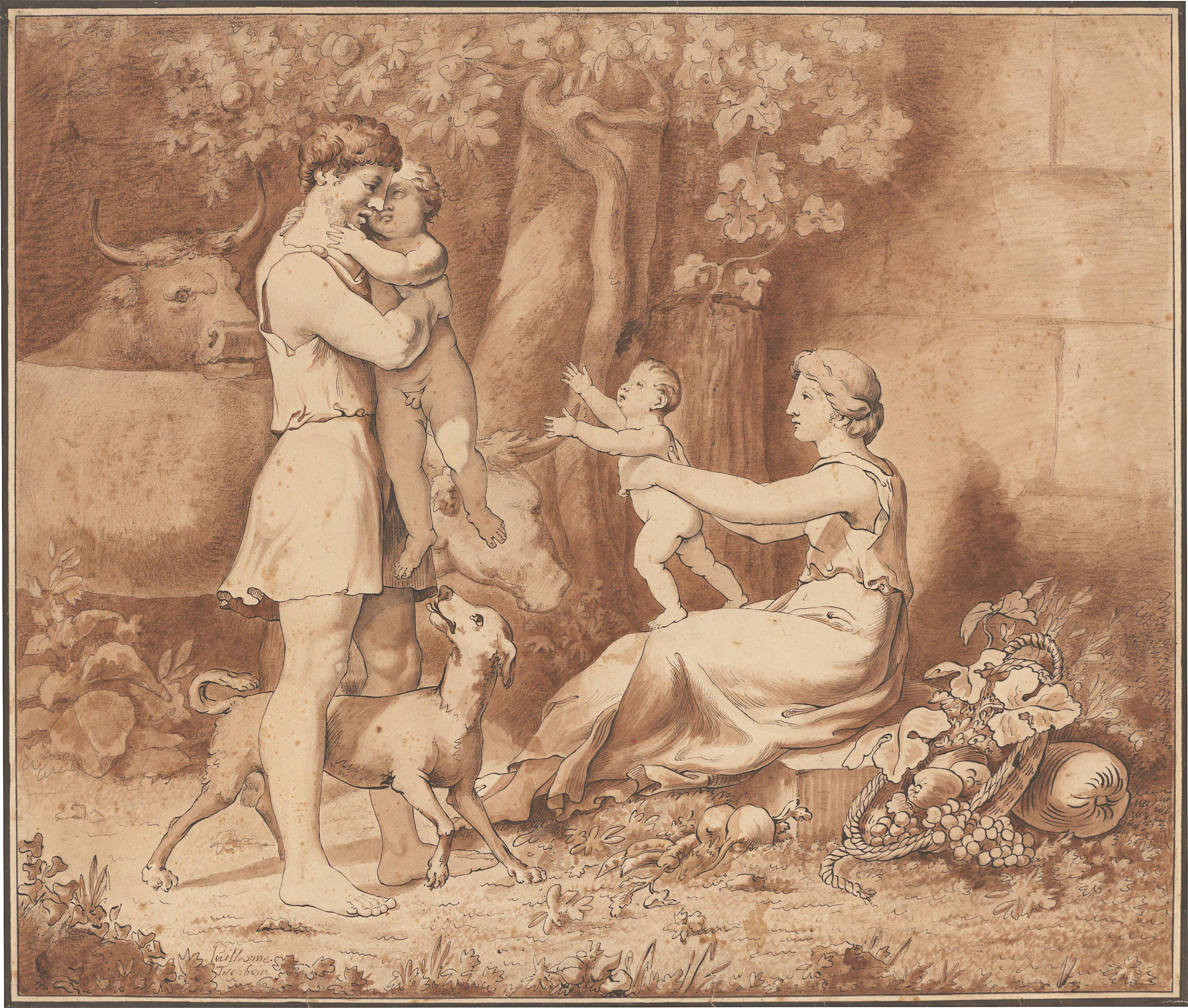
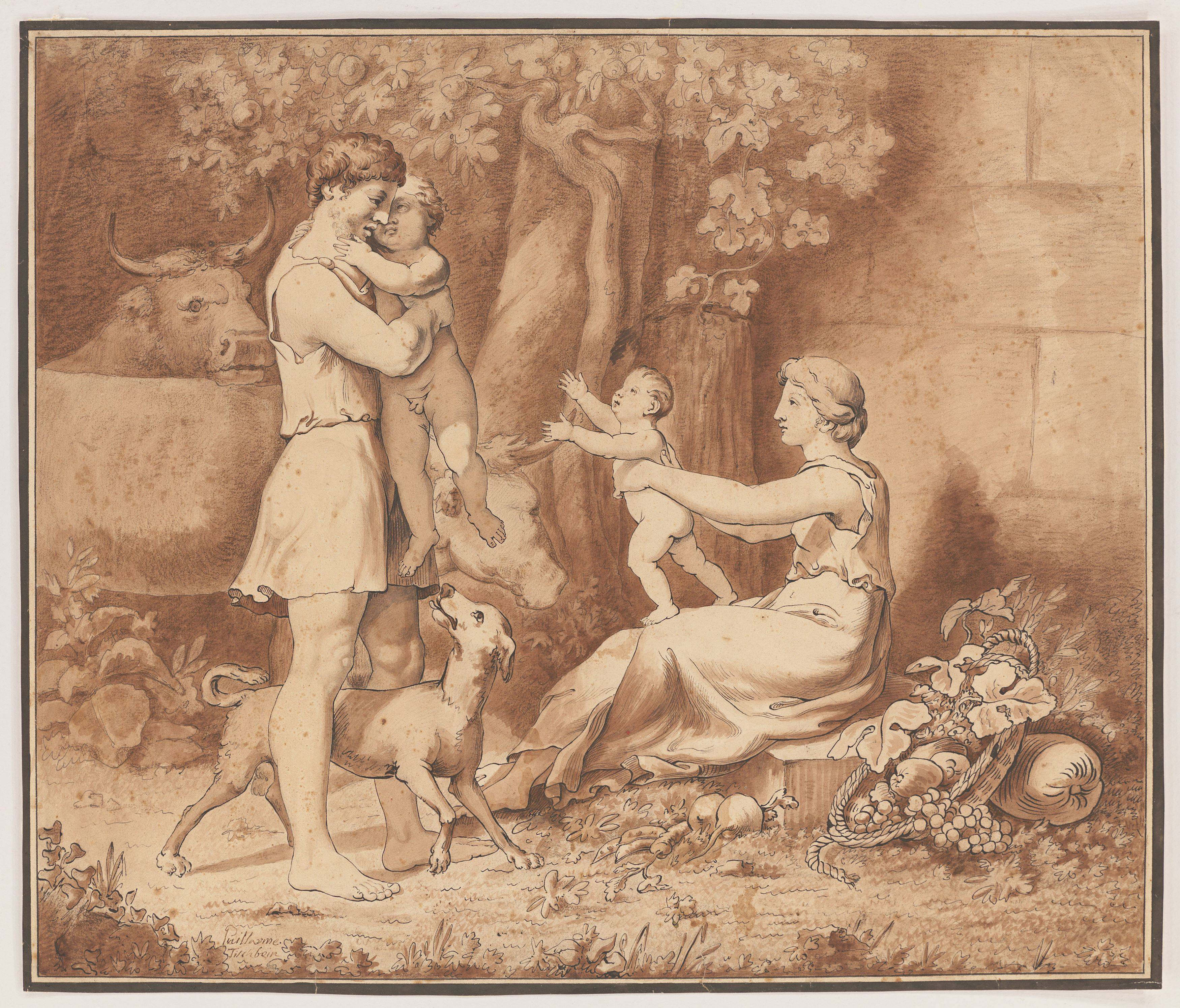
This picture shows the following artwork: Johann Heinrich Wilhelm Tischbein. Ancient shepherd family. 1790s.
135 Johann Heinrich Wilhelm Tischbein

Haina 1751 – 1829 Eutin

Ancient shepherd family. 1790s

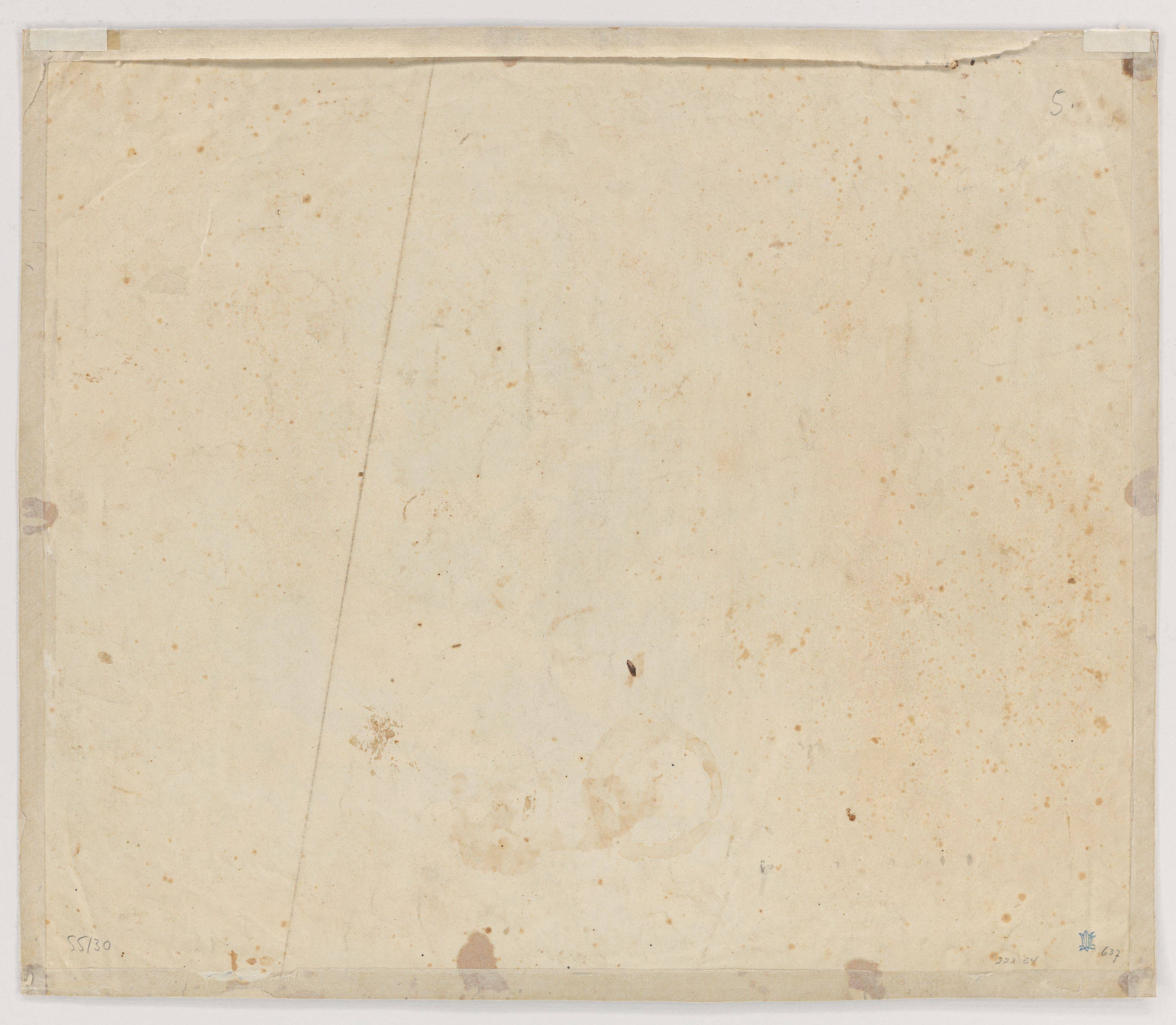
Pen and black ink, washed in red-brown, over chalk on paper. 38,5 × 45,2 cm (15 ⅛ × 17 ¾ in. ). Signed lower left: Guillaume Tischbein. On the reverse, the collector's mark Lugt 2841a. [3100]

Provenance

Museo Sant'Angelo, Naples / Carl Heumann, Chemnitz / Walter Bauer, Fulda (acquired 1957 at Stuttgarter Kunstkabinett, thence by descent to the present owner)

EUR 2,000


- 3,000

USD 2,350


- 3,530

Sold for:

8,255 EUR (incl. premium)

Auction 370

Thursday, November 27th 2025, 2:00 PM

Ask our specialists

Exhibition

Johann Heinrich Wilhelm Tischbein. 1751–1829. Gedächtnis-Ausstellung von Gemälden, Zeichnungen, Stichen und Manuskripten etc. aus dem deutschen und ausländischen Museums- und Privatbesitz. Oldenburg, Landesmuseum, 1930, cat. no. 343 / 100 Jahre deutsche Zeichenkunst 1750–1850. Sammlung Konsul Heumann, Chemnitz. Chemnitz, Städtisches Museum, 1930, cat. no. 343 („Ländliche Szene“) / Goethe. Dresden, Sächsischer Kunstverein zu Dresden, Brühlsche Terrasse, 1932, cat. no. 266 / Bildnis und Komposition 1750–1850. Zeichnungen und Aquarelle. Aus der Sammlung Heumann, Chemnitz. Leipzig, Museum der bildenden Künste, 1934, cat. no. 202

Literature and illustration

Auktion 29: Sammlung Heumann, Chemnitz. Stuttgart, Stuttgarter Kunstkabinett, 29.11.1957, cat. no. 359

The drawing, which dates from Tischbein's time in Naples, combines two elements typical of his work: the study of antiquity and the study of animals, with a particular delight in the parallel physiognomic representation of animals and humans. The mother, turned to the left in a strict profile, is based on the immensely popular wall fresco ‘Who buys gods of love?’, discovered during the excavations in Pompeii and Herculaneum and quickly spread throughout Europe through engravings and copies. Now, instead of a cupid dealer, a young mother is depicted, turning with the father to their own children, who resemble cherubs. The signature ‘Guillaume Tischbein’ is in his own hand, and the French form of his first name may be a playful pun for the recipient of the work. A very similar motif, also in profile, but now turned to the right, can be found on a supraporte (grisaille) in Oldenburg Castle, painted in the early 1820s. It is part of a suite of six supraportes framing the large historical painting ‘Des Mannes Stärke’ (The Strength of Man), dated 1821. Tischbein summed up the philosophical message to the duke who commissioned the work: ‘Thus, when a person enters life, he is immediately in need of help.’ Motherly and parental love play a significant role in Tischbein's work. There is also a pictorial drawing of the supraporte in the Klassik Stiftung Weimar. Hermann Mildenberger

Subject to change - Please refer to our conditions of sale.