It all began with a black square on a white background, painted by Kazimir Malevich in 1915 to liberate art from the ballast of the representational world. He brought painting back to zero, a concept which the art of Imi Knoebel revolves around. His art arises from art itself—it is a reaction to its own history. Focused on right angles and primary colors, his entire body of work is animated by an ongoing dialogue with the legacy of Concrete and Constructivist art.
Knoebel’s artistic path seemed almost preordained: born in 1940 in Dessau (the Bauhaus city) under the name Klaus Wolf, he attended the Werkkunstschule Darmstadt between 1962 and 1964. There, the foundation courses were based on ideas developed by Johannes Itten and László Moholy-Nagy. Even after transferring to the Kunstakademie Düsseldorf, the ‘Black Square’ continued to occupy his mind. Together with Rainer Giese, they formed the artist duo ‘Imi und Imi’, meaning ‘Me With Him’—whilst having nothing to do with the similarly named detergent brand.
In 1965, the two were admitted to the class of Joseph Beuys, who, according to legend gave them access to a storage room known as Room 19.
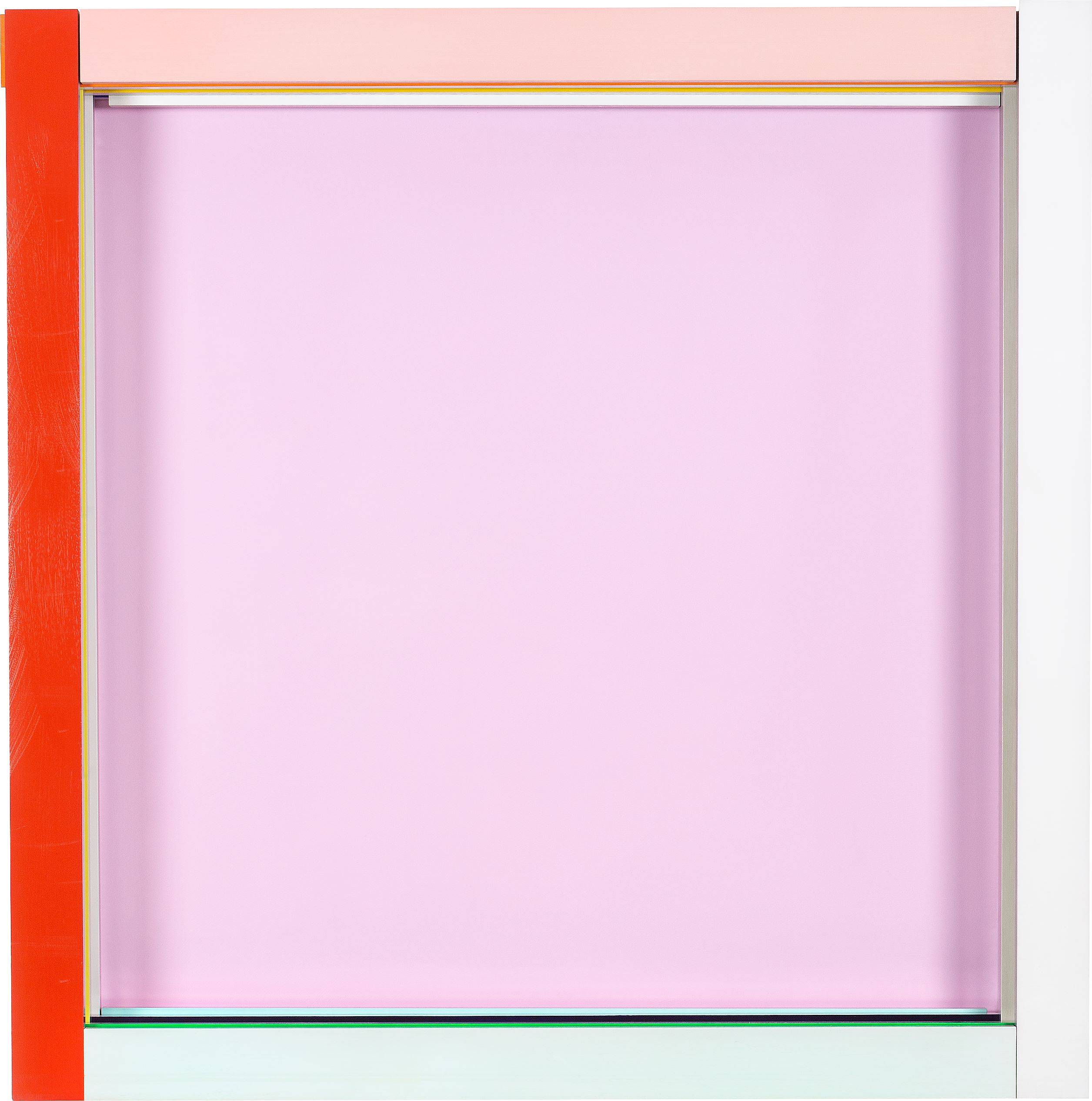
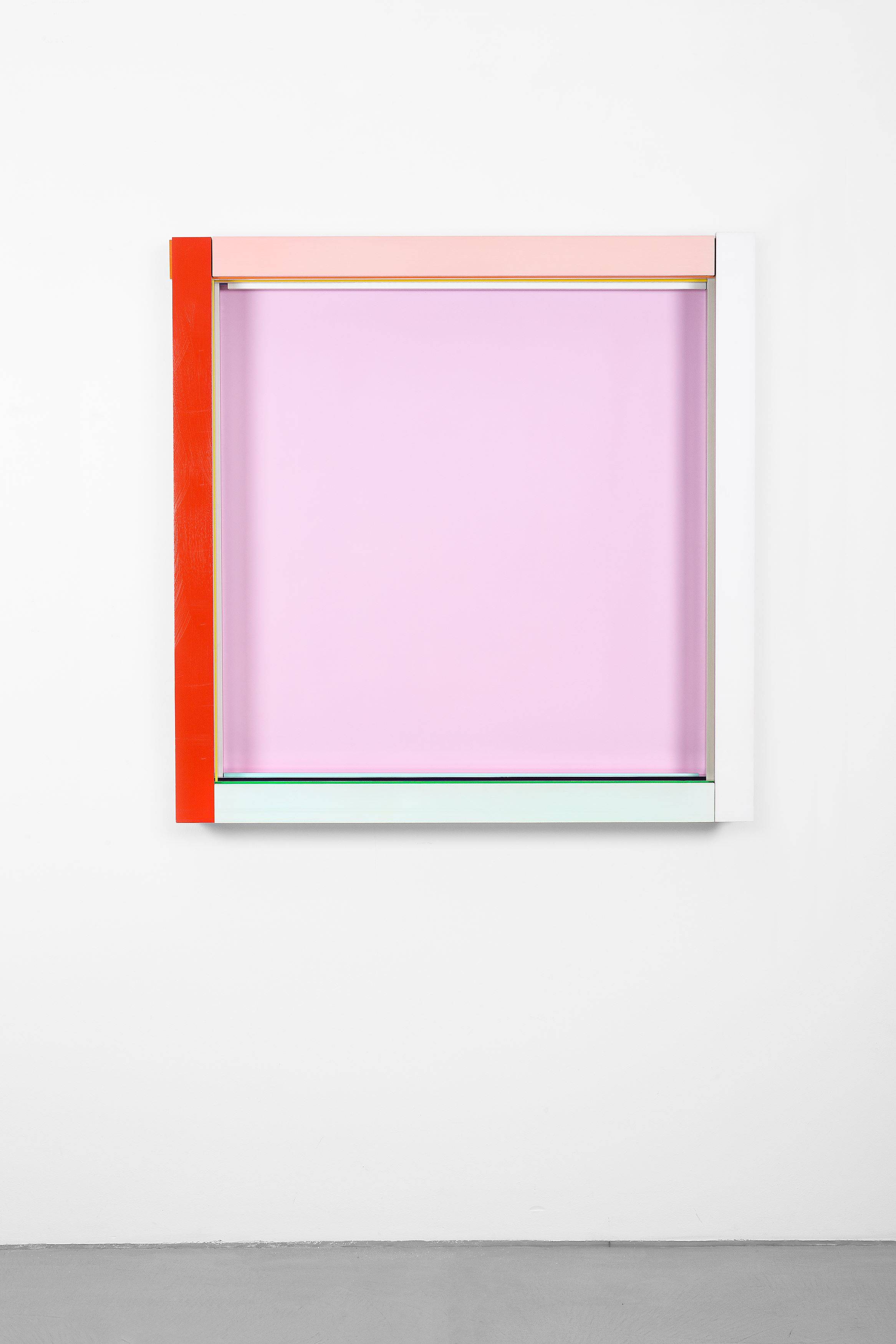
Although Beuys was not a direct influence on Knoebel’s artistic approach, his expanded concept of art gave Knoebel the freedom to pursue his own radical purism using hardboard panels and stretcher frames painted in black and white. He hung empty stretcher frames on the wall or stacked them atop one another, creating relief-like wall objects. The work’s red and yellow elements—set in contrast to the differing, wide, ultramarine side bars and the fine red and yellow stripes of the stacked frames—belong to a series from the 1990s, a period when his color-palette reached its most vivid, almost garish intensity. During this time, Knoebel titled several works ‘Pure Freude’ (Pure Joy), borrowing the name from a record label of the Düsseldorf punk scene.
Throughout his career, Imi Knoebel has pursued his goal of ultimate simplification with unwavering consistency. The influence of Piet Mondrian is unmistakable, yet Knoebel is entirely devoid of Mondrian’s missionary zeal.
Knoebel himself once remarked that he had no real talent as an artist: “I’m actually proud to be part of art history without that talent”.
Ute Diehl
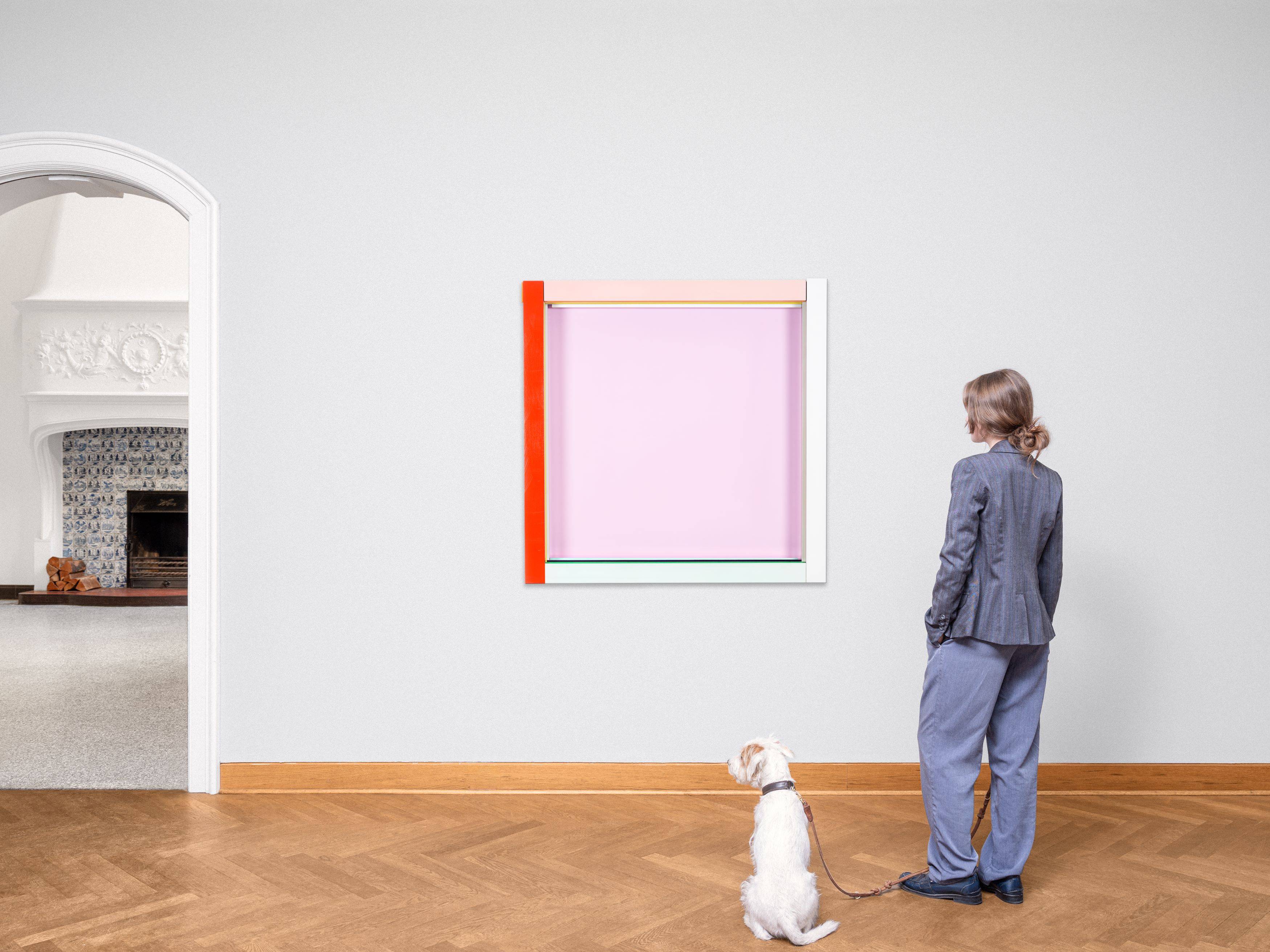
Acrylic on aluminium and wood. 121 × 121 × 14 cm
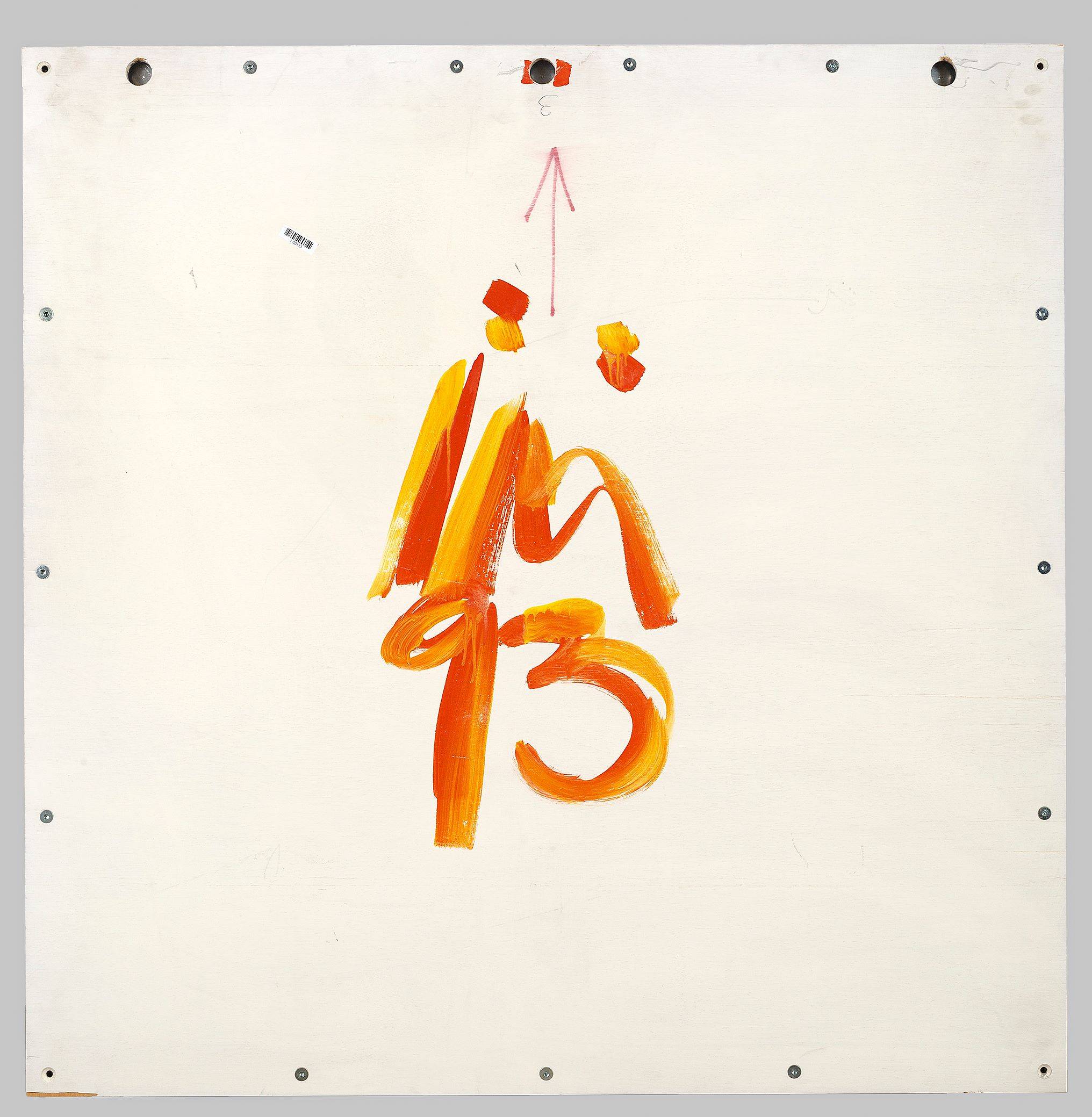
(47 ⅝ × 47 ⅝ × 5 ½ in.). Signed and dated with brush in red and yellow as well as inscribed with directional arrows in red felt-tip pen on the reverse: Imi 93. [3030]
Provenance
Corporate Collection, Germany (acquired in 1994 at Achenbach Kunsthandel, Düsseldorf)
It all began with a black square on a white background, painted by Kazimir Malevich in 1915 to liberate art from the ballast of the representational world. He brought painting back to zero, a concept which the art of Imi Knoebel revolves around. His art arises from art itself—it is a reaction to its own history. Focused on right angles and primary colors, his entire body of work is animated by an ongoing dialogue with the legacy of Concrete and Constructivist art.
Knoebel’s artistic path seemed almost preordained: born in 1940 in Dessau (the Bauhaus city) under the name Klaus Wolf, he attended the Werkkunstschule Darmstadt between 1962 and 1964. There, the foundation courses were based on ideas developed by Johannes Itten and László Moholy-Nagy. Even after transferring to the Kunstakademie Düsseldorf, the ‘Black Square’ continued to occupy his mind. Together with Rainer Giese, they formed the artist duo ‘Imi und Imi’, meaning ‘Me With Him’—whilst having nothing to do with the similarly named detergent brand.
In 1965, the two were admitted to the class of Joseph Beuys, who, according to legend gave them access to a storage room known as Room 19.
Although Beuys was not a direct influence on Knoebel’s artistic approach, his expanded concept of art gave Knoebel the freedom to pursue his own radical purism using hardboard panels and stretcher frames painted in black and white. He hung empty stretcher frames on the wall or stacked them atop one another, creating relief-like wall objects. The work’s red and yellow elements—set in contrast to the differing, wide, ultramarine side bars and the fine red and yellow stripes of the stacked frames—belong to a series from the 1990s, a period when his color-palette reached its most vivid, almost garish intensity. During this time, Knoebel titled several works ‘Pure Freude’ (Pure Joy), borrowing the name from a record label of the Düsseldorf punk scene.
Throughout his career, Imi Knoebel has pursued his goal of ultimate simplification with unwavering consistency. The influence of Piet Mondrian is unmistakable, yet Knoebel is entirely devoid of Mondrian’s missionary zeal.
Knoebel himself once remarked that he had no real talent as an artist: “I’m actually proud to be part of art history without that talent”.
Ute Diehl