Lot
765
Wendorf/Mecklenburg 1930 – 2025 Düsseldorf
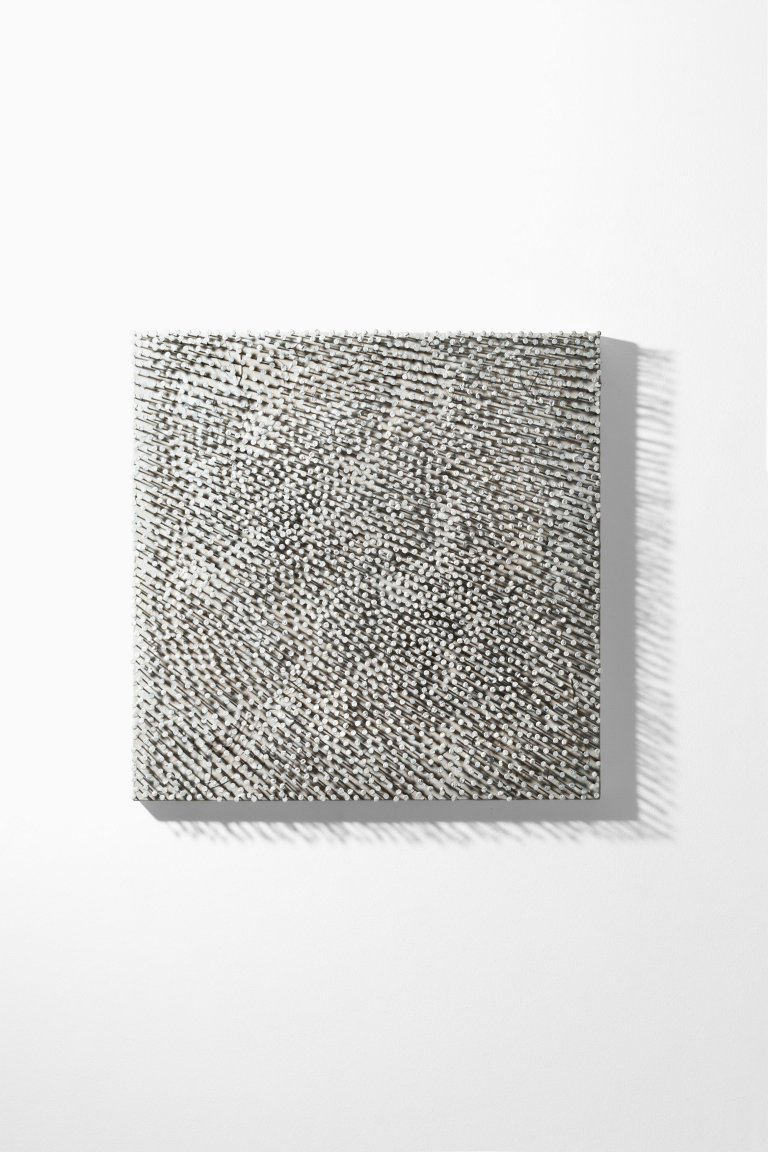
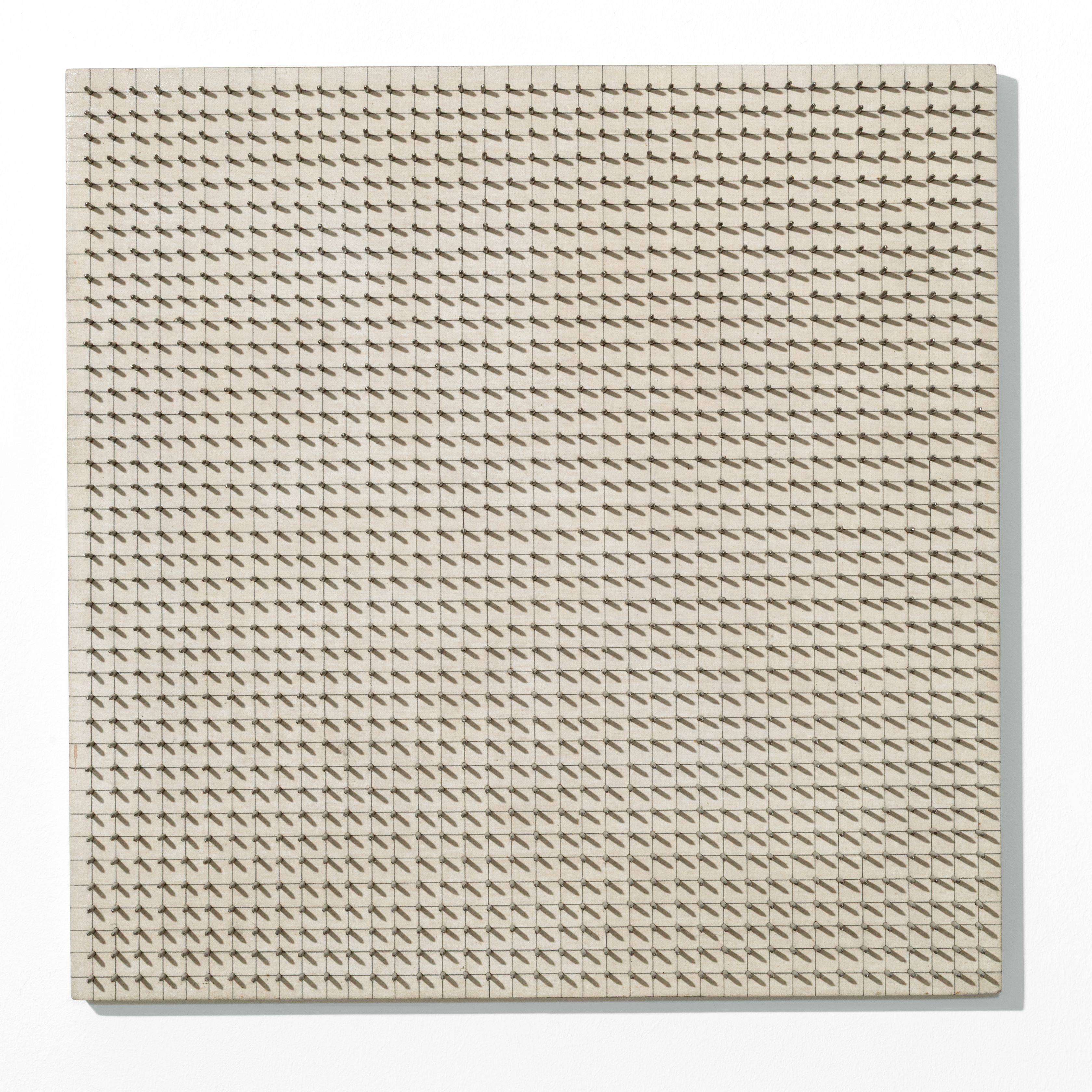
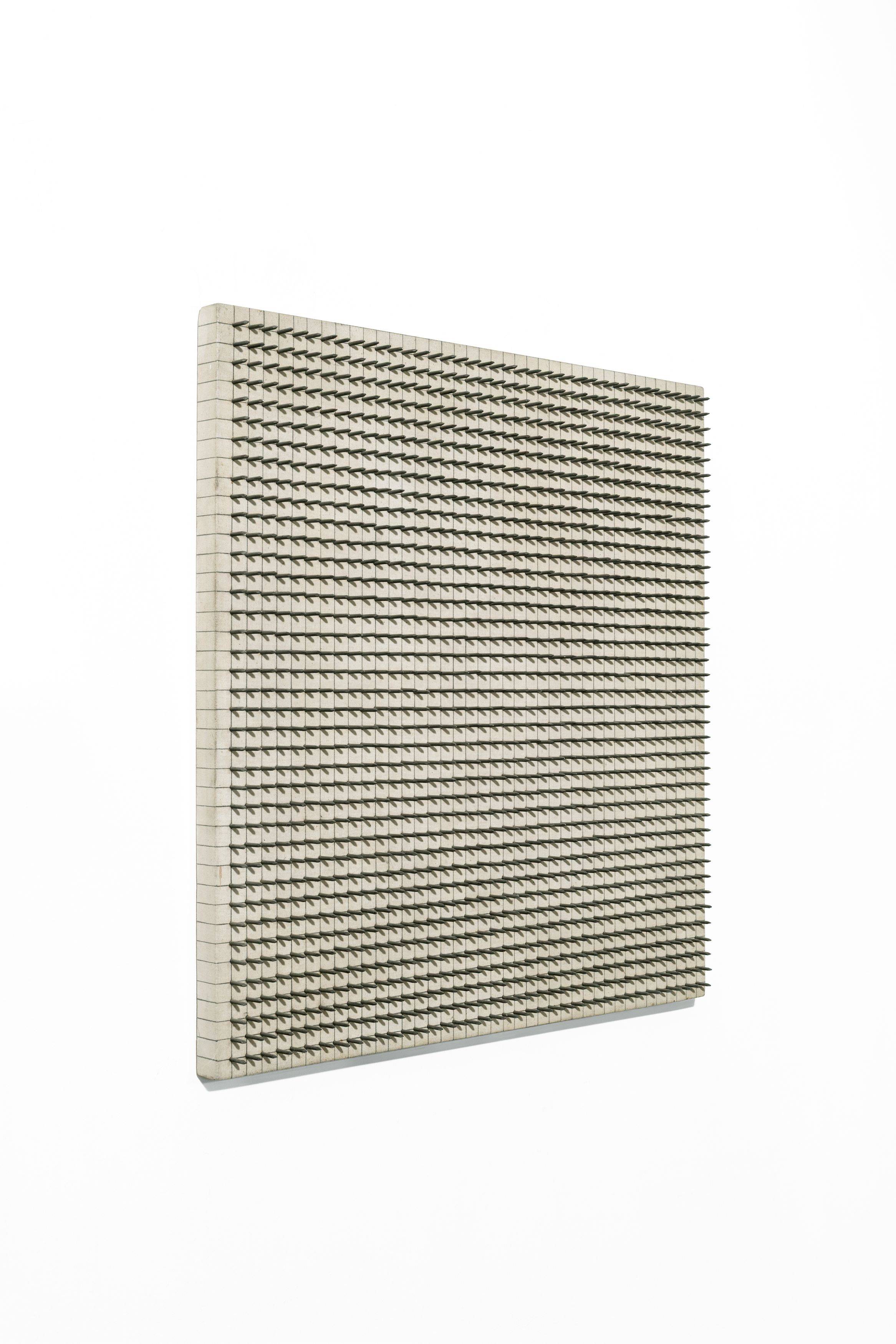
”Raumlinien. Aggressive Reihung”. 1970

Background:

Background:

Background:

Estimate:
EUR 60,000
- 80,000
USD 67,400
- 89,900
Auction 380
Friday, 27.11.2026, 4:00 PM
Request condition report
Ask our specialists
Private Collection, North Rhine-Westphalia (acquired in 1987 at Galerie Neher, Essen)
Günther Uecker’s „Raumlinien. Aggressive Reihung“ (1970) belongs to a group of works in which the artist reverses the familiar use of the nail motif. Rather than driving the nails into the canvas, he turns their points outwards. They now project from the canvas in almost menacing rows, set against a grid of graphite lines. The arrangement is reminiscent of a fakir’s bed of nails, whose seemingly magical power lies in the ability of a person to rise apparently unharmed from a bed of sharp spikes.
The particular tension of the work arises from the interplay between material and order. At first glance, the nails appear to follow a strict grid, dictated by the graphite lines. On closer inspection, however, subtle deviations become apparent: some nails project further than others, and the “spatial lines” are by no means entirely even. These minute irregularities reveal the artist’s hand at work: each nail has been driven into the canvas through the application of human force.
On the reverse, Uecker has dedicated the work to “Conrad Fischer”. This presumably refers to the Düsseldorf gallerist Konrad Fischer, known to his friends as Conny. Both Uecker and Fischer were influential and active figures in Düsseldorf’s art scene during the 1960s. One example of their close connection was the Creamcheese club, which opened in Düsseldorf in 1967 and whose interior Uecker helped design together with fellow artists, including Fischer, who was still going by the name Konrad Lueg at the time. Conceived as an experimental Gesamtkunstwerk, the club drew inspiration from Andy Warhol’s The Dom in New York. Fischer, who had initially worked as an artist himself and studied at the Düsseldorf Art Academy alongside, among others, Sigmar Polke and Gerhard Richter, opened his first gallery under his given name in the same year, in the same building as the Creamcheese. It soon developed into an internationally renowned venue for contemporary art. The dedication thus situates Uecker’s work not only within the artist’s personal circle, but also makes it a testament to a formative period in the history of Düsseldorf’s art scene. FvW
Subject to change - Please refer to our conditions of sale.