
Lot
7
Nolde 1867 – 1956 Seebüll
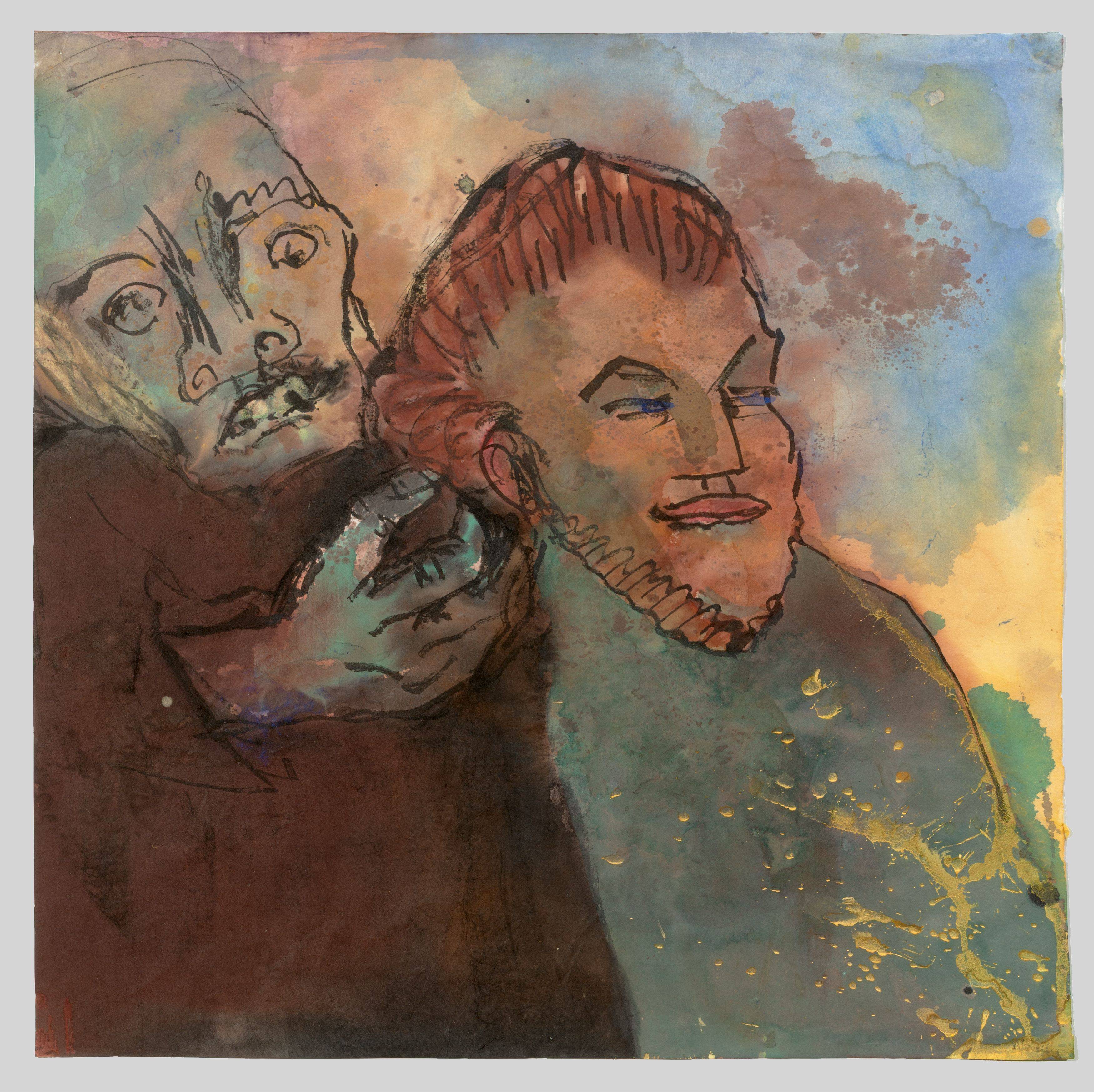
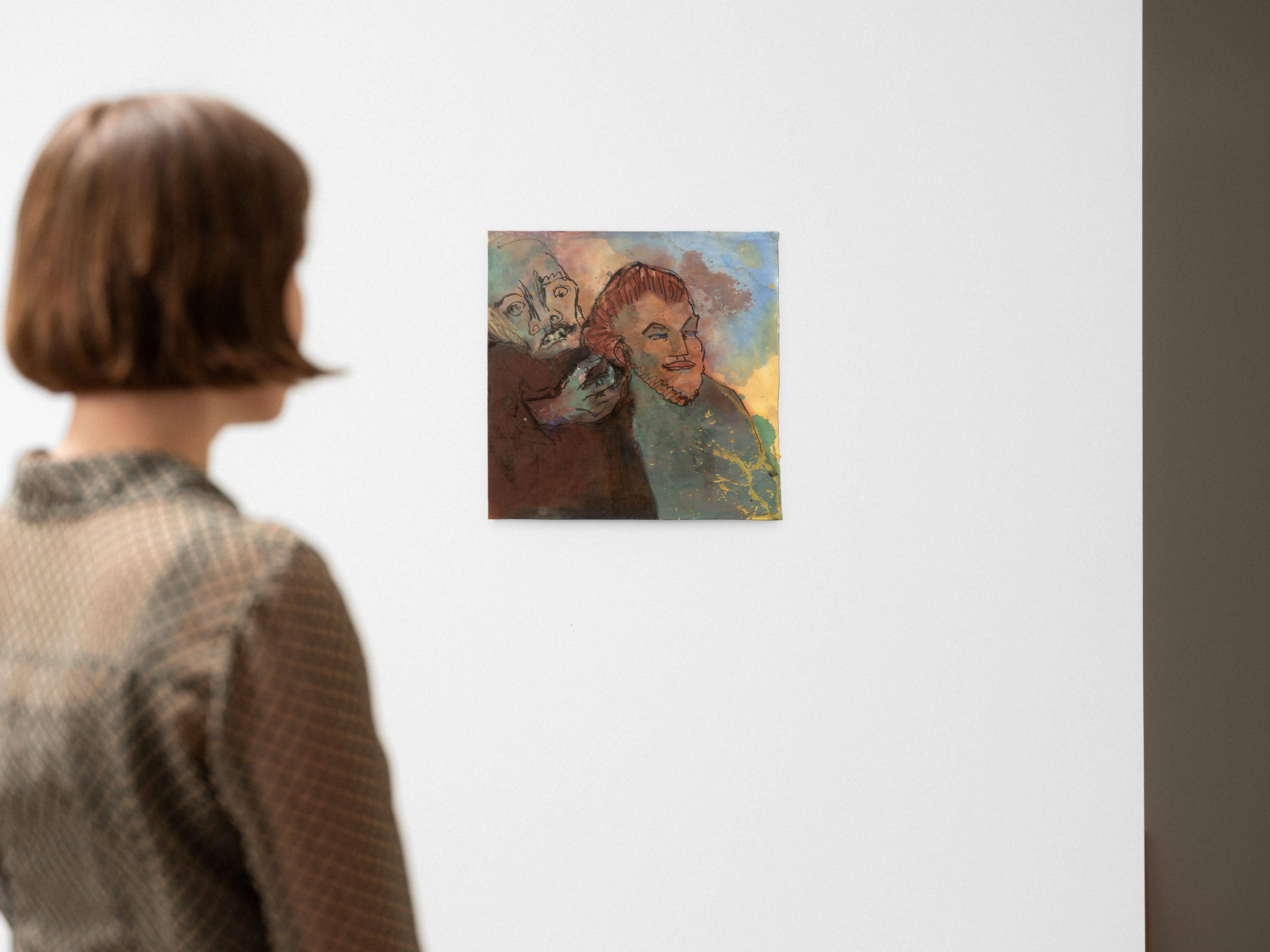
”Leben und Tod”. Before 1932

Background:


Background:

Background:


Background:


Background:
Estimate:
EUR 60,000
- 80,000
USD 67,400
- 89,900
Auction 378
Thursday, 26.11.2026, 6:00 PM
Request condition report
Ask our specialists
Private Collection, North Rhine-Westphalia (acquired from the artist, thence by descent to the present owner)
Between Fable and Inner Visions: Emil Nolde's Fantastical Watercolours
Emil Nolde's home was the wide marshland between the North Sea and the Baltic, and it shaped him profoundly from childhood. The isolated life on his parents' farm, with its lively animal world, awakened in him a fascination with everything mystical and fantastical that was common in the German-Danish border region. The mischievous house spirit Nis Puk was probably Nolde's earliest encounter with a supernatural figure. Other fabulous creatures soon followed, known from the eerie tales of the Dane Steen Steensen Blicher (1782–1848) and from the sagas of the "Edda" by the Icelander Snorri Sturluson (1179–1241), which Nolde held in high regard. His fascination with supernatural phenomena was reinforced by his mother, whom he describes in his memoirs as "clairvoyant". Looking back, he observed: "Her clairvoyance went with me into the dark spiritual expanses of an artist's life" (Emil Nolde: Jahre der Kämpfe, 5th ed., Cologne 1985, p. 15).
Nolde made a first, tentative attempt to capture the world of the grotesque and fantastical in art with drawings no larger than postcards, made in the summer of 1901 in the seclusion of the fishing village of Lildstrand in northern Jutland. Yet these first visions of fabulous creatures, ghostly figures, strange animals and monsters to take pictorial form could not satisfy the painter's ambitions: "By this time I already had countless visions. Wherever I looked, nature was alive: the sky, the clouds, on every stone and between the branches of the trees, everywhere my figures stirred and lived, in quiet or wild, vital life. They filled me with enthusiasm and also tormented me, calling out to be given form. But when would that be?" (ibid., p. 14)
Another thirty years were to pass before a change in technique flung the door to the fantastical wide open in Nolde's watercolours, once and for all. In the autumn of 1931, the painter began to experiment with his watercolours, spreading them freely across the white paper without any preconceived motif. Until then, the motif had determined the choice of colour, composition and design; now the painter let himself be inspired to pictorial ideas by the abstract structure of the colour alone. In the watercolours, applied to the paper purely by chance and intuition, and in their cloud-like, mottled structures, Nolde recognised grotesque heads, couples and even entire scenes. In a final step, he defined them more closely with an ink brush or pen, and only then did they become visible to the viewer as well. For the first time in his work, the "collaboration of nature" that Nolde had always sought became central, with chance playing a decisive part in the creation of each of these pictures.
His meditative handling of colour led to a strikingly frequent appearance of grotesque, bizarre couples. Mostly set against an intensely coloured ground, they appear like ghostly apparitions: hard to grasp, and liable to vanish again at any moment. Patches of colour become details of clothing, used to particularly charming effect in the sheet "Leben und Tod" (Life and Death), but also in "Schwarz und Weiss" (Black and White), where the choleric and the phlegmatic seem to collide. "Zuschauer" (Spectators) is a wonderful echo of the "Cabaret" scenes from Nolde's Berlin winter of 1910/11. All three sheets show both the master watercolourist's assured command of colour and the precise line of the great draughtsman at the height of his powers.

Lot
8
”Schwarz und Weiss”. Before 1932
Estimate:
EUR 60,000
- 80,000

Lot
9
”Kritiker (Zuschauer)”. Before 1932
Estimate:
EUR 60,000
- 80,000
Lot
29R
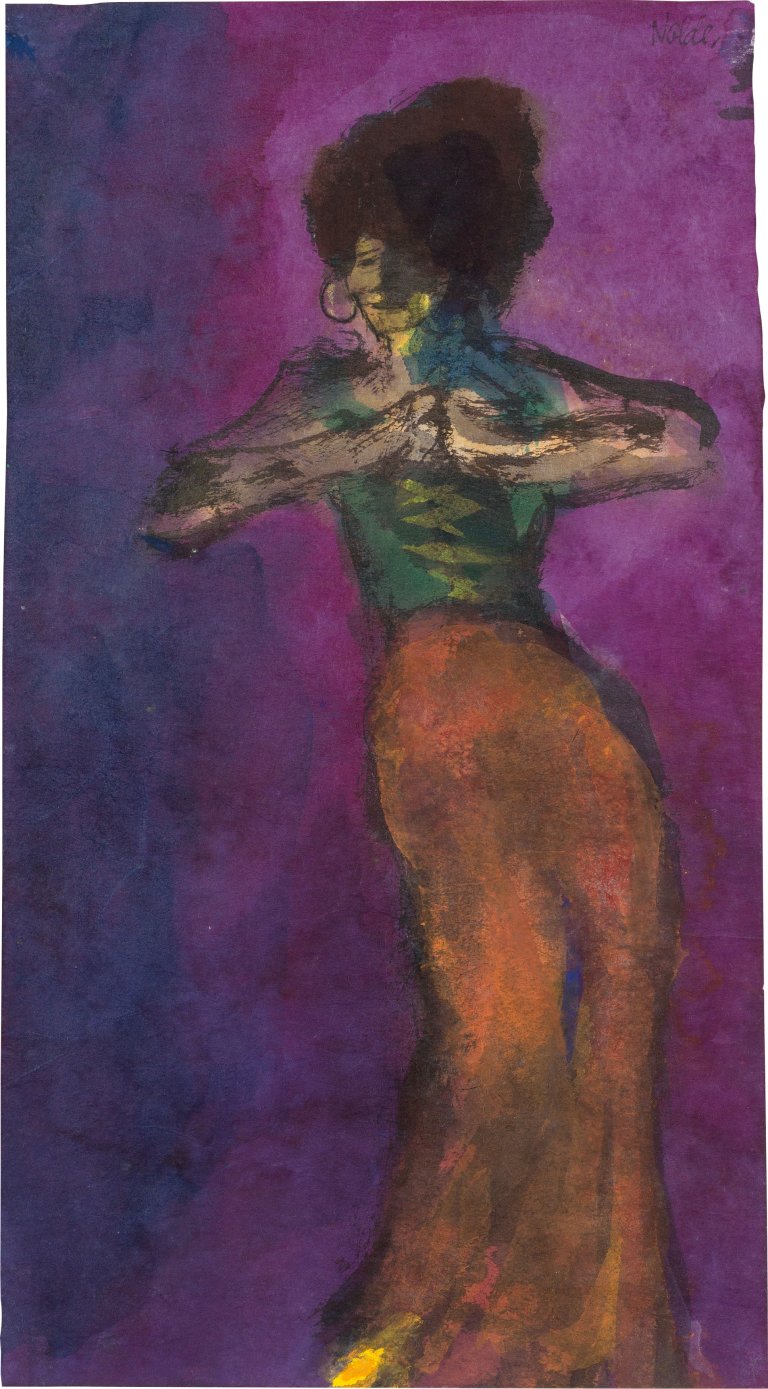
”Künstlerin”. 1930s
Estimate:
EUR 50,000
- 70,000

Lot
30
”Fuchsschwanz”. Circa 1937
Estimate:
EUR 50,000
- 70,000
Lot
31
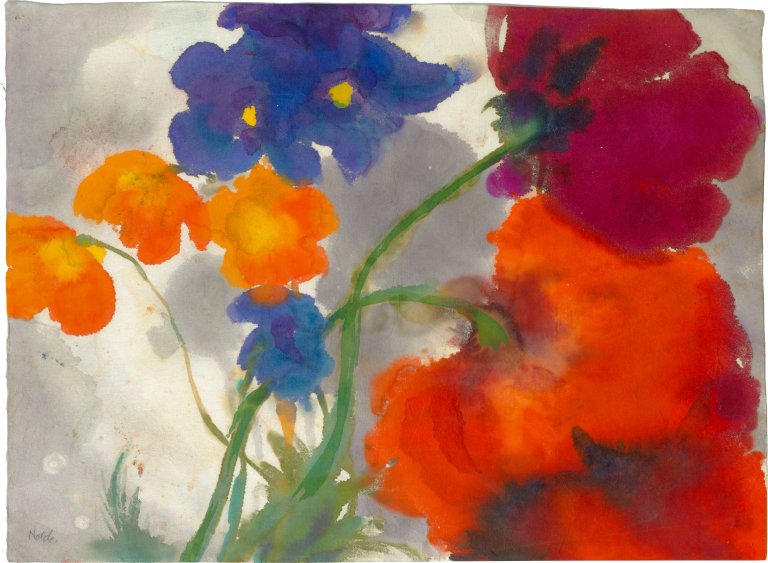
”Sommerblumen”.
Estimate:
EUR 50,000
- 70,000
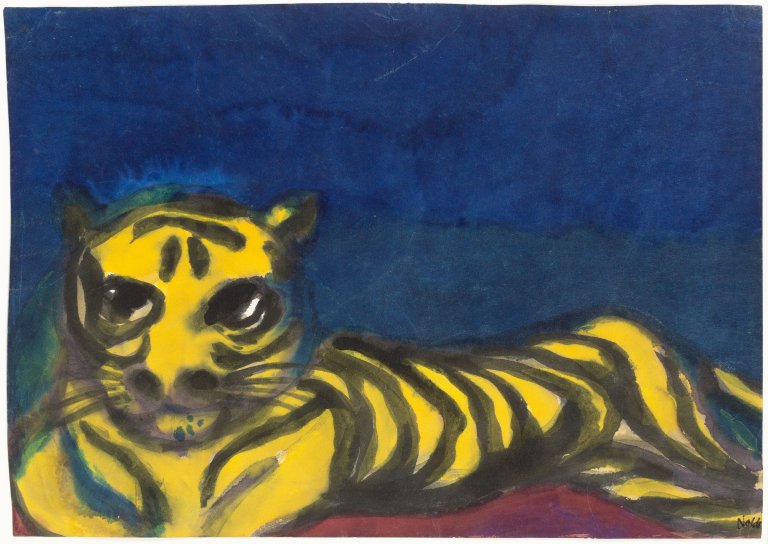
Lot
343
”Tiger”. 1923/24
Estimate:
EUR 40,000
- 60,000
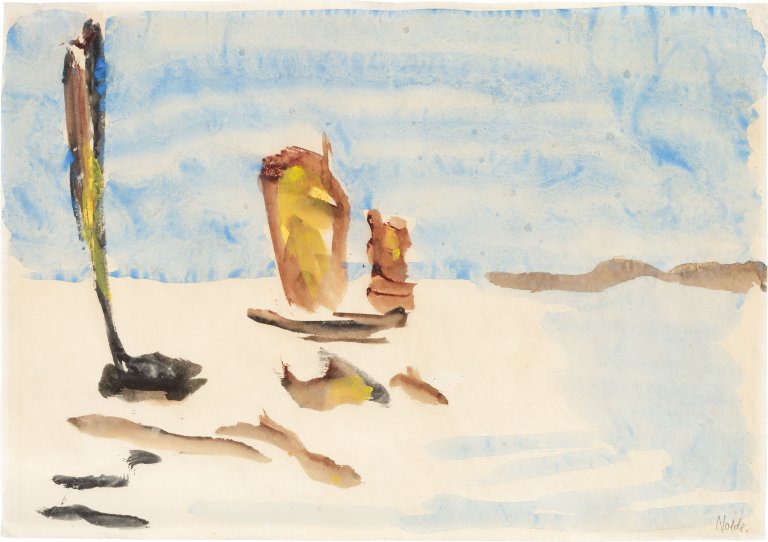
Lot
344
”Dschunken”. 1913
Estimate:
EUR 20,000
- 30,000
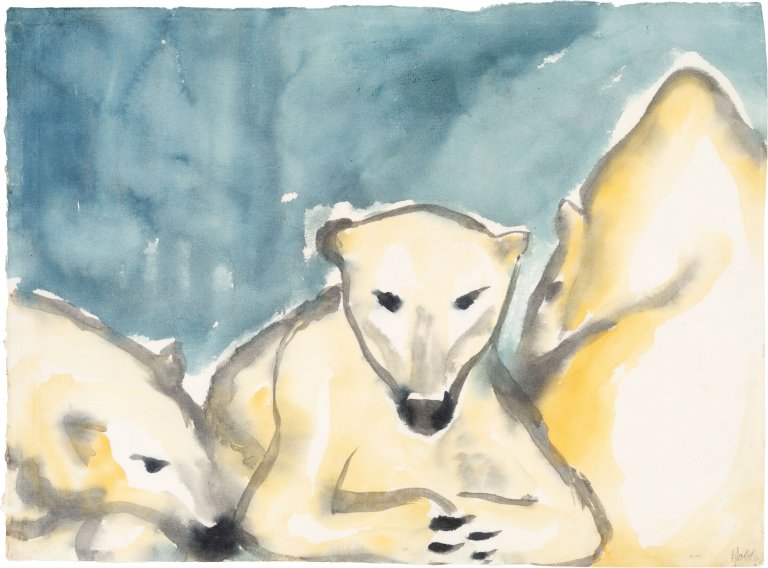
Lot
348
”Eisbären”. 1923/24
Estimate:
EUR 40,000
- 60,000
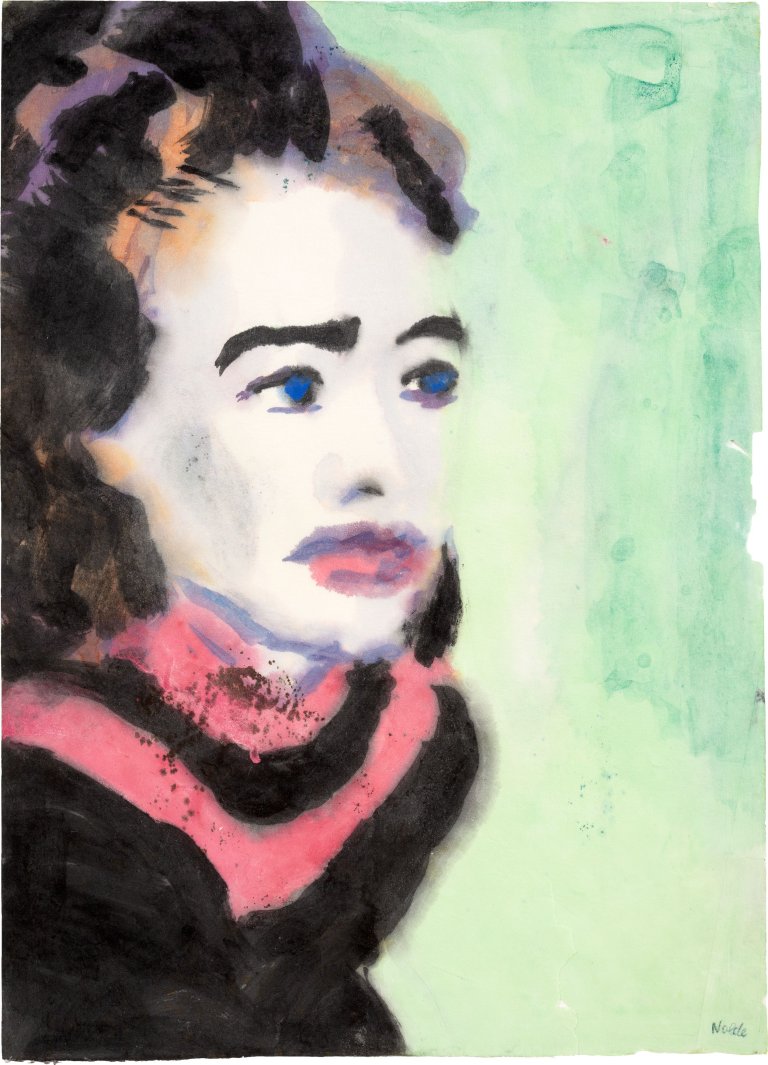
Lot
349
”Frauenbildnis Jolanthe Nolde”. Circa 1948-55
Estimate:
EUR 30,000
- 40,000
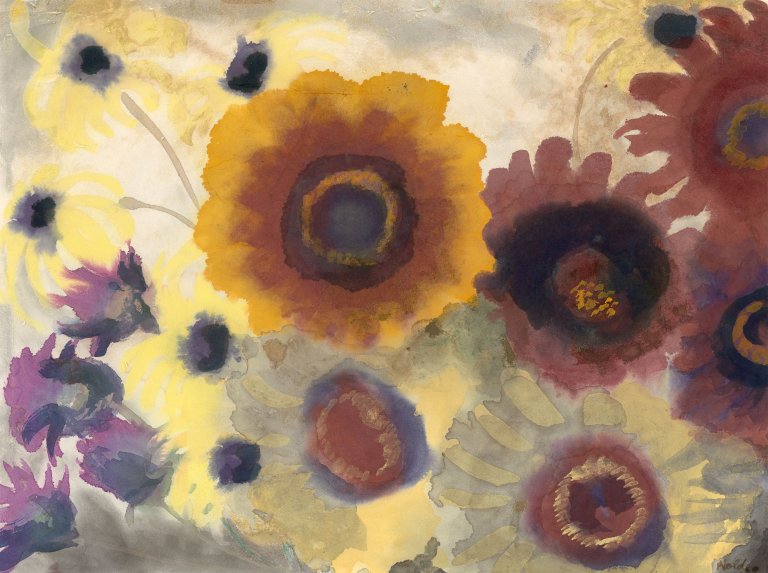
Lot
352
”Sonnenblumen (gelb und rot)”. Circa 1935/1940
Estimate:
EUR 40,000
- 60,000

Lot
2612
”Segler”. 1907
Estimate:
EUR 3,000
- 4,000
Sold for:
EUR 3,483
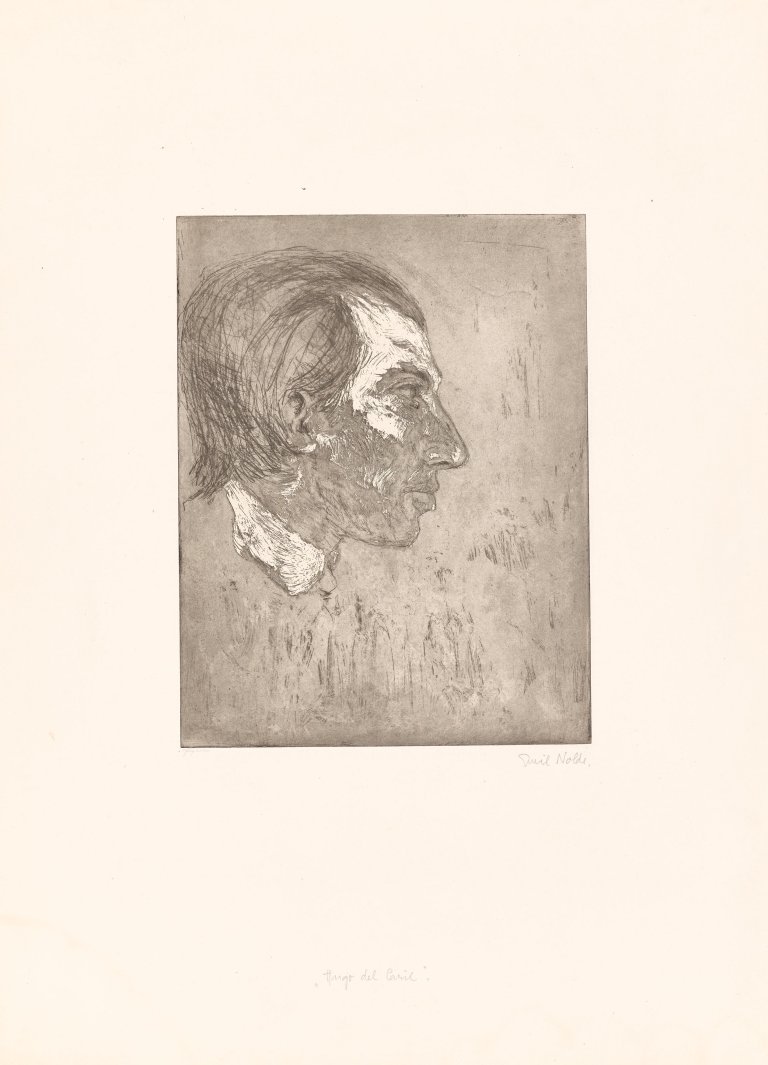
Lot
2613
”Hugo del Caril”. 1908
Estimate:
EUR 1,800
- 2,000
Sold for:
EUR 1,290
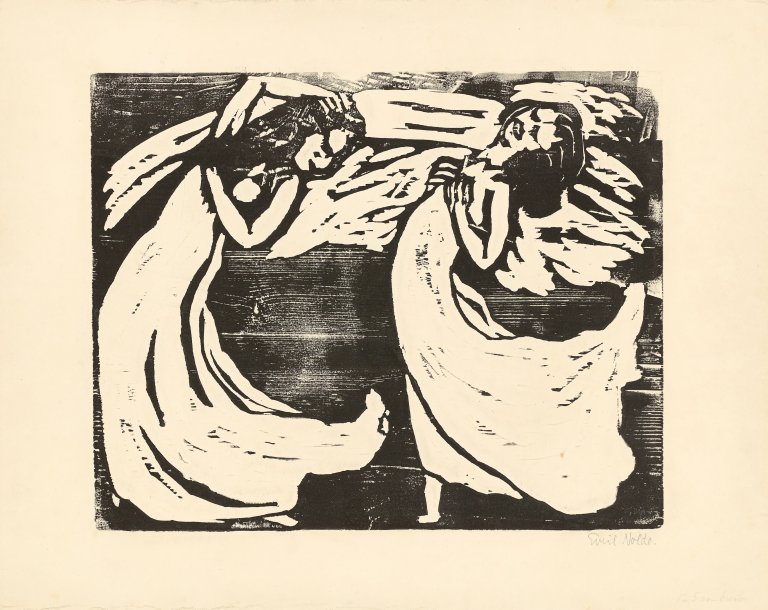
Lot
2614
”Tänzerinnen”. 1917
Estimate:
EUR 6,000
- 8,000
Sold for:
EUR 6,450
Subject to change - Please refer to our conditions of sale.