
Lot
304
Hintermauer near Meissen 1805 – 1864 Dresden
Moonlit Landscape. 1862

Background:
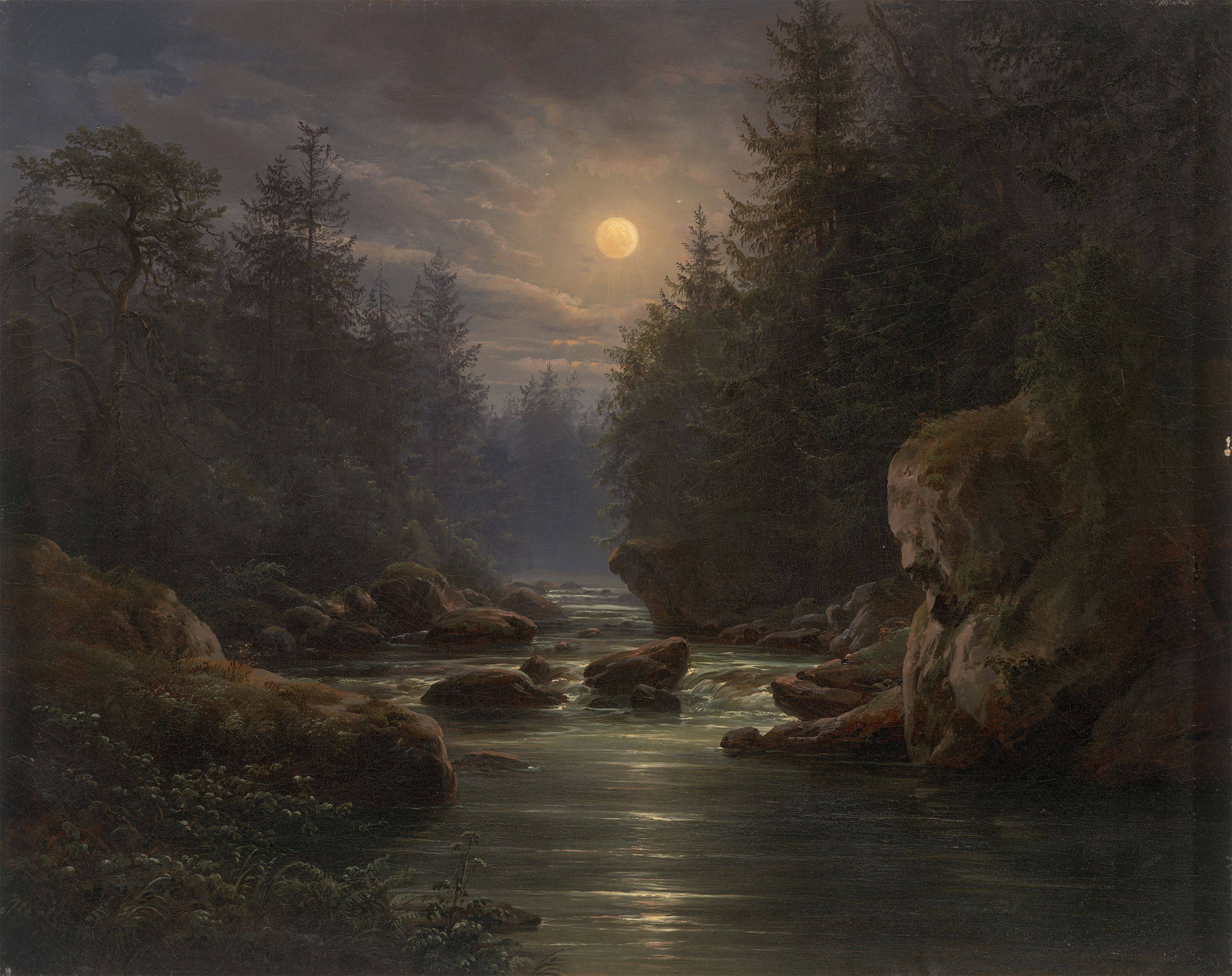

Background:
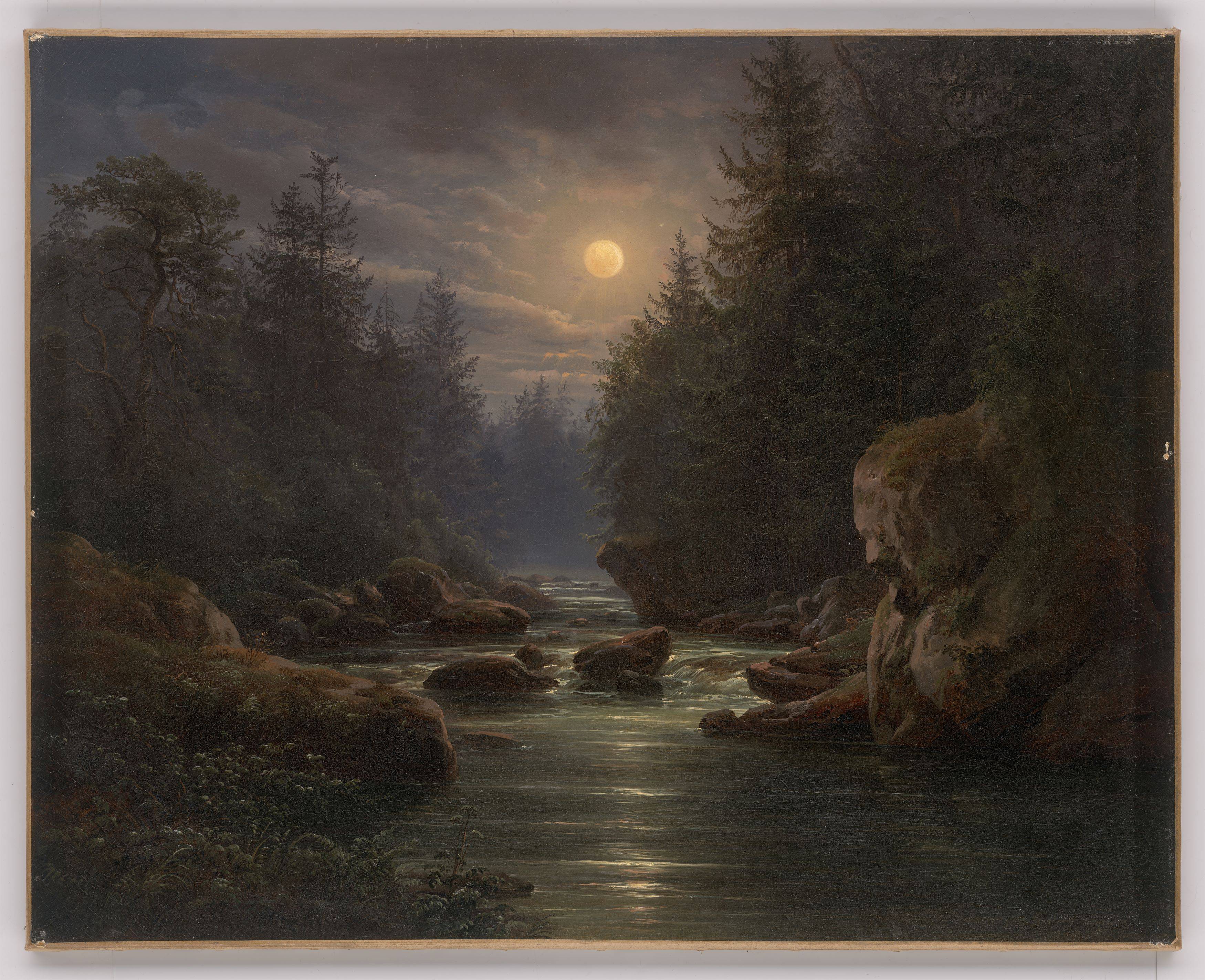

Background:
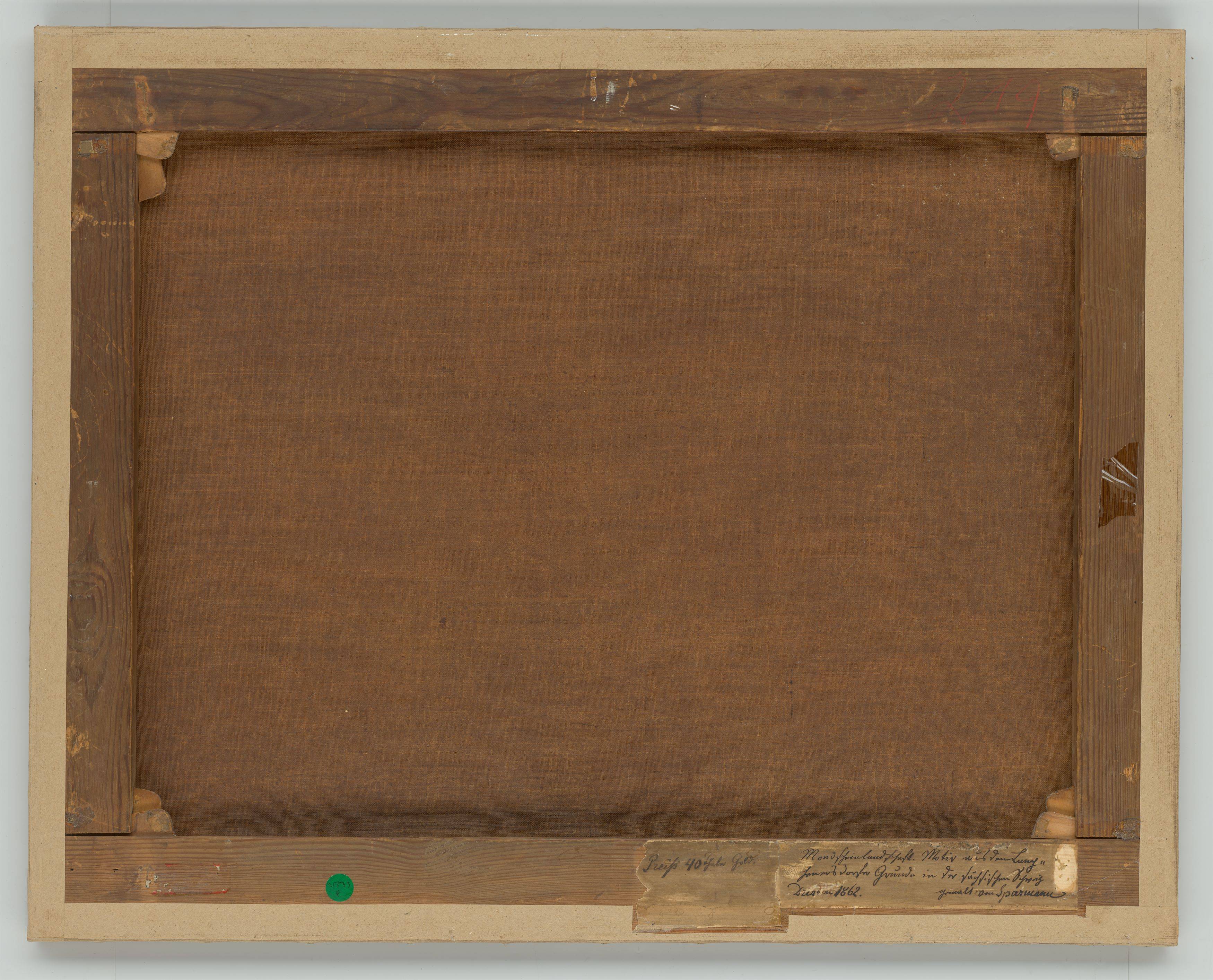

Background:

Estimate:
EUR 8,000
- 12,000
USD 8,990
- 13,500
Auction 379
Friday, 27.11.2026, 11:00 AM
Request condition report
Ask our specialists
Private Collection, Berlin
Carl Christian Sparmann – “Nature is the best teacher after all”
When the 13-year-old Carl Christian Sparmann began his apprenticeship at the drawing school of the porcelain manufactory in Meißen in the autumn of 1818, Johan Christian Clausen Dahl, a native of Bergen, Norway, had only just arrived in Dresden. The 30-year-old artist initially viewed the famous city of art and culture on the Elbe merely as a temporary stopover. He stayed for nearly two years and subsequently traveled to Italy after marrying a woman from Dresden, before settling permanently on the Elbe upon his return. Dahl’s residence in the city became the prerequisite for several groundbreaking changes in Dresden painting at the time. His exceptional aptitude as a teacher and his artistic example exerted a significant influence on the younger generation of artists, so that today one can rightly speak of an independent and widely influential Dresden school of Dahl. The newcomer Dahl established a close friendship with Caspar David Friedrich after only a few weeks. When Dahl moved into his apartment and studio at An der Elbe 33 in 1823—where Friedrich had already been living and working for three years—this influence proved doubly stimulating, as students usually came into contact with both masters and their works. This was also the case for Carl Christian Sparmann, as Dahl added a postscript to a letter written to him in 1825: “Friedrich sends his regards.” (Letter to Ermatingen near Konstanz, March 23, 1825). Thus, that house on the Elbe became the true epicenter of Dresden landscape painting during the Romantic era.
We do not know exactly when Sparmann established a personal connection with Dahl, Caspar David Friedrich, and Carl Gustav Carus. However, Sparmann’s participation in the annual Academy exhibitions, which offered students in particular an excellent opportunity to gain public recognition for their early works, provides certain insights into his development. In 1820, the 15-year-old Sparmann, still a student at the Meißen drawing school, was represented there with “two landscapes … washed in sepia.” In 1821, he exhibited for the first time as a student of the Dresden Academy, presenting a Swiss landscape. In general, it is striking that Sparmann’s student works were landscapes from the very beginning, revealing a close connection to Dahl’s artistic approach. Dahl had been hailed as a “new Ruisdael” upon his very first appearance in Dresden. It is therefore not surprising that an aspiring landscape painter found excellent opportunities for his own training here.
Evidently through Dahl’s mediation, the 19-year-old Sparmann obtained a position in 1824 as a drawing teacher for Prince Louis Napoleon, the future Emperor Napoleon III, who was living in exile at Arena Castle (Schloss Arenenberg) in Switzerland (cf. Wilhelm Loose, Lebensläufe Meißener Künstler, in: Mittheilungen des Vereins für Geschichte der Stadt Meißen, II, 2, pp. 283-284; Hans J. Kluge: Der Landschaftsmaler Carl Christian Sparmann (Meißen 1805 – 1864 Dresden); seine Tätigkeit in der Schweiz auf Schloß Arenenberg und auf Schloß Lenzburg, Lenzburg, 1983, p. 3). Decades later, as we know from letters, Dahl continued to support Sparmann—who by then was living back in Dresden as an independent artist—with financial loans, because the former student could not make nearly as comfortable a living from his art as the master (cf. the letters from Sparmann to Dahl in the manuscript collection of the SLUB Dresden: Mscr. Dresd. t 3667 and Mscr. Dresd. App. 2837, 14). The connection to Prince Louis Napoleon also endured for a long time. In 1852, when Louis Napoleon was proclaimed Emperor of the French, Sparmann sent him a painting created specifically for the occasion (Letter from Sparmann dated Dec. 12, 1852, manuscript collection of the Leipzig University Library: Slg. Schubert/17/23). Dahl’s patronage thus had lasting consequences, and the teacher continued to monitor the student's artistic development even after sending him off to Switzerland. A letter signed “Your friend Dahl,” written on March 23, 1825 (manuscript collection of the SLUB Dresden), contained advice on how Sparmann could use his time as a drawing teacher on Lake Constance to further his own career: “You have found the path you ought to follow, and nature is the best teacher after all” (ibid.). Sparmann was encouraged to include “even the sky with its passing formations of clouds”: “This has its merits in several respects …, for one cannot compose the way nature does, after all. – ” (ibid.). Furthermore, Sparmann’s stay in Switzerland was of lasting significance not only for the beginning of his career but also for the thematic repertoire of his landscapes; the mountains, “the lakes and valleys with streams rushing wildly over rocks, the sweeping vistas from the mountains, and the atmospheric moods, thunderstorms, and mists” became “the decisive experience for his artistic output.” (Kluge, op. cit., p. 8).
Subject to change - Please refer to our conditions of sale.