Lot
54
Rottluff 1884 – 1976 Berlin
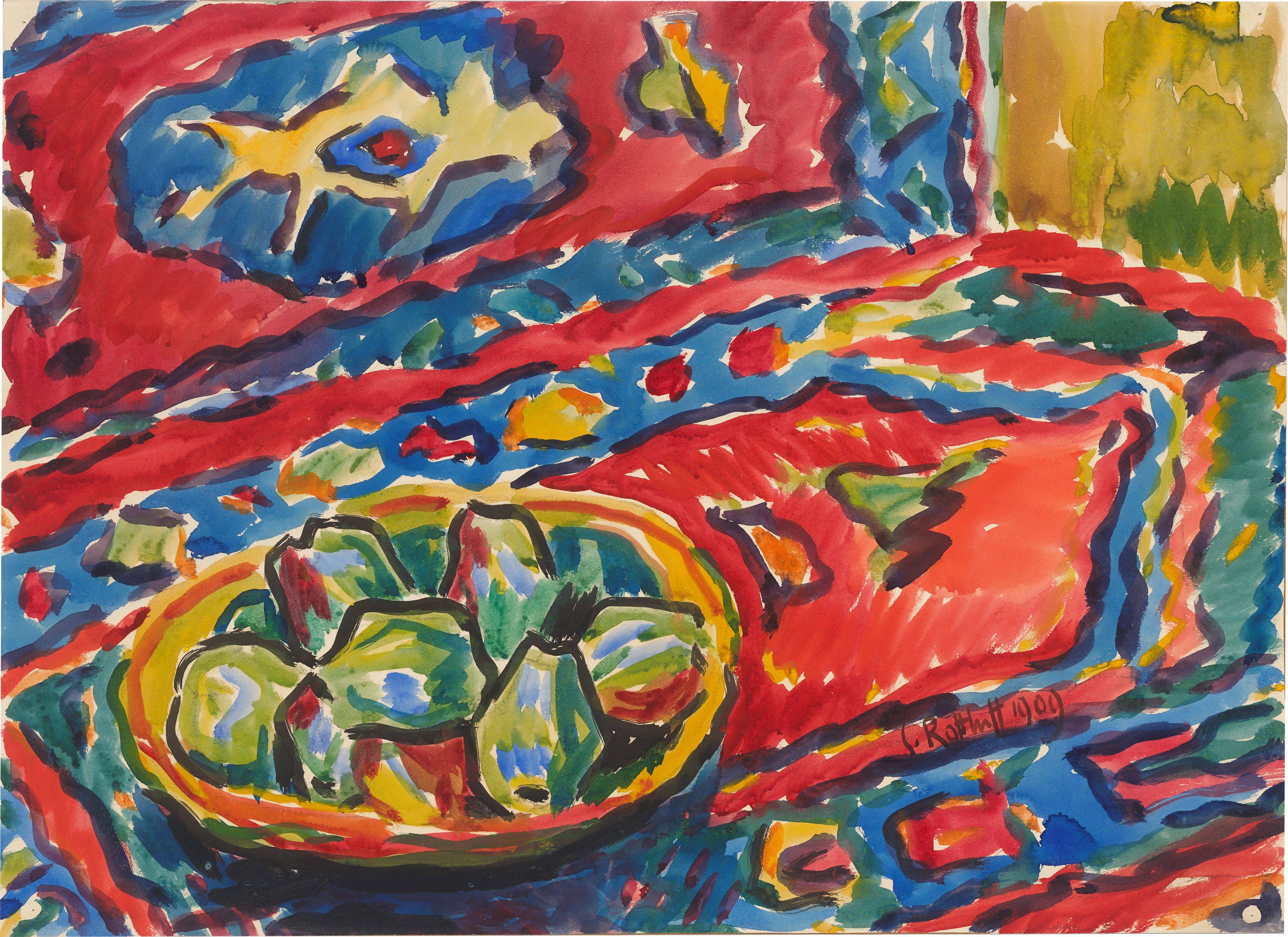
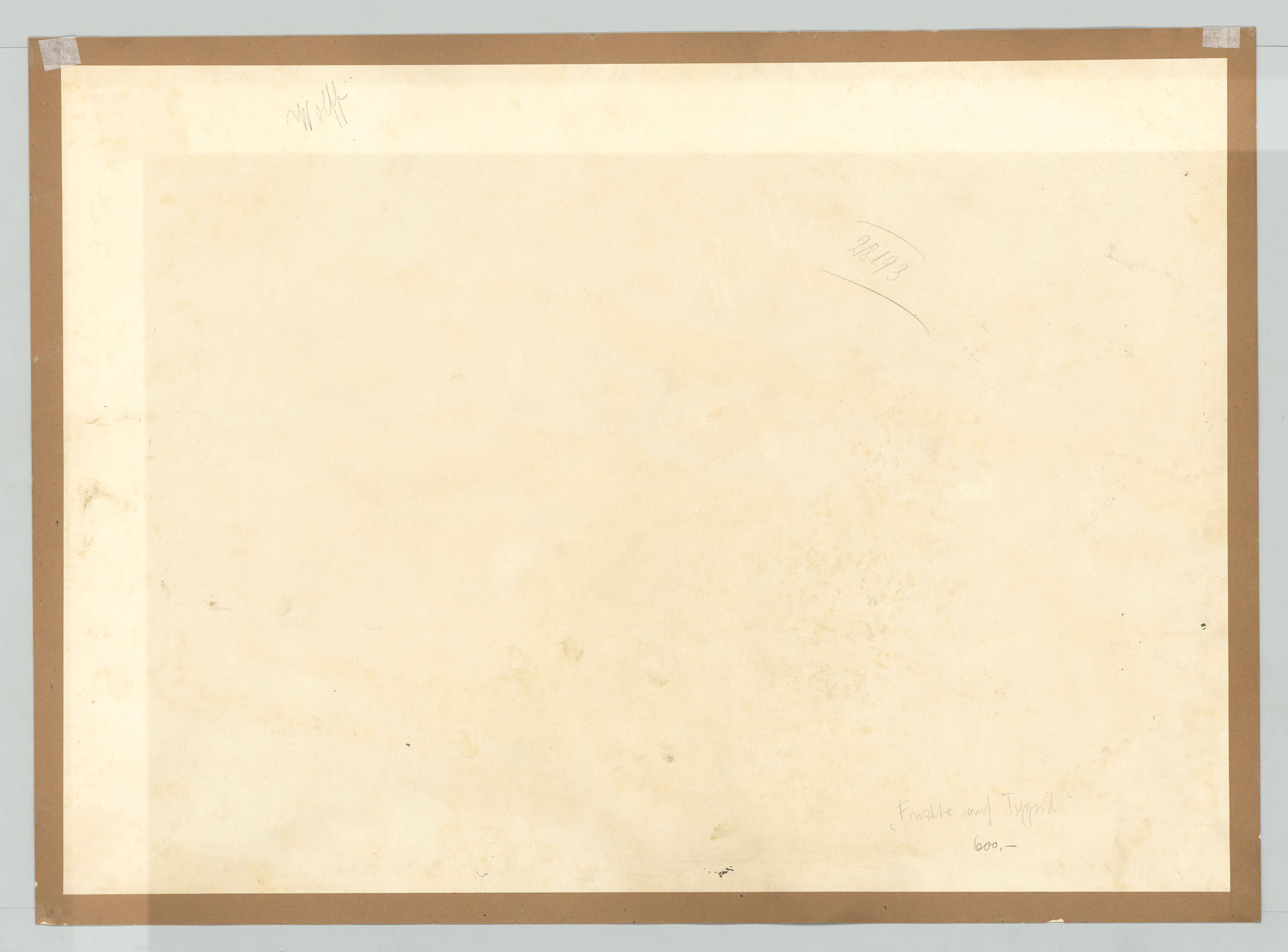
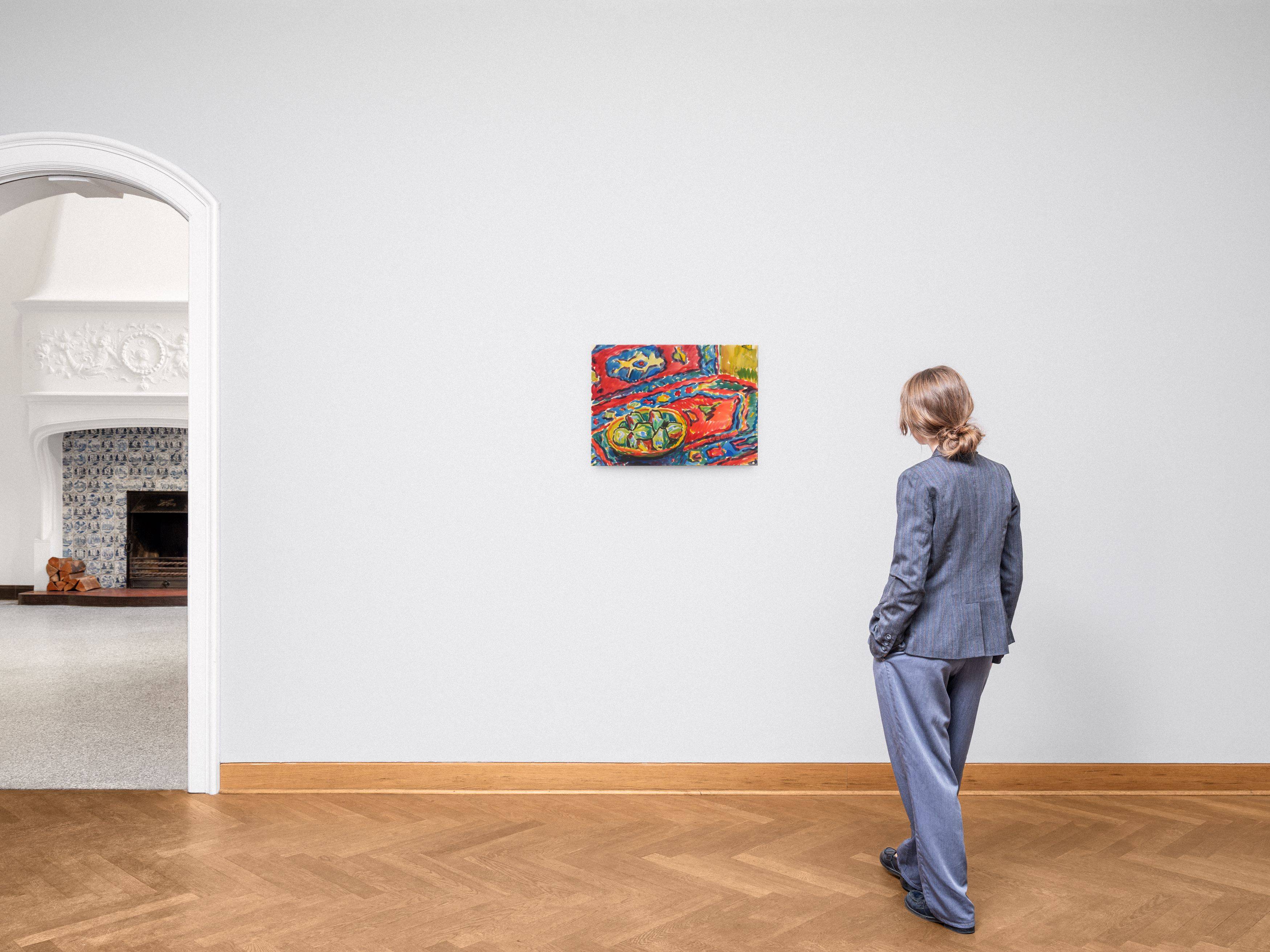
”Früchte auf Teppich”. 1909

Background:

Background:

Background:

Background:
Estimate:
EUR 120,000
- 150,000
USD 135,000
- 169,000
Auction 378
Thursday, 26.11.2026, 6:00 PM
Request condition report
Ask our specialists
We would like to thank Christiane Remm, Berlin, for kindly providing additional information.
Hellmuth Wolff, Halle (acquired from the artist, thence by descent to the present owner, 1987–2026 as long-term loan in the Kunstmuseum Moritzburg, Halle/Saale)
Expressiv! Die Künstler der Brücke. Die Sammlung Hermann Gerlinger. Wien, Albertina, 2007, cat. no. 12, p. 46/47, ill. (“Früchtestilleben (Stilleben mit Birnen)")
Christiane Remm: Karl Schmidt-Rottluff. Aquarelle. Munich, Hirmer, 2011, ill. 14, p. 24
"Ganz grosse Klasse Cezanne!" (Cezanne, absolutely first-rate!): as late as 1926, Karl Schmidt-Rottluff was still enthusing about the works of the French master, which had influenced the German Expressionist's artistic expression in his early period (Karl Schmidt-Rottluff to Ernst Beyersdorff, letter of 8 April 1926, quoted in: Gerhard Wietek: Schmidt-Rottluff. Oldenburger Jahre 1907–1912, Mainz 1995, p. 165).
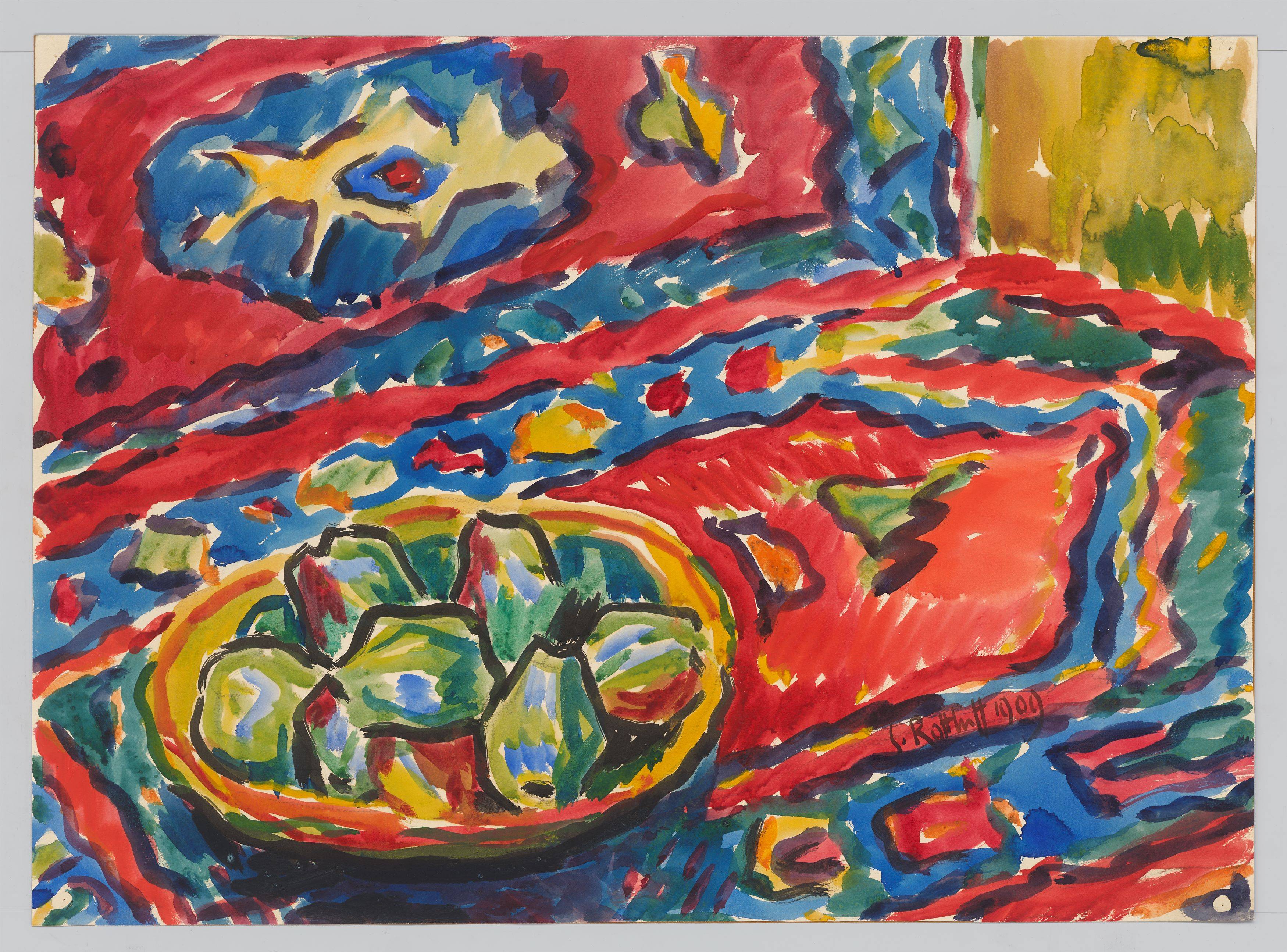
Cézanne's direct influence is evident in the present large-format watercolour of 1909. The still life with pears, set against a colourful carpet, oscillates between the shimmering colour of Expressionism and the composure of the composition. In the watercolours of this year, Schmidt-Rottluff used dark contour lines for the first time to stabilise the forms, as here in the outlines of the pears. Complementary contrasts and dynamic brushwork leave the viewer's eye hardly any rest in this richly coloured, museum-quality work.
Dated and signed within the image, the watercolour thus marks an important stage in the artist's development. Having begun to free himself from the visual experience of Vincent van Gogh's painting, Schmidt-Rottluff carried out artistic experiments in 1909 in search of a new language of form and composition. Unlike oil painting, watercolour allowed him to work more cheaply and more quickly. At about the same time as the present work, he also made the watercolour "Stillleben mit Äpfeln und Henkelkrug" (Still Life with Apples and Handled Jug), which he executed in two versions; one is now in the Staatliche Graphische Sammlung München.
During this experimental phase, Karl Schmidt-Rottluff also visited the large Cézanne exhibition at Kunstsalon Cassirer in Berlin, where some 40 works were shown in November and December 1909. On a postcard to his artist friend Erich Heckel, he sketched one of the Frenchman's landscapes and noted: "At Cassirer Cezanne – some very good ones" (KSR to Erich Heckel, postcard with sketch after Cézanne, 29 November 1909, Altonaer Museum Hamburg, quoted in: Gerhard Wietek: Karl Schmidt-Rottluff. Zeichnungen auf Postkarten, Cologne 2010, p. 77). On the occasion of the Cézanne exhibition, the critic Walther Gensel expressly singled out his still lifes, in which Cézanne had proved himself "the opposite of an Impressionist [...], namely a complete stylist of colour". The artist, Gensel wrote, had called on others not to emulate him in what he painted, but in what he wanted to paint (W.G.: Von Ausstellungen, in: Die Kunst für Alle, vol. 25, no. 8, 15 January 1910, p. 190). In the present watercolour, Schmidt-Rottluff responds congenially to this appeal to pursue that aspiration in his own way. Gloria Köpnick
Subject to change - Please refer to our conditions of sale.