
Lot
21
Aachen 1887 – 1965 Düsseldorf
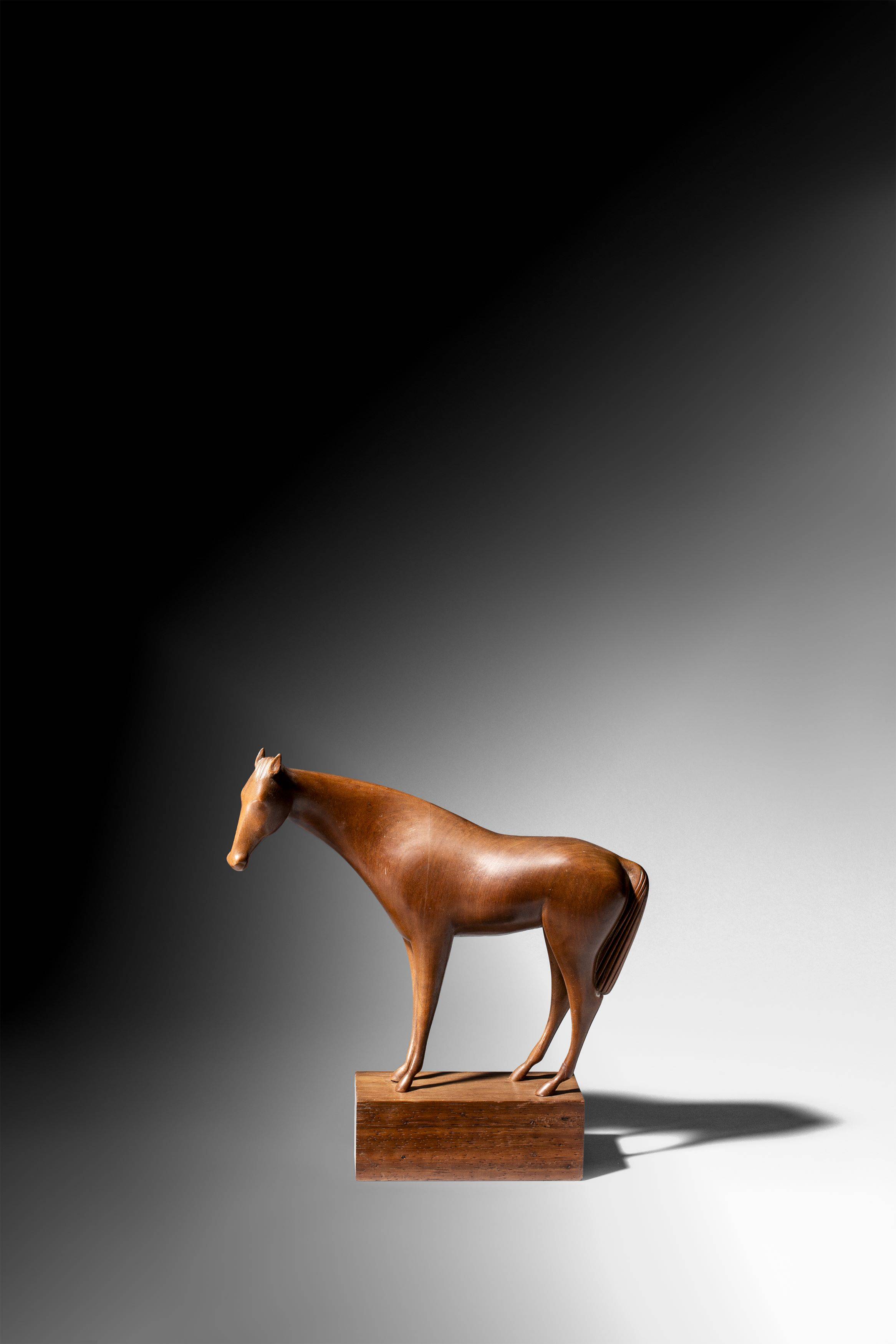
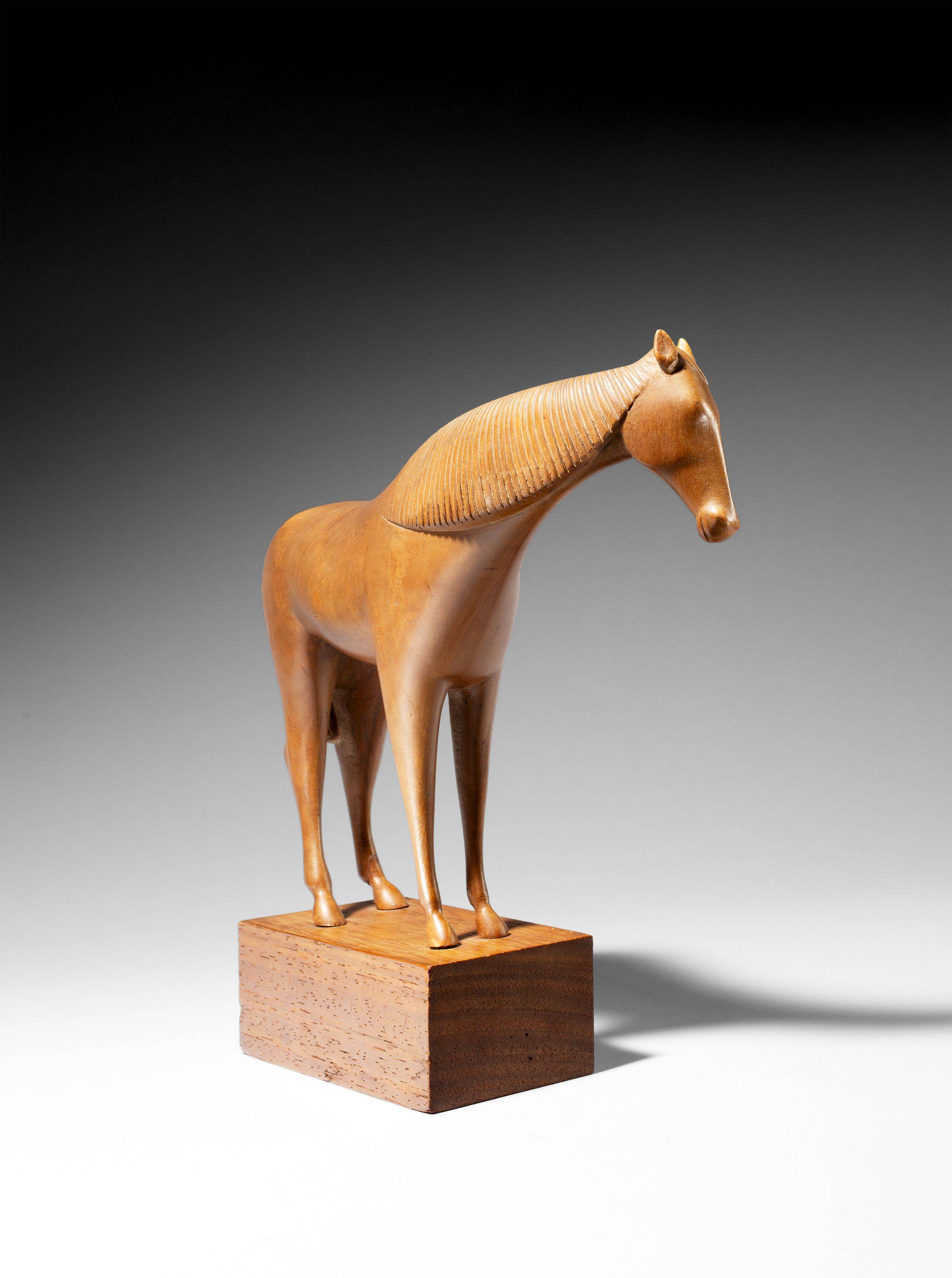
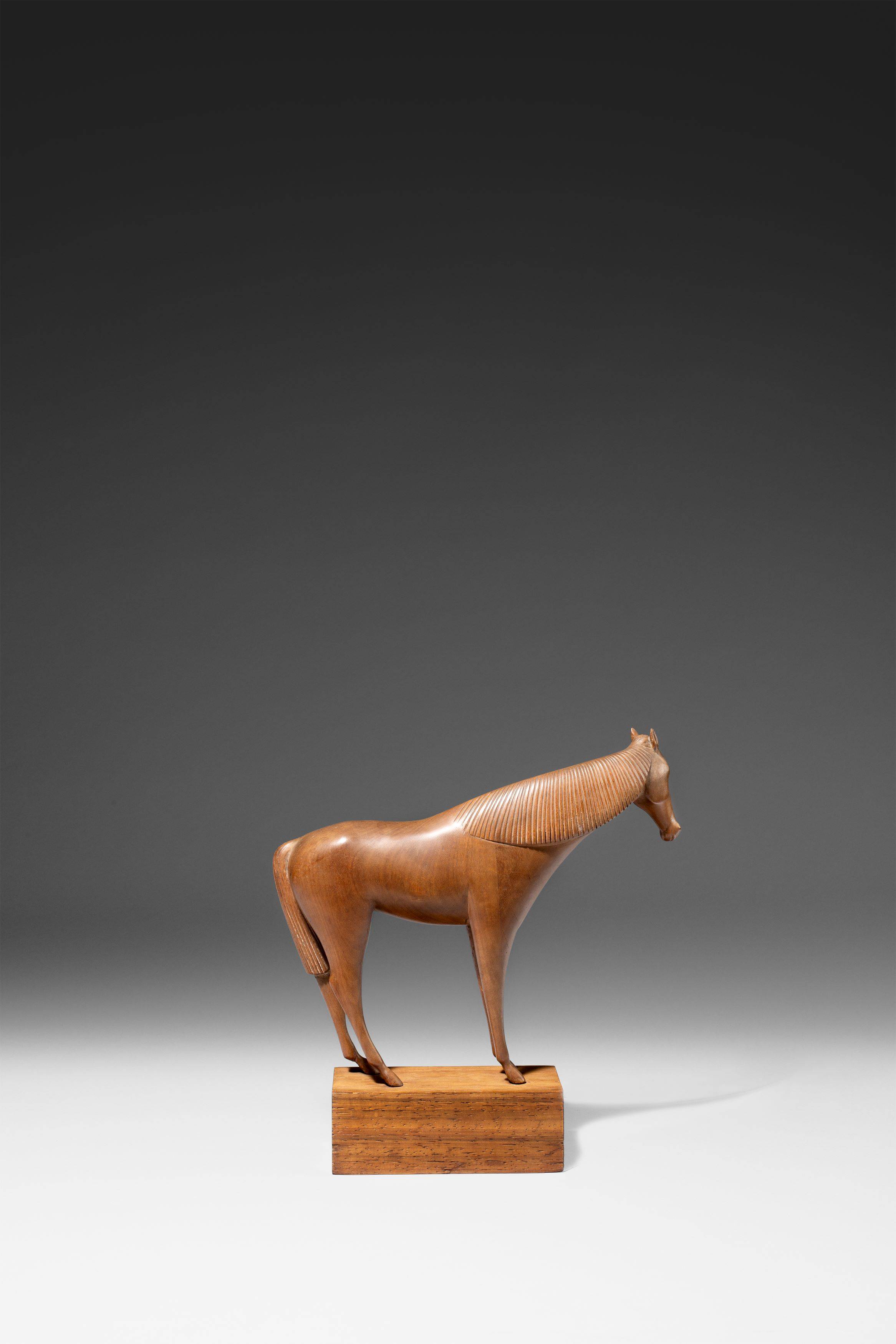
”Pferd”. 1930

Background:

Background:

Background:
Estimate:
EUR 200,000
- 300,000
USD 225,000
- 337,000
Auction 378
Thursday, 26.11.2026, 6:00 PM
Request condition report
Ask our specialists
Lisa Henkel-Maskell/Henkel-Petersen, Dusseldorf (until 1998) / Ursula Schulz-Dornburg (until 1999, inherited from the above-mentioned) / Thomas Olbricht (Olbricht Collection), Essen (until 2019, acquired from the above-mentioned) / Private Collection, Brandenburg (2019 acquired from the above-mentioned)
Group Exhibition: Ewald Mataré und Heinrich Nauen. Cologne, Galerie Dr. Werner Rusche, 1946, no cat. no. / Mataré und seine Schüler. Beuys, Haese, Heerich, Meistermann. Berlin, Akademie der Künste; Hanover, Kestner Gesellschaft; Nijmegen, Museum Nijmegen, and Krefeld, Museum Haus Lange, 1979, cat. no. 14, ill. p. 39 / Ewald Mataré. Eine Werkübersicht. Dusseldorf, Akademie-Galerie – Die Neue Sammlung, 2005, cat. no. 19, ill. / „Nichts ohne Natur" – Ewald Matarés Tierplastiken. Berlin, Kunsthaus Dahlem; Hamburg, Ernst Barlach Haus; Neumarkt/Oberpfalz, Museum Lothar Fischer, 2026/27, cat. no. 36 (exhibited in Berlin)
Eduard Trier: Ewald Mataré. 2nd ed. Recklinghausen, Aurel Bongers, 1958, ill. p. 35
Fusion of Form and Nature – Ewald Mataré's "Pferd" from 1930
During his Berlin years, Mataré often travelled to Sylt or to the coast in the summer months. From 1927 his travels took him further north, to Finland. For some time he had been wrestling, in ever new attempts, with the motif of the cow. On arriving in Finland, however, he found that there were few cattle there, and that the animals were not let out to pasture until late in the year. Finnhorses, on the other hand, were everywhere. In 1929 and 1930 he made several sculptures of this motif. The high point was undoubtedly the horse of 1930, number 73 in the catalogue raisonné. Whereas the preceding versions showed the horse standing stiff and motionless with a primeval heaviness, the version in amaranth wood brought a light, elegant movement into the sculptural form. A tension runs from the compact tail and the staggered hind legs, through the narrow body, into the elongated neck that tapers towards the front and ends in a head turned curiously to the side. The pricked ears make its alertness even clearer. At first the impression is one of monumental presence, until the eye penetrates more deeply into the animal's life, which at first seems hidden. Longer contemplation reveals the horse as an individual.
Mataré created lying, standing and grazing cows, and was rarely satisfied. The artist always started from nature, in order to arrive at a design based on a unity of observation and form. With the horses, this constant struggle for the form that had to be latent in nature evidently did not occur.
Obtaining suitable wood was a problem. Mataré preferred hardwoods of the kind that grow in the tropics; the amaranth wood for the 1930 horse came from South America. Carving it was strenuous and also had to be done with the utmost precision. Wood was not always available in the desired size, and deliveries, often from Hamburg, took time. On 28 July 1929 Mataré noted: "I have now got the wood, but bringing it here takes days and days, and so I am forced to sit idle, eager to work." When he carved the horse in the summer of 1930, he chose a wood that matched the colour of the horse's coat. Wherever possible, he took the animal's natural colour into account when choosing the wood, and the chestnut brown of the Finnhorse could be drawn from the block of amaranth. The horses he was able to observe and study in Finland belonged to a highly versatile breed, used for farming, as draught horses or for riding. Horses were ubiquitous in 20th-century painting and sculpture. They could take on unusual colours, as with Franz Marc, whose yellow, blue and red animals are further tinged with a mystical aura arising from their fusion with the realm of nature. The opposite model is found in Renée Sintenis, who captured the playfulness of animals, especially foals. She rejected any tendency towards monumentality, and from 1915 onwards she made animal sculptures continuously. Between these positions there was plenty of room for changing approaches and styles. If one looks at the broader panorama of animal sculpture, particularly in Germany, as it presented itself after 1900, August Gaul stands at the beginning. From the late 19th century he had depicted mainly undomesticated animals in sculpture, including lions, bison, otters, penguins and sea lions. Although he left out many details, his sculptures convey a concentrated view of the animals, which lose nothing of their natural form; the individual animal remains visible. Following Gaul, the Berlin sculptor Gerhard Marcks modelled a number of animal sculptures in his early years around 1910, before the human figure became his central theme. But he returned to animals again and again later on, often with a touch of humour.
No other sculptor of the 20th century devoted himself as consistently to animals in sculpture as Ewald Mataré. He had begun as a painter in Berlin, where he had lived since 1907. Born in Aachen, he was drawn back to the Rhineland in 1932. Mataré's breakthrough as a sculptor came late. The year 1930 marked a decisive step, made possible by an exhibition at Ferdinand Möller's gallery in Berlin, followed by a second in 1931. Mataré's work attracted increasing attention during this period. At that time he also received the commission for a relief that was prominently installed in the house of the architect Erich Mendelsohn (now in the Neue Nationalgalerie, Berlin). Although some success had thus arrived, the Mataré family's material situation remained insecure, and would remain so for a long time. Mataré's daughter Sonja, born in 1926, later became a great support to her father. She worked as a goldsmith, an occupation closely related to her father's work, and from 1944 they collaborated on various commissions and occasions.
Apart from occasional visits, his wife Hanna and daughter Sonja mostly stayed in Berlin while Mataré was working in northern Europe. He spent the summer of 1930 in Finland, living in simple lodgings, for example with farmers or in small guesthouses. There was no money for comfort, although the cost of living in Finland was lower than in Berlin. His diaries frequently deal with his precarious financial situation, and his mood swung back and forth.
Diary entries from 1929 serve as an example. On 17 August he wrote: "This time, though, I was entirely free of money worries, and that gave me a great deal of stability […]. It is incredible what a difference this freedom from care makes." On 2 July 1929, by contrast, Mataré had written: "But what does it mean to work in peace when I see from day to day that more money is being spent and no lasting source presents itself? Yet it is precisely here that one must not lose one's nerve." Mataré had just received 1,000 marks from the Ministry of Culture, but his pleasure at this was dampened by the situation. A diary entry of 7 July 1929 shows how much the unsettled nature of his existence weighed on him: "Sometimes I have no desire at all to be artistically active; if one regards working in the artistic sense as a profession, it is no longer possible at all." Despite such occasional doubts, he carried on working undeterred.
The diaries also show Mataré as a thinking artist who nevertheless never undervalued craftsmanship as the foundation of his work. Two names stand out: Goethe and Dürer. Both forerunners are discussed in a diary entry of 1 June 1942. On Goethe he wrote: "Goethe probably wrote nothing that he had not actually, truly and bodily experienced, or seen and observed. He possessed the tremendous self-restraint to depict only his own self, that is, to work with material from his immediate earthly surroundings and to radiate it back filtered and clarified." On Dürer: "His view of the world was determined by moving from the individual object towards the whole, whereas the 20th century, in the end, starts only from the whole and grants the individual within it only a modest place." Running like a thread through Mataré's reflections is the concern that the particular or individual will be lost in the whole. At one point he calls this "social thinking", which he believed should be avoided.
His aim was to attain a fusion of wholeness and multiplicity that could almost be called mystical. This is why religion was not foreign to Mataré. Herein also lies the decisive difference from his contemporary Gerhard Marcks, who, especially in his animal sculptures from the 1920s onwards, remained a sober Berliner. Siegfried Gohr
Subject to change - Please refer to our conditions of sale.