Lot
308R
Elberfeld 1837 – 1887 Rome
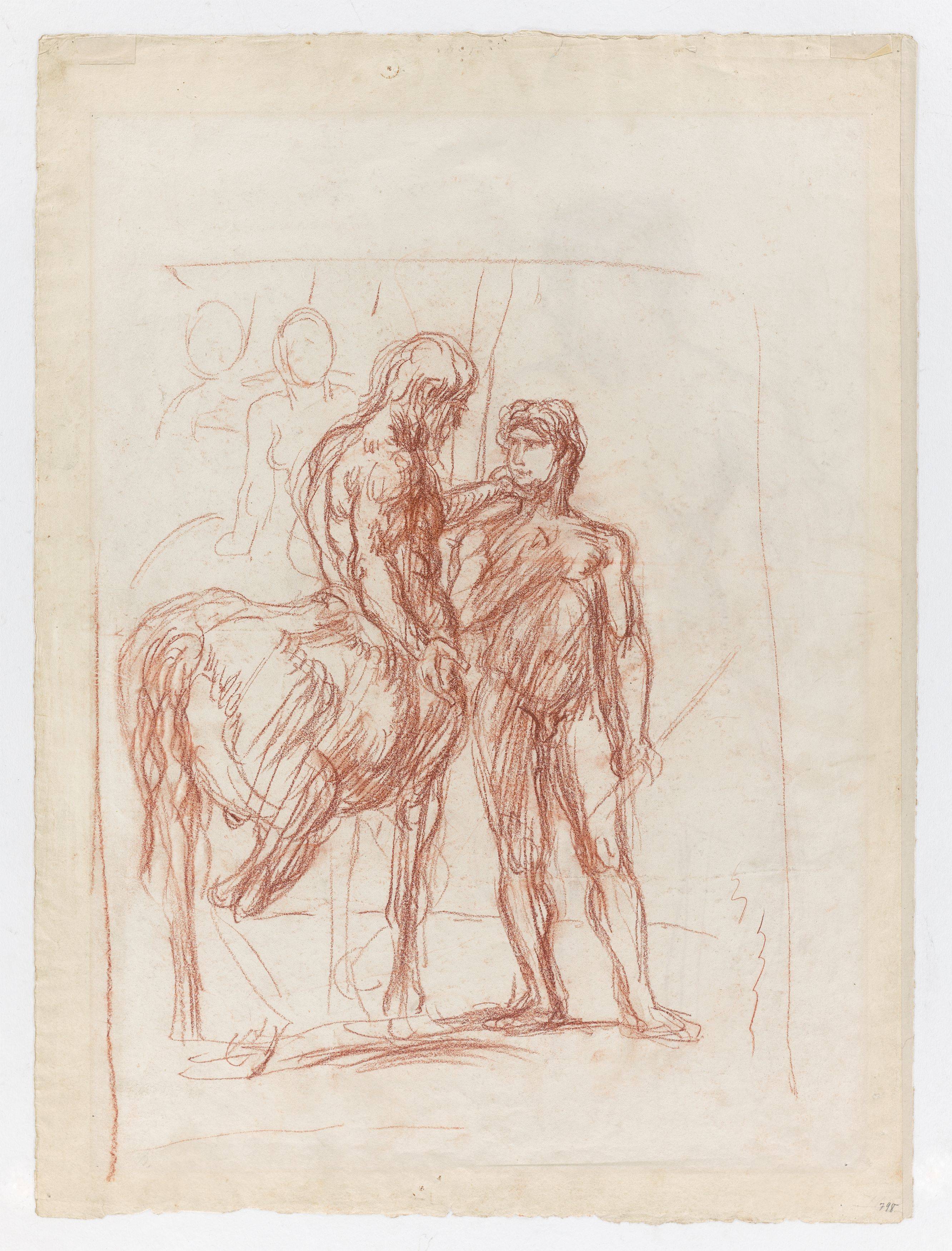
”Cheiron und Achilles (Verso: Sitzende Frau)”. 1883

Background:


Background:

Background:

Background:
Estimate:
EUR 8,000
- 12,000
USD 8,990
- 13,500
Auction 379
Friday, 27.11.2026, 11:00 AM
Request condition report
Ask our specialists
We would like to thank Dr. Angelika Wesenberg, Berlin, for kindly providing additional information.
Mary Balling, Partenkirchen / Peter Nathan, Zurich / Private Collection, Switzerland
Europäische Meister 1790–1910. Kunstmuseum Winterthur, June/July 1955, cat. no. 258 / Hans von Marees. Gemälde und Zeichnungen. Munich, Bayerische Staatsgemäldesammlungen, Neue Pinakothek, 1987, cat. no. 91, ill. p. 297
Hans von Marées, born in 1837 and thus roughly the same age as the leading French Impressionists, pursued an entirely different artistic program in his adopted home of Rome: rather than rendering impressions of everyday life, he created timeless idylls, frequently drawing on classical antiquity. Through large, symbolic figures acting calmly alongside one another, or mostly side by side, he sought to revive the spirit of a supposedly harmonious prehistoric era.
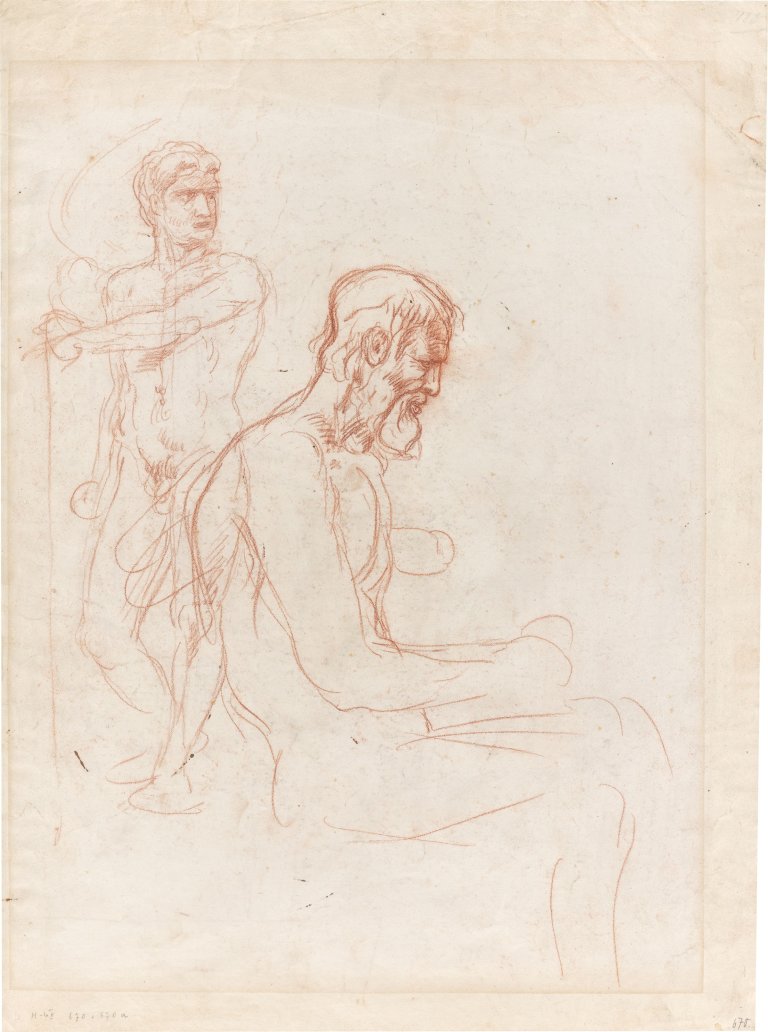
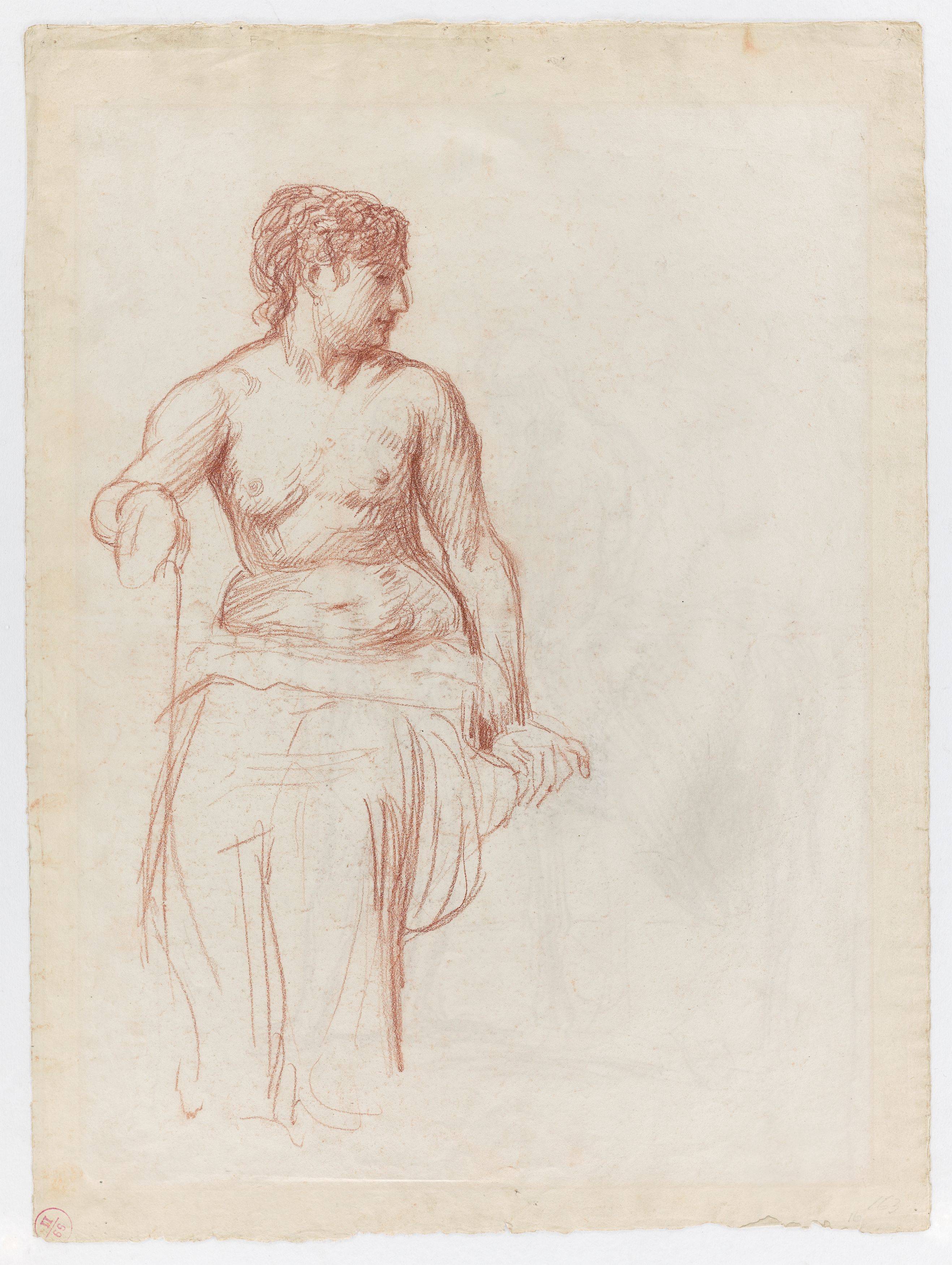
From the 1870s onward, alongside his painterly oeuvre and beginning with his work on the frescoes for the Zoological Station in Naples, he produced thousands of drawings. Marées used this medium as a means to clarify his concepts. Figures and scenes appear, with only slight variations, in entire series of drafts. Most are executed in soft red chalk (sanguine), which lends the drawings a painterly quality and condenses in color at key points. We can distinguish between fleeting sketches, studies after nature - such as the seated woman on one of the reverses of our pictures - and compositional ideas comprising several idealized figures, such as the couple in front of trees on the reverse of the other sheet. More impressively executed on the front, we see the centaur Chiron and his pupil Achilles. Unimportant details - the horse legs, the peripheral figures - remain merely implied, while the interplay between the two figures is precisely captured through searching layers of lines, thereby also highlighted in color on the sheet. At times, individual figures even served as inspiration for sculptures, such as those studies for the elderly Nestor, the legendary ruler of Pylos. The draftsman's interest here lay in the rendering of the face. Marées himself acted at this time as a Nestor within the circle of artists who revered him, most of whom were sculptors.
Yet, as reported by visitors and his students, Marées himself held his drawings in low esteem. They accumulated until he destroyed them; only random pieces have survived. Early on, however, the exceptional graphic quality of these sheets was recognized, and an independent artistic value was attributed to the convolute. Some even valued them more highly than his paintings, which had become dark and heavy through constant overpainting. The artist’s personality confronts the viewer most directly in these drawings, which were created quickly and almost in passing. A critical eye will also discover "anatomical distortions" (Verzeichnungen), which were unhesitatingly accepted for the sake of psychological or formal expressive value. This freedom from naturalistic correctness, as well as his preference for what ultimately became clearly outlined figures, brings his art close to Modernism. A number of artists at the beginning of the 20th century, both sculptors and painters, drew inspiration from Marées: Karl Hofer, Wilhelm Lehmbruck, Oskar Schlemmer …
Angelika Wesenberg
Subject to change - Please refer to our conditions of sale.