Lot
26
Waldheim, Saxony 1877 – 1947 Berlin
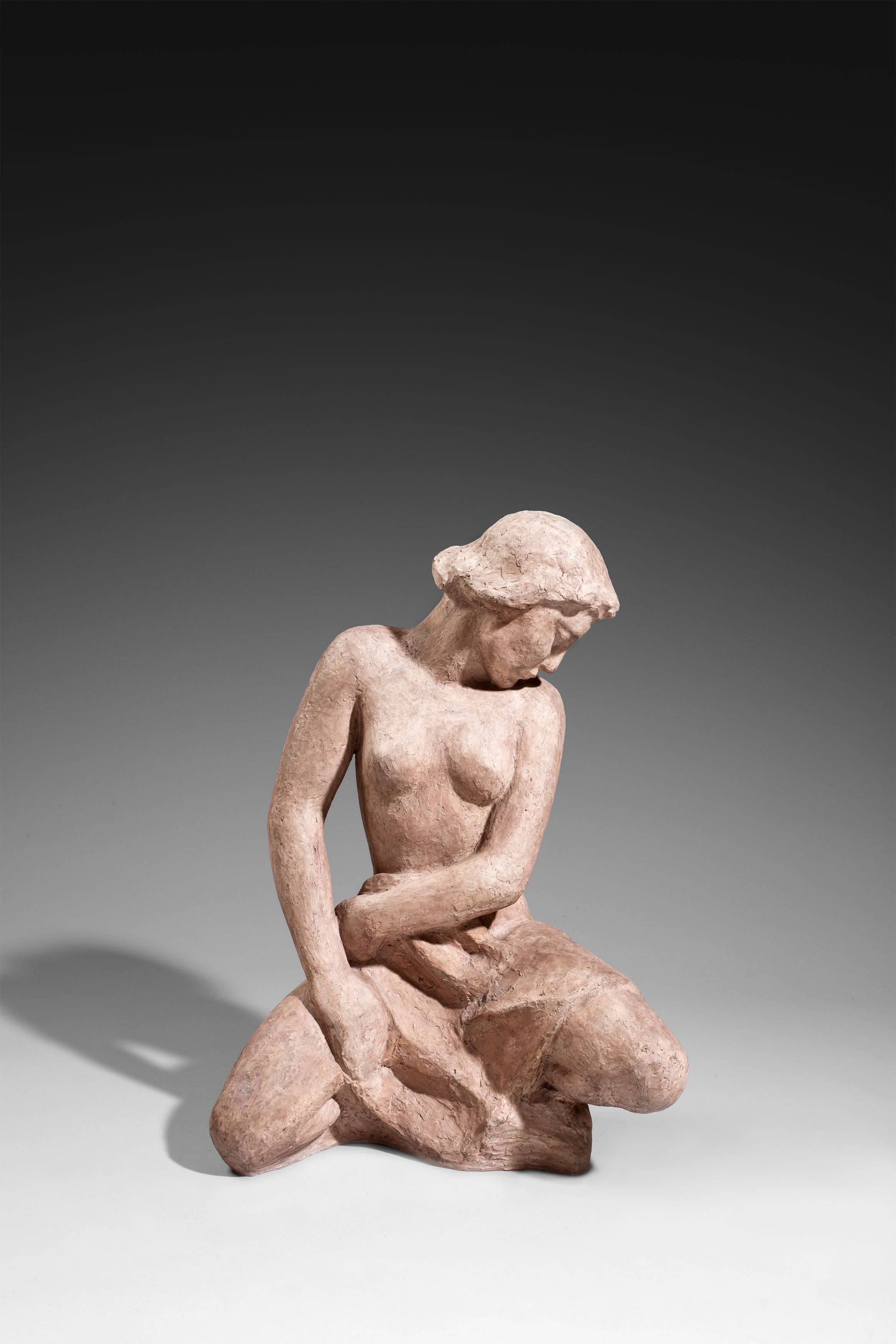
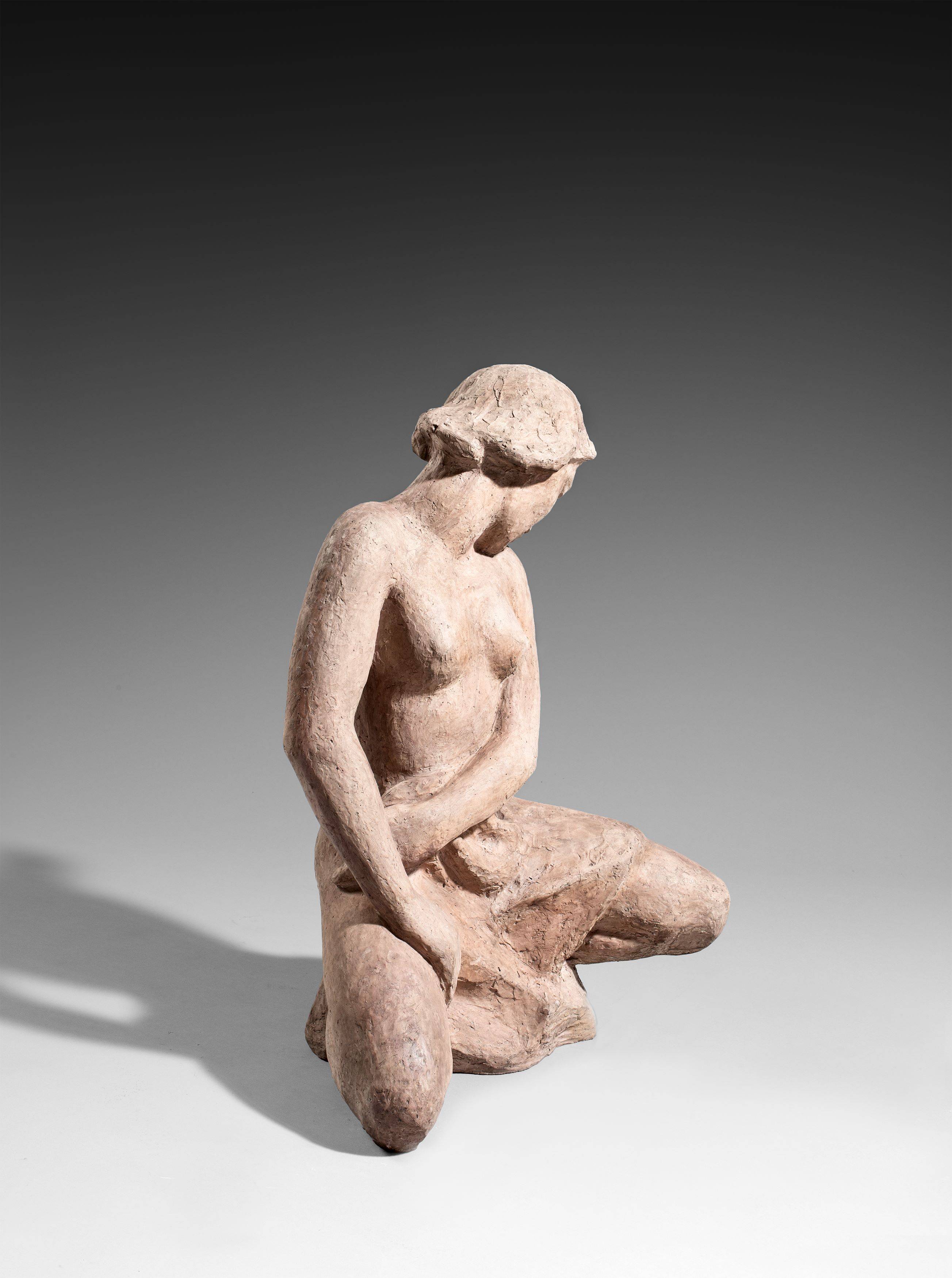
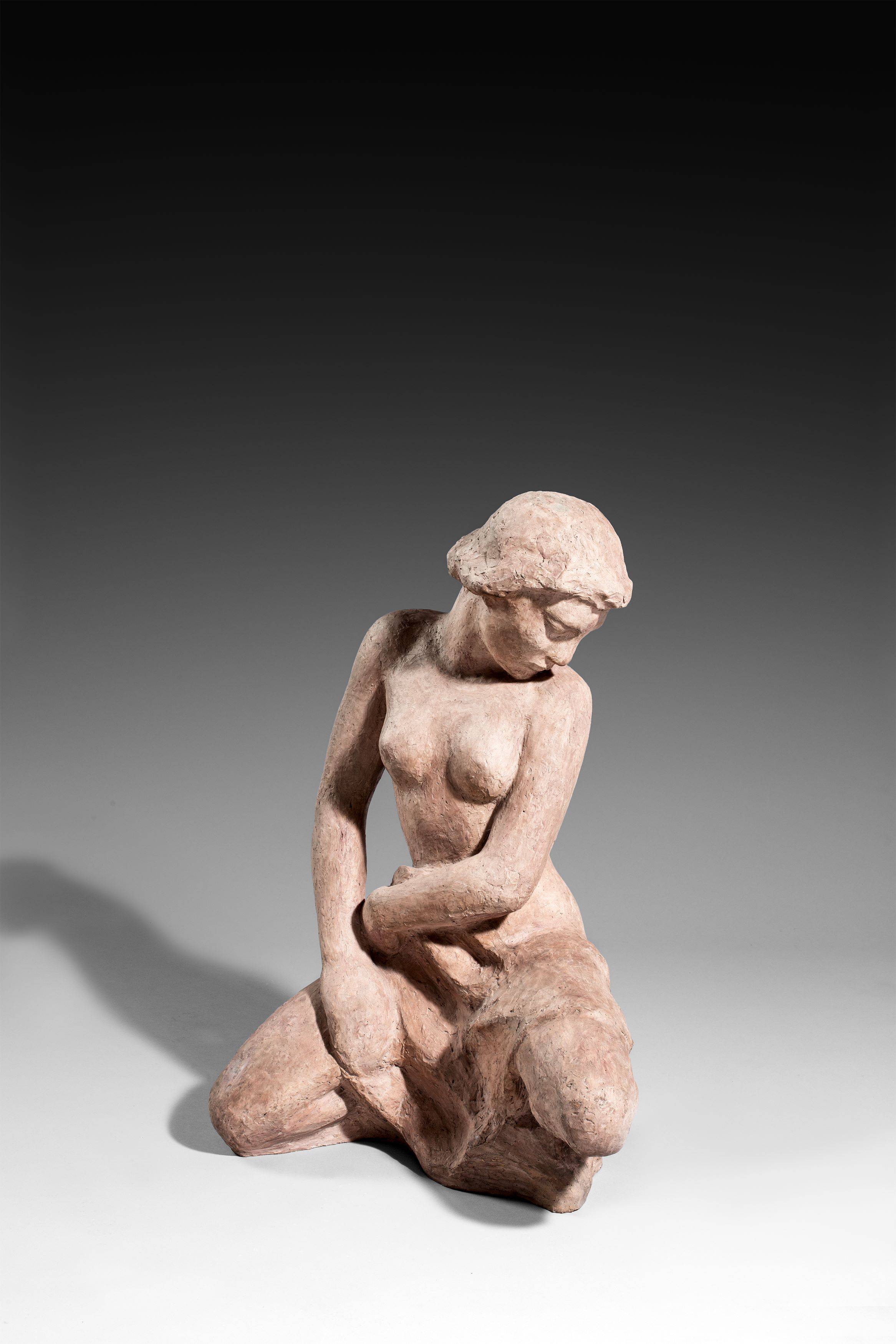
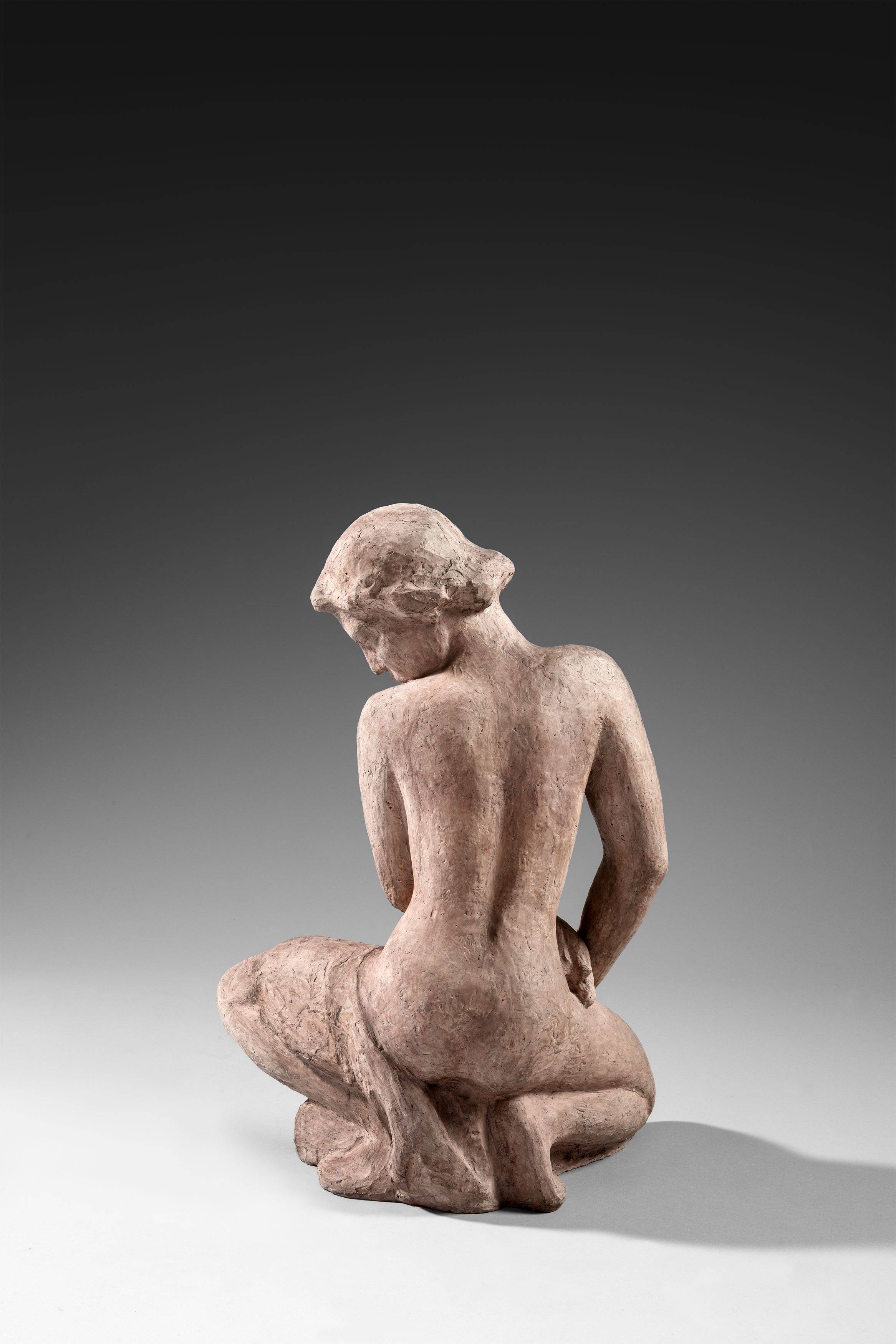
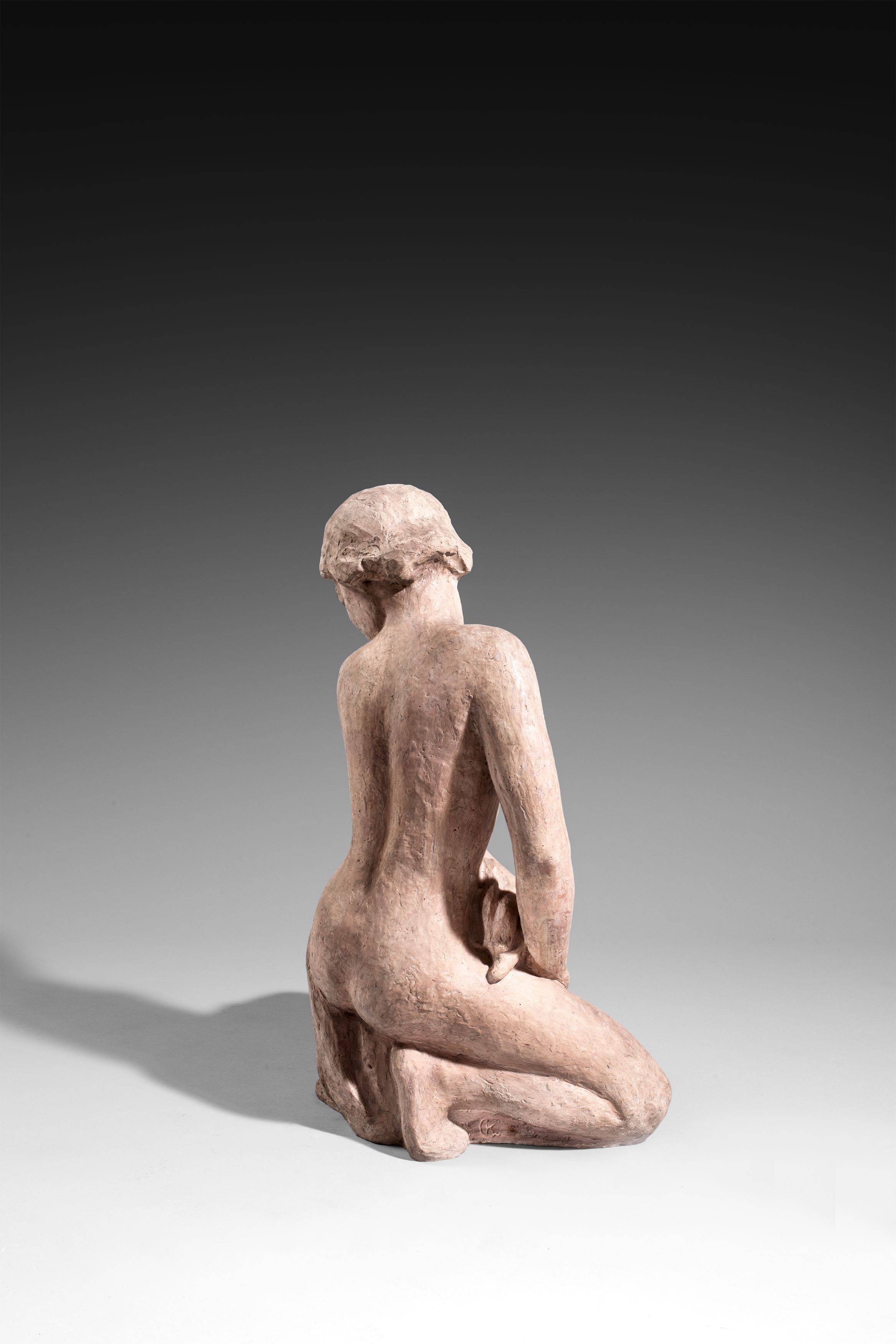
”Kniende mit Gewand”. 1914

Background:

Background:

Background:

Background:

Background:

Background:
Estimate:
EUR 80,000
- 120,000
USD 89,900
- 135,000
Auction 378
Thursday, 26.11.2026, 6:00 PM
Request condition report
Ask our specialists
We would like to thank Dr. Ursel Berger, Berlin, for the scientific advice.
Theo von Brockhusen, Berlin (to 1919) / E. Weyhe Gallery, New York (until at least 1932) / Private Collection, Berlin
Schwarz-Weiss-Ausstellung der Freien Secession Berlin. Berlin, Ausstellungshaus am Kurfürstendamm, 1916, cat. no. 297 (?) / Georg Kolbe 1877–1947. Berlin, Georg-Kolbe-Museum: Bremen, Gerhard-Marcks-Haus, 1997/98, cat. no. 41
Stanley Casson: The Recent Development of George Kolbe. In: International Studio, Vol. 96, No. 399 (August 1930), p. 17–20, ill. p. 17 / Drawings and Sculpture by Georg Kolbe. Cambridge, Germanic Museum at Harvard, 1932 / Kolbe. Plastik. 500 Photos (Plastik und Zeichnungen. Aufnahmen im Kunstgeschichtlichen Archiv des Seminars). Marburg a. d. Lahn, Verlag des Kunstgeschichtlichen Seminars, 1931 (2nd ed. 1938), p. 8, no. 455 / Kurt Eugene von Meier: Georg Kolbe (1877–1947). Ann Arbor, Princeton University, 1966, p. 306, no. 97 / Auktion 1545: Modern and Contemporary Paintings, Drawings and Sculpture, including the Collection of Helen W. Benjamin. New York, Sotheby’s Arcade Auctions, 7.6.1996, cat. no. 30, w. ill.
L'Après-midi of a Nude – Georg Kolbe's "Kniende mit Gewand"
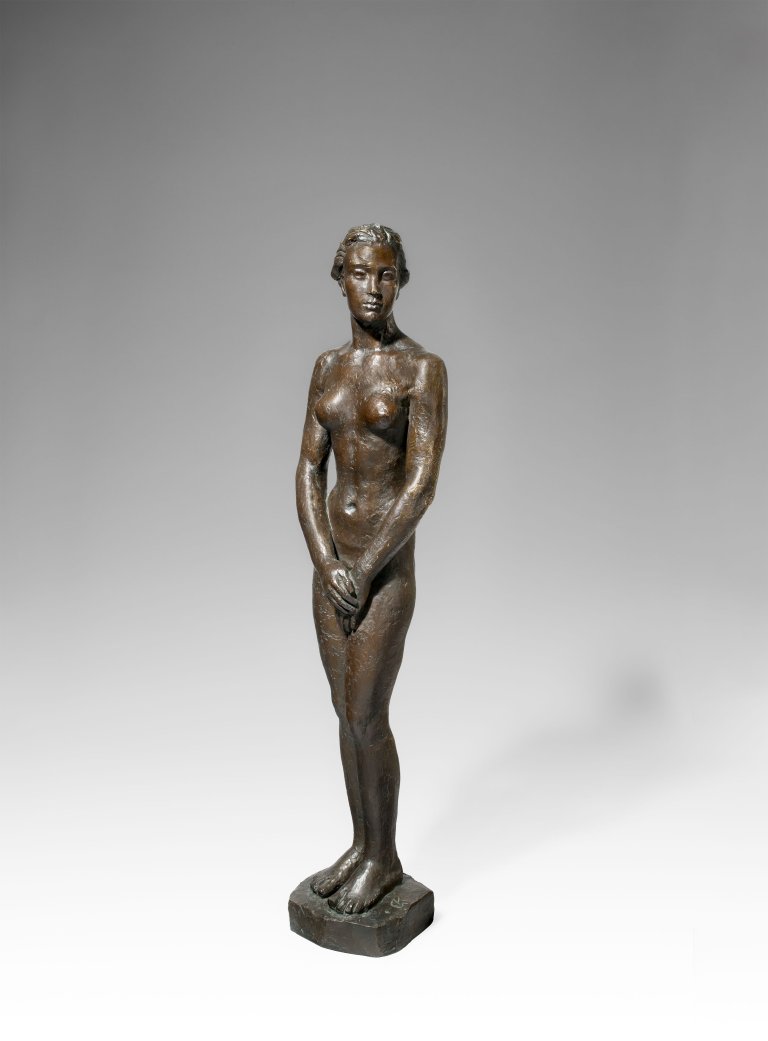
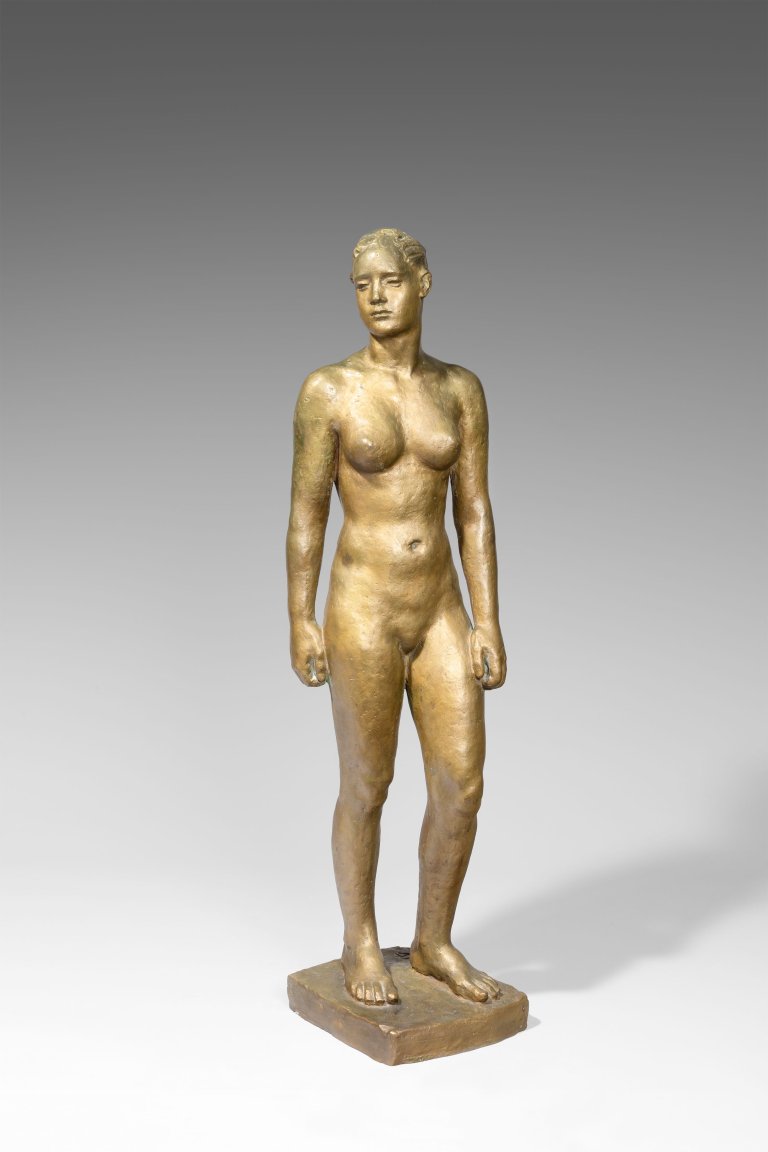
If you have forgotten what a declaration of love is, you should look at how Georg Kolbe shaped this terracotta. Does it breathe? What does it smell of? What temperature is its surface? Its beige-pink, skin-like tone involuntarily provokes our sense of touch. One wants to touch it, to run one's fingertips over the traces of modelling. Kolbe's "Kniende mit Gewand" touches on a threshold of sculptural definition: between the living and the lifeless, between the human body and the sculptural image. It is the dramaturgical end point of a downward sequence of movement. After the "Tänzerin" (Dancer, 1911–12), the "Amazone" (Amazon, 1912) and the "Kniende" (Kneeling Woman, 1912), all in bronze, Kolbe chose clay for the figure closest to the ground. It was first exhibited in 1916 at the Ausstellungshaus am Kurfürstendamm in the black-and-white exhibition of the Freie Secession, and later shown in 1997 at the Georg Kolbe Museum, Berlin, and in 1998 at the Gerhard-Marcks-Haus, Bremen. It has been in private ownership since 1996.
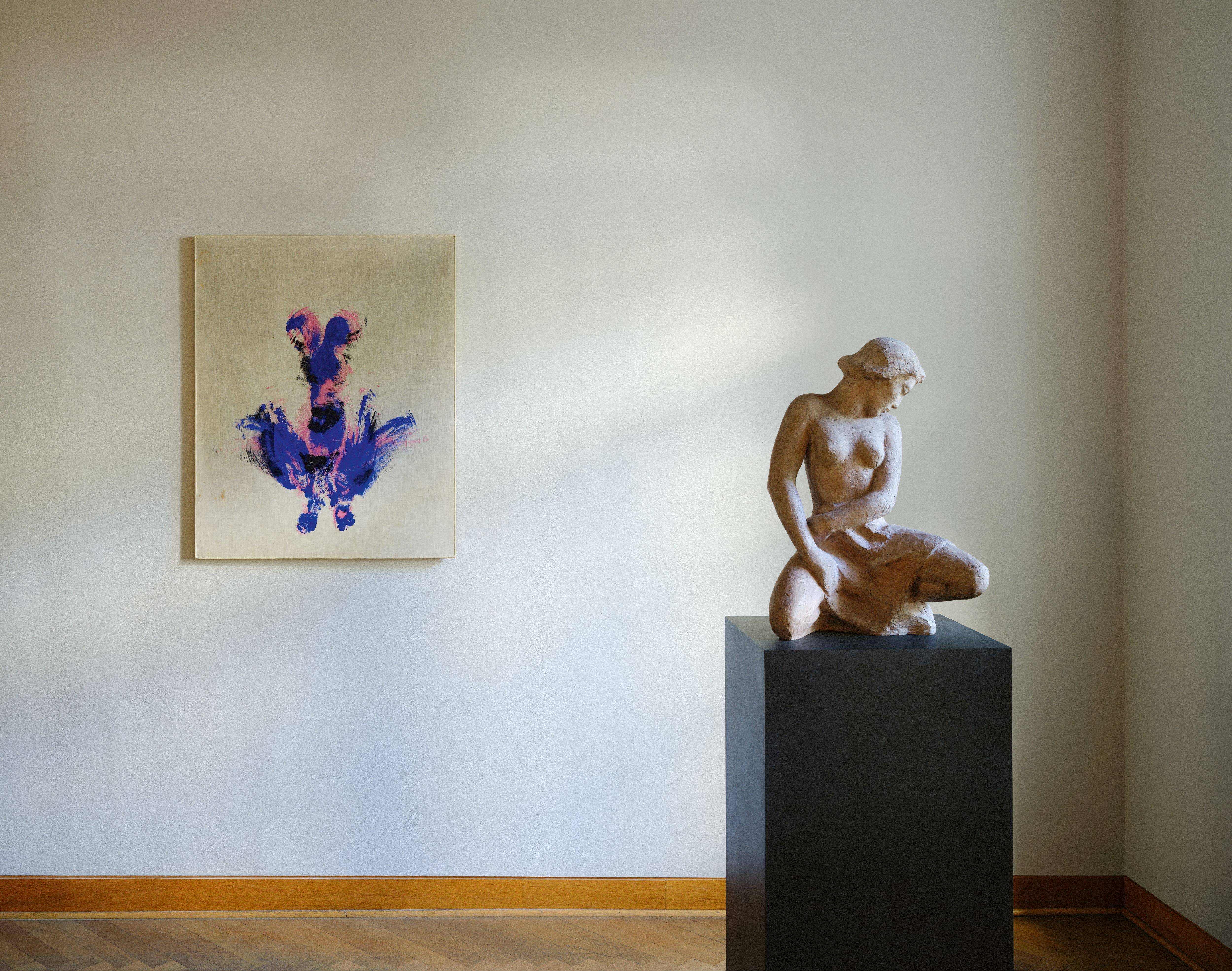
In the summer, Georg Kolbe's famous "Tänzerinnenbrunnen" (Dancers' Fountain) made a guest appearance in the garden of the Villa Grisebach, an astonishing performance that reconciled it with history and that would seem hard to surpass. The kneeling nude is of similar stature to the dancer of the fountain, yet its essence can hardly be grasped fully by sight alone. Standing beside her is an almost physical experience. Her gaze is not directed towards us; instead, it brushes us endearingly and shyly from the side. That is why it does not strike one immediately, but at the latest when one notices the upturned feet, the taut back and the effortless extension of the neck, one realises that there is no preferred view as such: no front view, no side intended for the wall. Kolbe has endowed his "Kniende" with a charming 360-degree aura!
How does such a sculpture come about? We are not talking about craftsmanship here, but about the phenomenon of how Kolbe opens the door to the viewer's intuition. How does that work? The important point is that the figure is not carved from a solid block of clay. Kolbe begins with damp clay and builds up the large volumes step by step, probably from the pelvis and thighs via the long back, the shoulders, the chest, neck and head, to the artful architecture of the drapery folds. In doing so, he can add, remove, shift, smudge and pleat, or engrave fine patterns into the leather-hard surface with a toothed chisel, other tools or damp cloths. These hair-fine traces of movement and tools remain legible; they form a kind of record of the modelling. Only firing makes the preliminary form irreversible, yet one can still virtually see in this kneeling figure how Kolbe had his hands on her before he pushed her into the kiln. With this figure he thus squares the circle: the irresistible sensuality of the pastel, delicately reddish complexion and the sculpturally twisting movement become an equivalent for overcoming gravity by means of gravity itself.
It is entertaining, exciting and illuminating to consider which art the sculptor Kolbe trained his feeling for the effect of few, simple means on, and where the historically informed artist positions himself when he treats a figure of bronze, plaster, stone or terracotta like a human being of flesh and blood. In these early years of the 20th century, sculpture as a reminiscence of dance and transience, of body and movement, was Kolbe's great artistic obsession. The door to his studio in the Tiergarten district was always wide open to dancers from Berlin, Germany and all over the world. In 1912 Vaslav Nijinsky (1889–1950) was performing in the city and came to his studio. By then the dancer was already a world-famous star, his phenomenally gifted body enabling him to leap into spheres seemingly beyond human possibility. A brief excursion to the Paris of those years: the ballet "L'Après-midi d'un faune", set to music by Claude Debussy, was premiered by the Ballets Russes in Paris in 1912. Nijinsky's analytical approach to movement made his choreography a kind of moon landing in the history of dance; the world of ballet looked different afterwards. Nijinsky took his cue from ancient vase paintings and moved not frontally, as was usual in classical ballet, but sideways, with stylised profiles and angular movements, in a costume designed for him by the painter Léon Bakst. Ever since his student years in Paris, Kolbe had kept an eye on what was happening in the artists' studios and on the stages there, and one can guess what must have electrified him here. Instead of a forward-driving body language, instead of a kinetic event, Nijinsky composed a figure whose rhythm seems to have been broken out of the flow of time. It arises from rotation, twisting and angles around the body's axis. This new, almost sculptural quality in the architecture of movement flowed into the pose and the elaborated drapery of the "Kniende". Kolbe's sketchbook contains identical motifs of movement, and his "Tänzer-Figur" (Dancer Figure, 1913) is regarded as an idealised image of Vaslav Nijinsky. It is also telling that Kolbe acquired a series of photographs by Eugène Druet showing the dancer in the air and in his characteristic rotation around his own axis.
Kolbe was not, of course, the first or the only artist to bind together divergent categories in a spherical, spindle-like movement, in such a way that the opposites even reinforce one another: abstract formulation on the one hand, an intense sense of inwardness on the other. Auguste Rodin's "Femme accroupie" (Crouching Woman, 1880) and Wilhelm Lehmbruck's "Kniende" (Kneeling Woman, 1911), two fixed stars of modern sculpture, belong to the prehistory of Kolbe's "Kniende". These squatting, crouching, waiting figures create space, and at the same time it seems as if the outer space were turning inwards, drawn in by their self-forgetful "allure". And even more intensely than in his iconic models, Kolbe's sculptures detach themselves from their physical realities in favour of the subjective aspects of our perception. Touch and chance can enter into the work: the puzzled pause of passing visitors, a ray of light, snatches of conversation, an architectural detail. It is this web of the finest interactions that surrounds a work of art from his hand and helps shape it.
The British art historian Stanley Casson recognised Kolbe's experimental freedom, his modern wilfulness, where others would have aimed at idealisation, likeness or meaning. To him, the "Kniende" seemed "a study in slow grace and movement". Casson's tribute appeared in 1930 in the art magazine "International Studio" and describes with astonishing precision the unintentional time of its own that the present nude also creates. A hundred years later, his sensory experience reads almost like an anticipation of the live sculptures of the 21st century, in which dancers, whether on stage or in the museum, bring into being something that oscillates between living body and sculptural still life. Throughout his life, Kolbe was interested in how we experience space and how movement can change our experience of it. The quality of his terracotta lies in its invitation to perform an act of perception in situ, body and soul. For, let's be honest: how often is a world-class work stored on our screens faster than in our memory? Marietta Piekenbrock
Subject to change - Please refer to our conditions of sale.