How Autonomous May Art Be? – Arthur Segal's Benevolent Utopia of Equivalence
The painter Arthur Segal, who came to Berlin from Romania in 1892, was something of a conservative avant-gardist. He took up the new currents and isms of painting without prejudice, experimented with different styles and, out of a great disappointment to which we shall return, developed the principles of his theory of equivalence (Gleichwertigkeit). With it, he intended to reconnect art to reality and lead it out of the ivory tower of the noncommittal and back to "life". The painter's career tells of lively exchange and wide-ranging educational commitment, revealing him as a great humanitarian who always cared about the social impact of art. Whether as a co-founder of the Neue Secession in 1910 or, after the First World War, as a board member of the Novembergruppe founded in 1918, Segal repeatedly stood out as one of the most ardent advocates of an art that wanted to, and should, have an effect on society. He called for constant feedback between painting and lived reality, which is why he rejected the idea of the autonomous work of art. Art, as a kind of daily bread, was to nourish people spiritually and help them see their circumstances differently. Not least, the painting school that Segal founded was driven by the idea of freeing its students from the corset of restrictive conventions so that they could contribute their personalities to a more just future. Segal's main concern was not only to teach the fundamentals of design but also to cultivate the heart through painting.
Let us return to the great disappointment that preoccupied him for several years. It was the catastrophe of the First World War that drove out his faith in the power of art. He describes this in his lecture "Mein Weg der Malerei" (My Path in Painting), published in 1927/28: "At that time I was angry with art for not having been able to prevent the war, and I regarded its effect as bankrupt. I lost my inner relationship with it, since its ethical necessity no longer made sense to me." Demanding such power from art testifies to an enormous ambition, but it was not untypical of the artistic currents of the early 20th century that we sum up under the term modernism. Hardly anyone, however, was as uncompromising as Segal. At first he went to the easel only out of habit, and it was only through his engagement with philosophy and religion that he received the decisive impulses for his theory of equivalence. Applying it to painting once again filled his artistic practice with meaning.
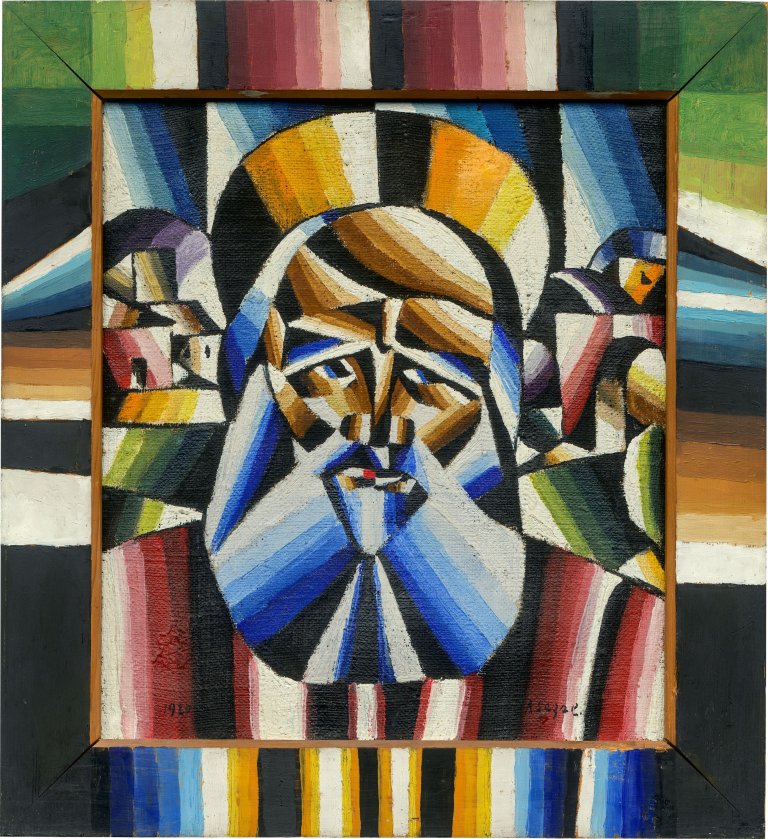
The painting "Heiliger" (Saint, lot 14) is a prime example of the effect of a distribution of contrast that emphasises no area of the surface and is thus meant to rule out any hierarchy among the pictorial elements. Segal describes it as follows: "The composition of my pictures is a decentralising one. The eye must attend equally to every part of the picture. Even the frame takes on a different meaning with me. It leads beyond the boundaries of the picture, not back into it" (lecture given on 26 January 1919 at the Kunstsalon Wolfsberg, Zurich).
The frame opens the picture to the outside and thereby connects it with its surroundings instead of closing it off as an isolated entity. Bands of colour arranged in coordinated sequence from dark to light create an illusion of spatial gradation, which is, however, optically cancelled out again by the equal treatment of all parts of the surface. It is no coincidence that Segal here, as it were, assembles the saint with the tools of his constructive building kit: only a figurative anchoring of the subject guaranteed him a connection with the world outside the picture. And for Segal, the "democratic", non-hierarchical organisation of the surface is the expression of a divine principle, which he describes thus: "[…] it is religious seeing, seeing from God's point of view. And before God everything is of equal value. Before God the small is great and the great is small." The saint thus becomes the representative of the divine world view as Segal understands it.
On the one hand, however, the equivalence of the pictorial elements tends towards the repetitive structure of the ornamental; on the other, the "underlying" subject, here the saint, does give the gaze a direction after all, contradicting the painter's assumption that "the viewer's eye perceives every part as equally important". Hardly any artist has struck so much creative fire from this contradiction as Arthur Segal.
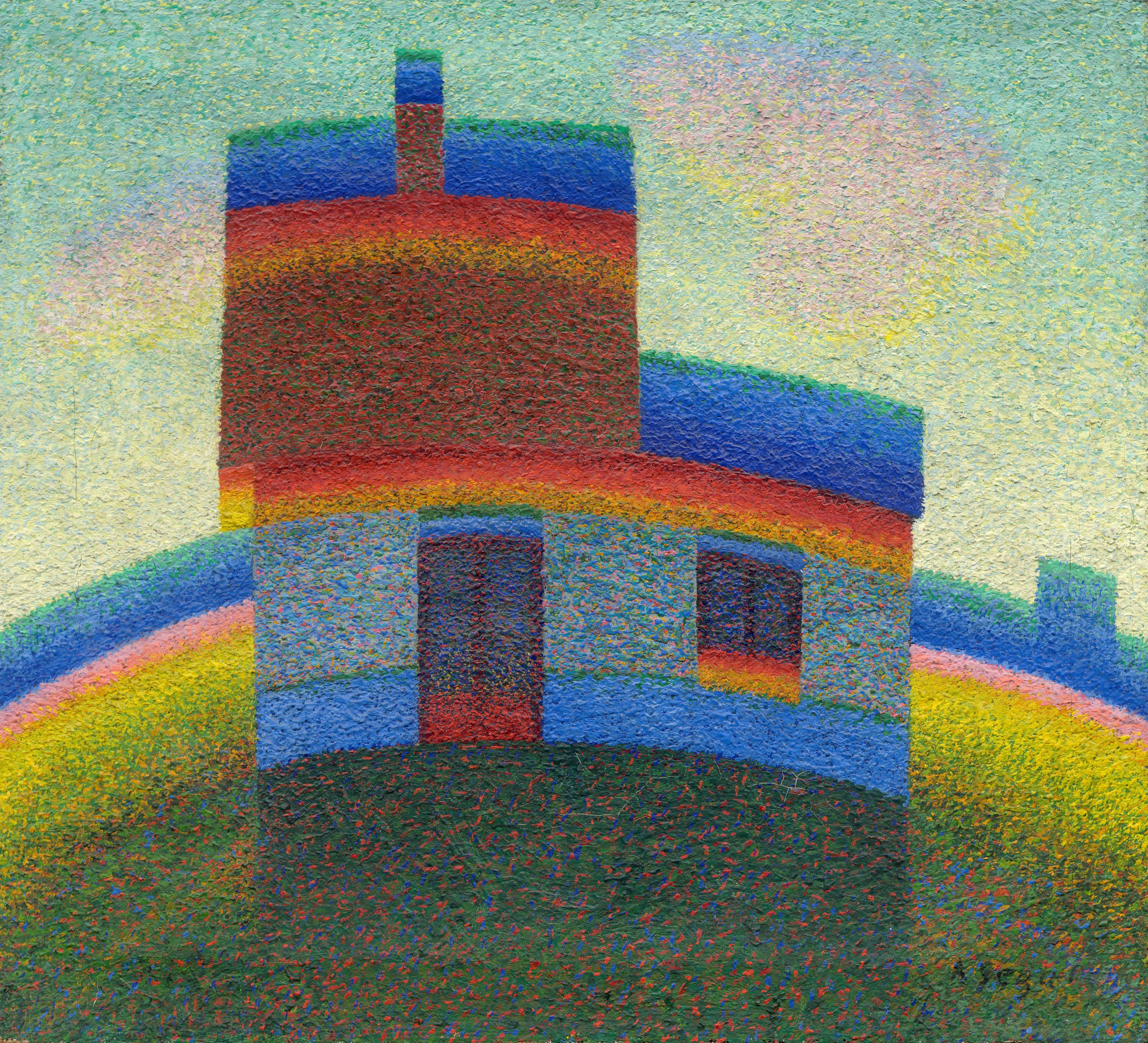
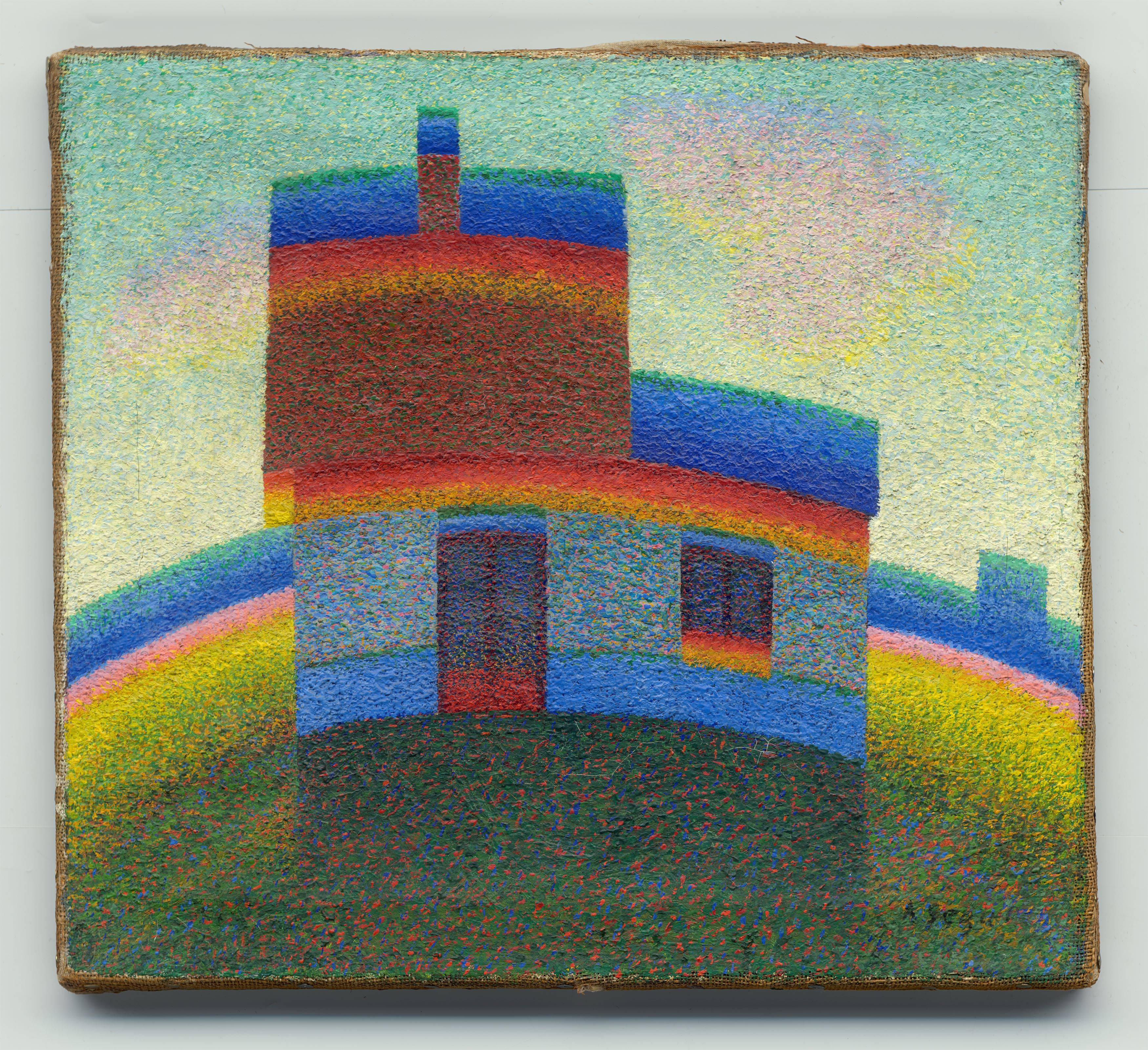
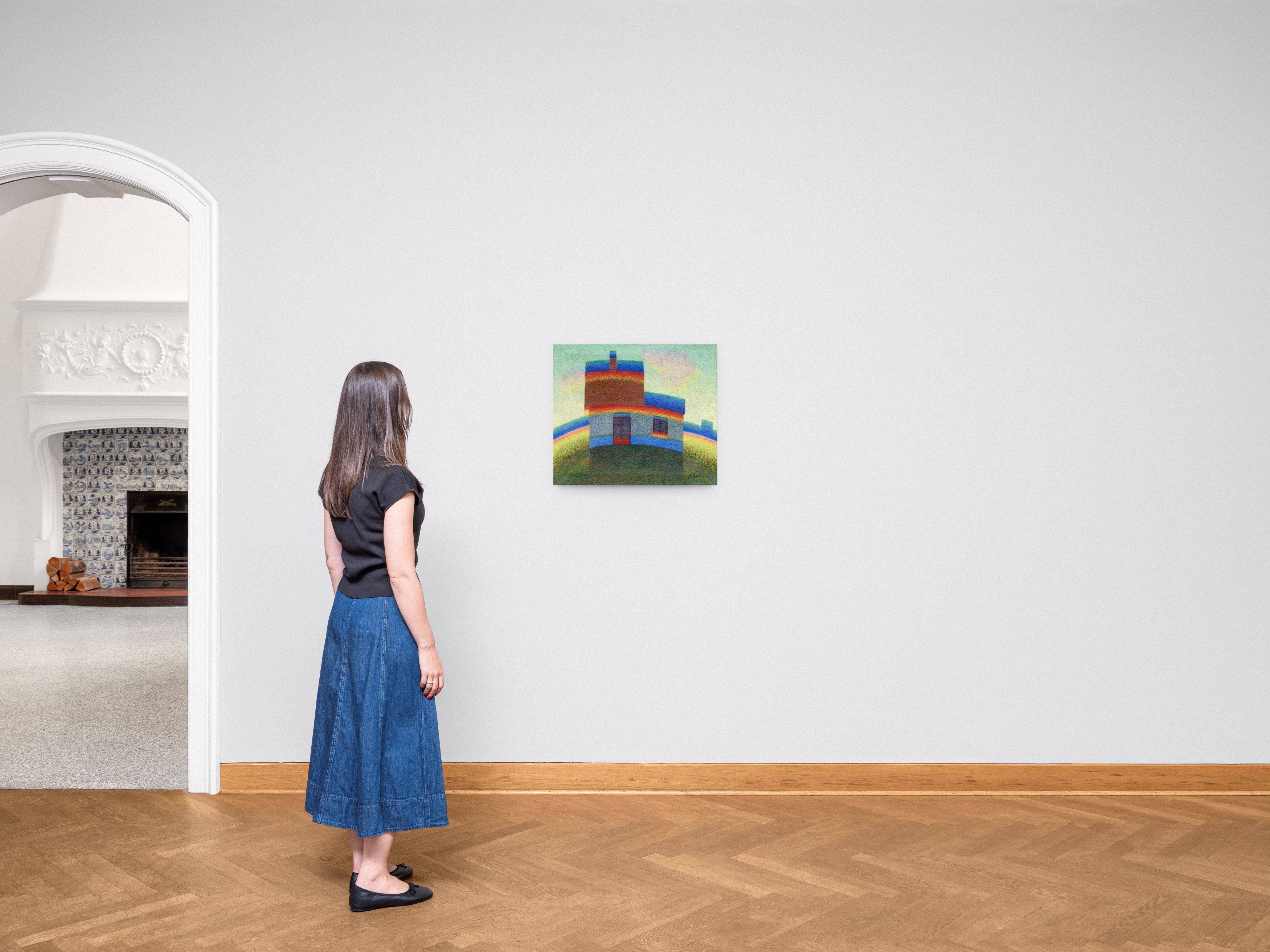
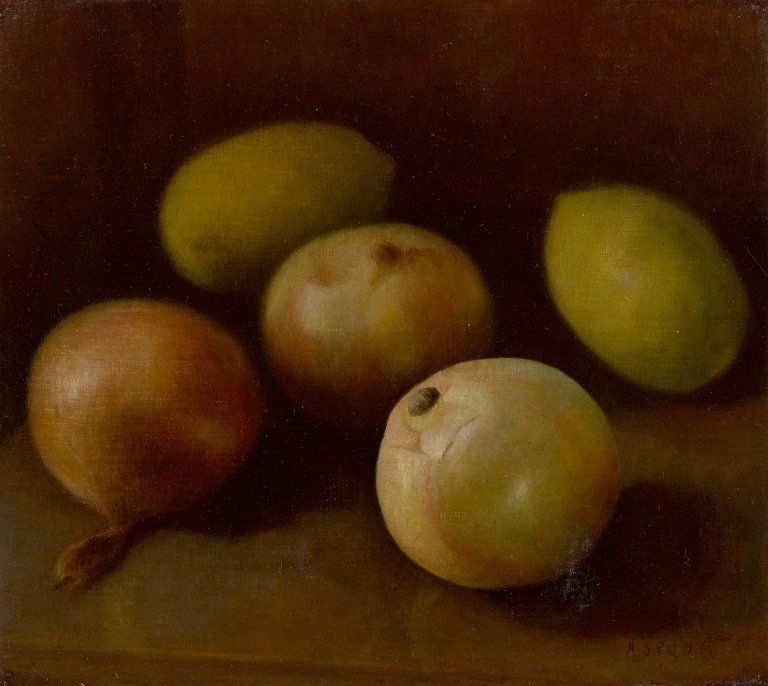
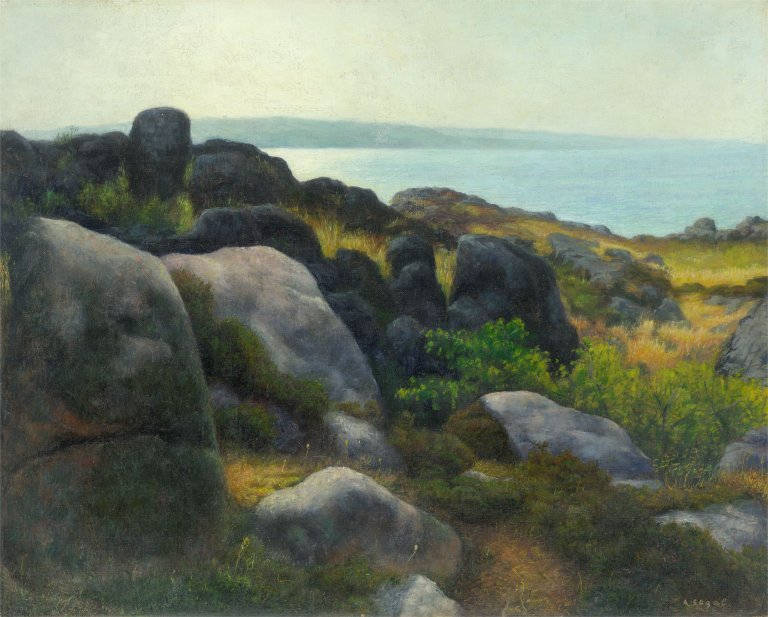
From 1921 onwards, he studied Goethe's Theory of Colours and gained insights from it that underlie his "prismatic painting". In doing so, he abandoned the more or less regular division of the surface in his compositions and transformed it into an equivalence of form, colour and light. "Haus II" (House II, lot 15) is a model example both of the application of prismatic optics and of the artistic freedom to depart from it in places. The subject is formed by parallel bands of colour. On the light side, they rise towards brightness through the sequence red-orange-yellow; on the shadow side, a little green and a great deal of blue predominate. The violet that would complete the dark sequence appears as a delicately tinted reflection in the suggested clouds in the sky. Segal truly achieves a mode of perception here that gives equal attention to the three elements of form, colour and light. The eye leaps back and forth between the curved form of the house, the shimmering colouring and the zones of light and shadow, and cannot see enough of any of it! The surface seems lit from within, a phenomenon we also find in Segal's later naturalistic pictures (cf. lot 376, "Zwiebel und Zitronen" [Onion and Lemons], and lot 377, "Bornholm"). We might describe this phenomenon as an optical smouldering fire that gives the objects warmth and energy. With "Heiliger" and "Haus (prismatisch) II", two paintings are brought together here that represent Arthur Segal's views most beautifully.
The provenance of both pictures reflects a special artistic friendship. For a long time they belonged to the painter Anneliese Ratkowski-Braun, later Ratkowski-Wanger, who, like her husband Nikolaus Braun, was taught at Segal's painting school, which had existed since 1920. She developed into an outstanding painter of the New Objectivity, whose still lifes attracted particular attention. The teacher-student relationship soon grew into a great friendship that lasted a lifetime and is documented in many fine letters from Segal to the Brauns. Time and again, these documents reveal the painter's warm interest in the lives of his former students. They bear witness that Arthur Segal was not only an incredibly versatile and virtuoso painter but also a unique teacher of art and a friend to humanity. In the Berlinische Galerie, the teacher with his large Heligoland picture and the student with a kitchen still life meet as close neighbours.
The two paintings were later acquired by Wulf Herzogenrath, who directed the Kölnischer Kunstverein until 1989. There, and later as curator at the Neue Nationalgalerie and director of the Kunsthalle Bremen, he was responsible for numerous groundbreaking exhibitions. We owe to him and his collaborator Pavel Liška the major monograph, the catalogue raisonné and the exhibition of Arthur Segal's paintings, which began at the Kölnischer Kunstverein in 1987/88 and travelled via several venues as far as Tel Aviv. It remains the definitive presentation of the artist's paintings to this day. Wulf Herzogenrath's intensive engagement with these works fostered his wish to gather some of them around him as permanent housemates. Martin Schmidt