“A sparkle of your very self, of the power of the spirit!” – Elisabeth Jerichau-Baumann and her mermaid
Unconventional, outspoken, warm-hearted, self-assured, brimming with creative drive, very clever – and highly talented. Three nationalities (German, Polish and Danish). Fluent in seven languages, with some knowledge of Arabic and Persian. A free spirit. Born in Warsaw to a German entrepreneur and a Polish mother, the young Elisabeth Baumann witnessed the November Uprising of 1830 against the rule of the Russian Empire. Her talent as a painter became apparent at an early age. Her parents already saw her as a ‘new’ Angelika Kauffmann. At the age of 19, she began her studies at the Düsseldorf Academy of Fine Arts (1838–44). The sale of her first paintings enabled her to spend three years in Rome (1845–48). She married the Danish sculptor Jens Adolf Jerichau during Carnival in the Eternal City; from then on, she made her home in Copenhagen, where she had nine children. She countered initial resentment towards her German identity (Prussian–Danish War 1848–51) with sensitively chosen and self-assuredly presented national subjects that drew on the Düsseldorf School and Parisian models (‘Mother Denmark’, 1851, Carlsberg Glyptotek, Copenhagen). Above all, however, she found her place as an artist on the international stage. She travelled countless times to Italy, Germany, Switzerland and Saint Petersburg; 13 times to London; several times to Paris; and undertook two major journeys to the eastern Mediterranean and the Middle East (the Ottoman Empire, Greece and Egypt, with extended stays in Constantinople, Smyrna, Cairo in 1869/70 and 1874/75), where the painter was granted the unusual permission to paint portraits of women living in harems (including ‘Egyptian Pottery Seller in Giza’, 1876/78, Statens Museum for Kunst, Copenhagen). As early as 1851, she was the only female artist to exhibit at the Düsseldorf Gallery in New York, showing her striking paintings at the salons in Paris (‘La Sirène du Nord’, 1861), Copenhagen, Stockholm, Berlin, Amsterdam and Milan. London played a special role in her life: she exhibited repeatedly at the renowned Royal Academy, as well as at the Bridgewater Gallery and Gambart’s prestigious French Gallery, where Henriette Brown and Rosa Bonheur also exhibited. Queen Victoria personally offered her the opportunity to hold a private exhibition at Buckingham Palace and purchased a painting in 1852. She exhibited on several occasions at the London Society of Female Artists, founded in 1858. She took part in the World’s Fairs in Paris (1855, 1867, 1878), London (1862) and Vienna (1873), and became a member of the art academies in Copenhagen and Stockholm in 1861.
‘She is an artist through and through’ – so writes the eminent author and pioneer of women’s rights, Fanny Lewald, about her close confidante Elisabeth Baumann (Roman Diary 1845/46; Spiero 1927, Chapter 5). Both arrived in Rome in 1845. They quickly bonded – “because she found herself in a similar situation to mine”, according to Lewald. Impressed by her friend’s self-assured demeanour, she notes: Elisabeth “had been in Italy for quite some time; for years in Düsseldorf, where she had studied, she had mingled freely and informally with men, and this habit, combined with her self-assurance, gave her a freedom and ease in her dealings with men that I still lacked”. The city had an enormously stimulating effect. Her personal notes paint a picture of just how astonishingly freely she moved amongst “this society of cosmopolitan figures and artists”: “I do not believe there is any place in the world,” writes Fanny Lewald, “not even London and Paris, that boasts a society like the one which […] gathered in Rome every year, yet was constantly changing. North and South, East and West, Asia and America’ met here ‘in just one district’. Almost all shared ‘the same aspirations, the same aims’, sustained by the feeling of being able to move ‘free from the constraints of social convention’. Rome strengthened their conviction that ‘there is, after all, something eternal within us, within humanity’, and that ‘to develop and fulfil oneself is one of the highest tasks an individual can set themselves’ (ibid., chap. 6). Elisabeth Jerichau-Baumann felt from an early age a strong desire to ‘possibly secure an independent position in life through art’. She was aware of the challenges she faced as a woman of her time: ‘Every new difficulty was a new incentive for me’ (Memories of My Youth, 1874; Dubois, Female Artists, 2025, p. 186). Peter von Cornelius’s bon mot about the artist during a visit to Rome in 1845 is often quoted: ‘This girl is the only man amongst the Düsseldorf painters!’ (see, amongst others, Lewald, Chapter 5).
In the winter of 1845, Elisabeth Baumann met the Danish writer Hans Christian Andersen. He had published his world-famous fairy tale ‘The Little Mermaid’ in 1837. A beautiful mermaid had also accompanied the artist since her childhood: according to legend, she once swam through the Baltic Sea and the Vistula as far as Warsaw, where she settled. A merchant captured her to earn money from her singing. When brave fishermen freed her, she vowed, out of gratitude, to defend the townspeople with sword and shield for all time. She is the emblem on Warsaw’s coat of arms. Her little sister, so the legend goes, swam to Copenhagen. The place where they first met is also legendary: the famous Caffè Greco – the artists’ haunt in Rome: ‘The Caffè Greco was the real headquarters. When a woman entered there, she was met by a wall of heavy tobacco smoke, loud laughter and heated debates about art. The Danish artists sat there like a close-knit brotherhood at the small marble tables,’ the artist vividly recalls (Reisebilder, 1881). She soon formed a deep, lifelong and close, almost familial friendship with the Danish poet. ‘As fantastical as she was brilliant in her very being’ (Lewald, Chapter 5), she met the sensitive storyteller as an equal, both in intellect and in heart: Like “a strange, slender bird amidst the smoking and politicking artists”, he often seemed “almost startled by the noise at the Greco, but would come into his own as soon as the conversation turned to art or his fairy tales. He had an almost childlike soul that stood out wonderfully in this rough environment” (Reisebilder, 1881).
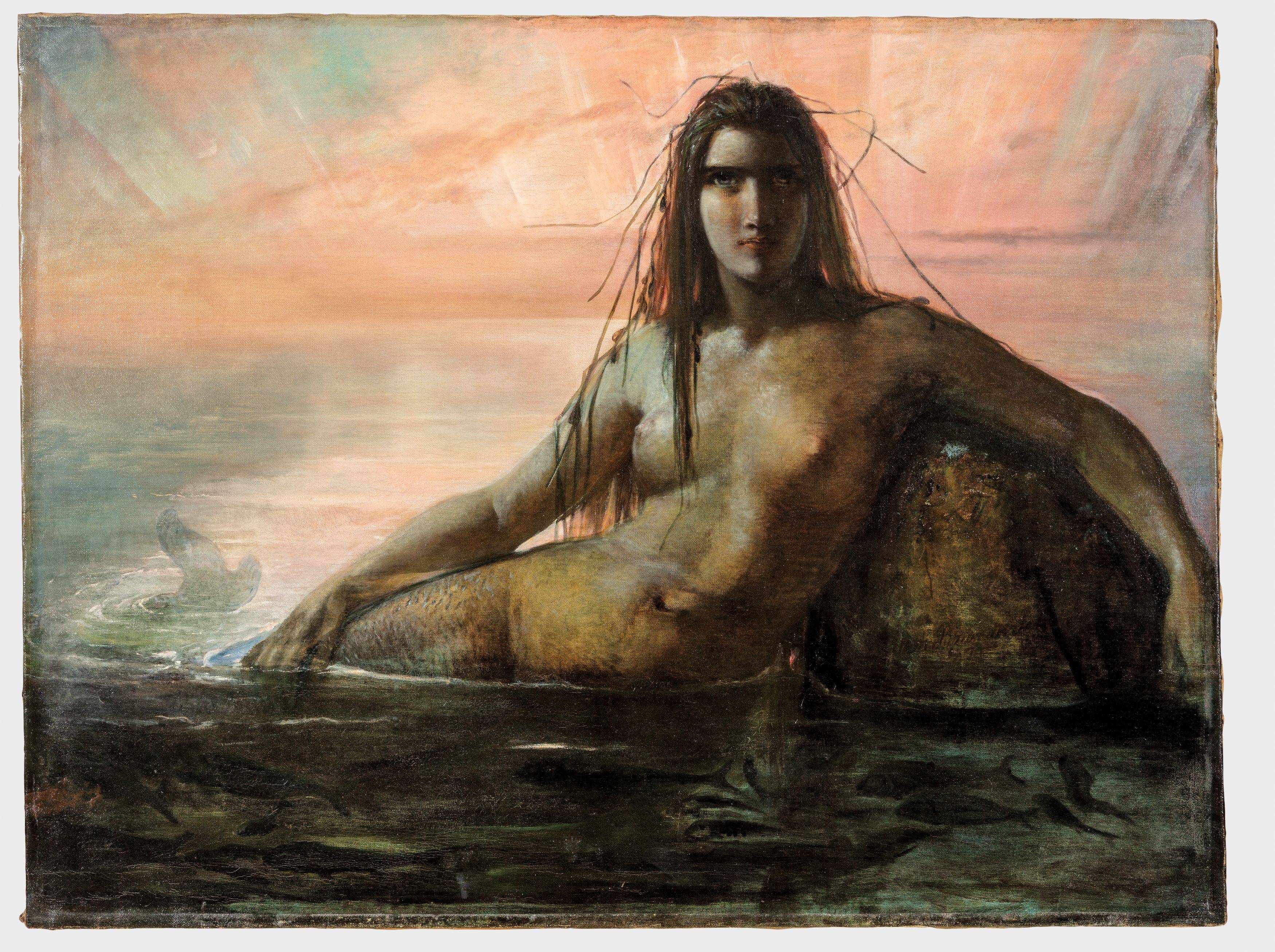
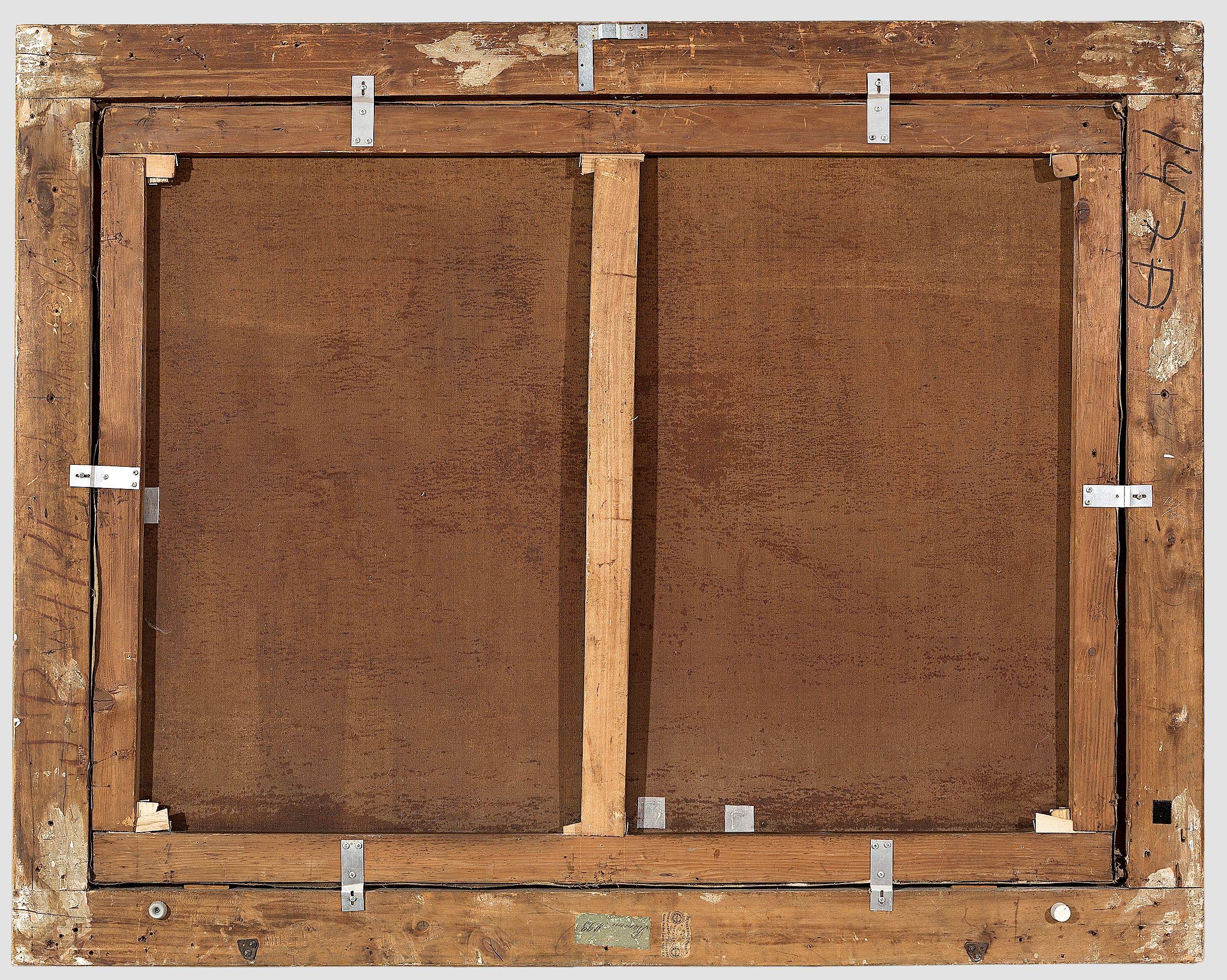
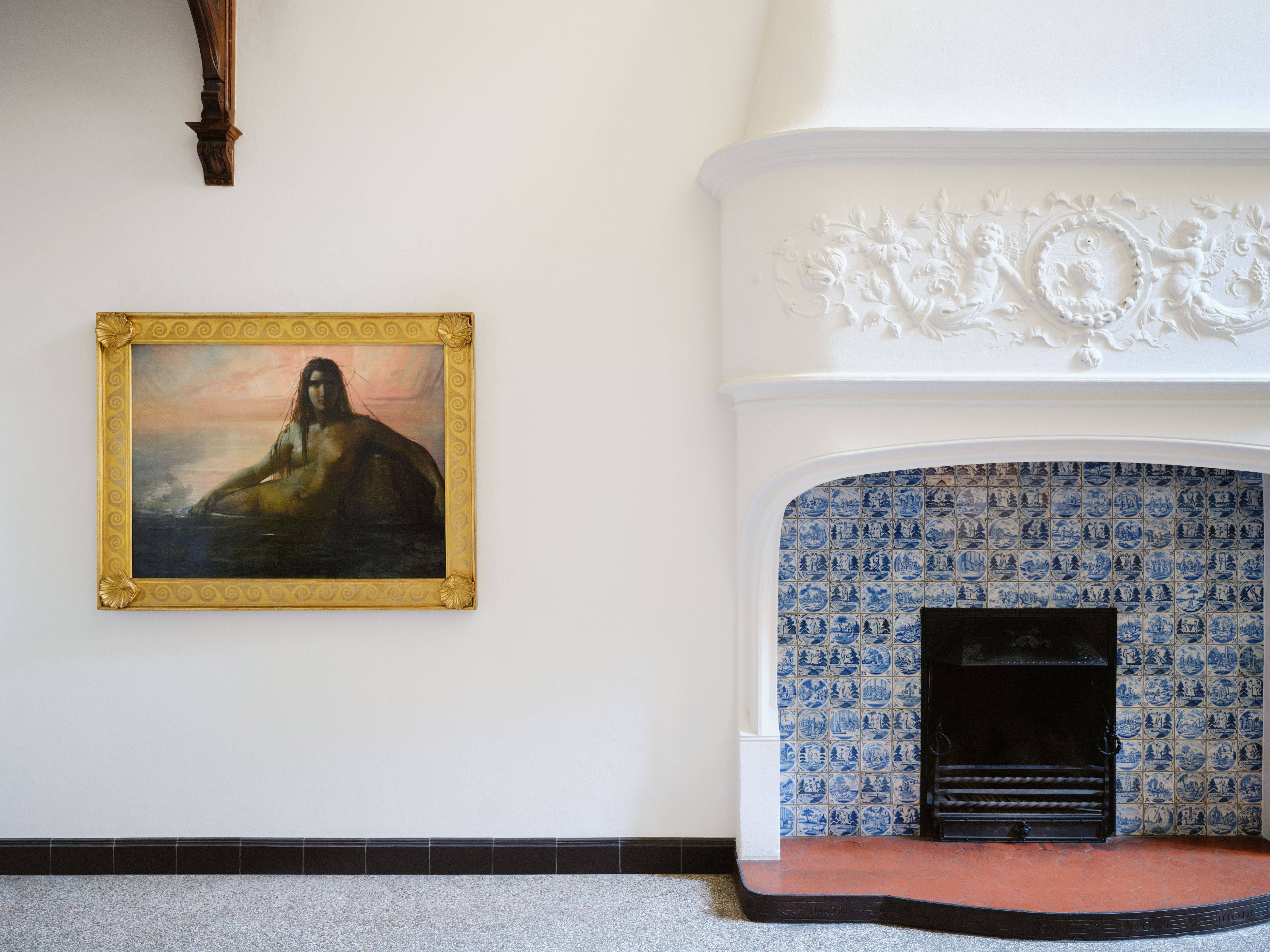
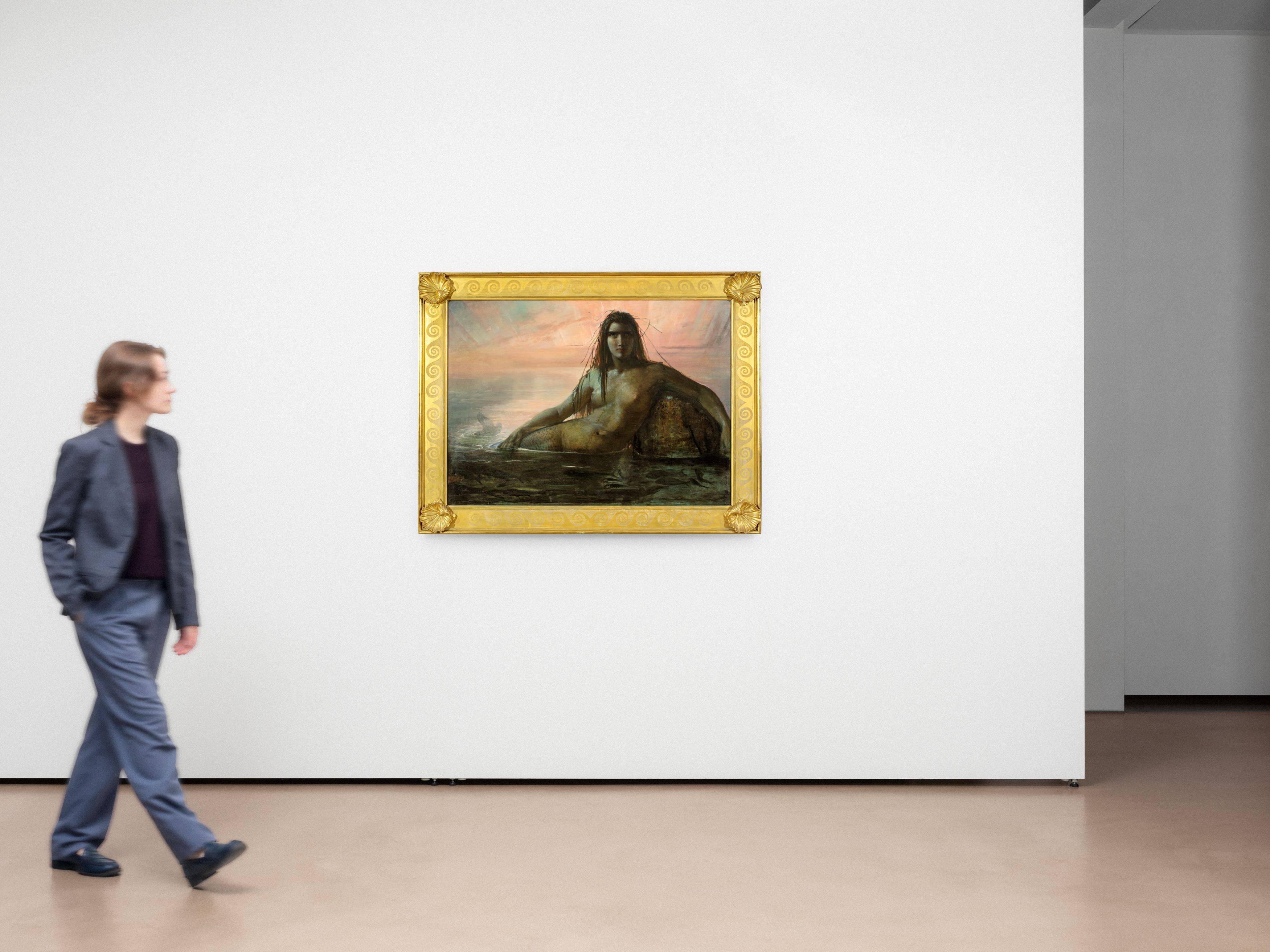
Ever since those earliest days they spent together in Rome, the painter has also explored the theme of the ‘mermaid’ in her art. Right up until the 1870s, a period strongly influenced by her travels to the Orient, she repeatedly engaged with this mythical creature. This first version, which she probably completed whilst still in Rome, or at the very latest in Copenhagen around 1860/61, is certainly the most astonishing and progressive version (Lot 19). The painting is of exceptional artistic quality and, thanks to its early acquisition by the Danish collector Wanda Zahrtmann – whose descendants have preserved it with great care to the present day – it has remained virtually untouched. Zahrtmann, then just 19 years old and later Countess Danneskiold-Samsoe, came from an influential Danish family. Having recently lost both her parents, she saw the painting in the artist’s studio and fell in love with it. The purchase price of 1,200 rigsdaler was equivalent to an annual allowance. On 24 December 1861, she wrote to the artist in a moving letter, saying that she dreamt of the mermaid day and night and – in a second letter dated the same day – that she wished to be allowed to purchase the painting (Royal Library, Copenhagen). The painter allowed her to keep the painting, which was also of personal value to her, together with the decorative frame she had designed herself and which had been specially made by Francesco Tomasco in Rome (see the original label on the back).
As self-assured and independent as the artist herself, Jerichau-Baumann places the beautiful sea creature prominently in the foreground of the large-format canvas. Against the radiant dawn, with the sun still below the horizon, the mermaid appears before our eyes like a mirage. Her presence is as real as the reality of a dream. Motionless and self-assured, her naked upper body, facing the viewer, leans against a small rock that protrudes just far enough from the water for her to casually rest her left arm upon it. Her lower body rests sideways on her left hip and gently disappears into the sea, from which only the tip of her fin re-emerges. Her right arm rests relaxed on her thigh. Her defiant gaze emphasises the authenticity of her presence. She is not teasing, she is not enticing – she is reflecting. Against the backlight of the day just beginning to dawn, she gazes at us silently and questioningly from her oversized, dark eyes. Her almost mask-like, beautiful, oval face – with a rounded yet pointed chin, an elegantly elongated bridge of the nose, high cheekbones and perfectly straight eyebrows – is framed by dark, seaweed-like hair, from which individual strands dance silhouetted in the light. A closer look at the painting technique reveals something astonishing once again: in contrast to the sky, which is painted with opaque paint, the beauty’s body is rendered in an olive-brown glaze that plays, sometimes more and sometimes less distinctly, with the canvas showing through (the area beneath the eyes). The modelling within the defining contour focuses on the white accents applied with a blunt brush, which ultimately suggest reflections of light even from the front. In nature, this would be virtually impossible – at least without the aid of a lamp. This unusual interplay of light reflections, sources and layers is so subtle that we perceive it without immediately realising it. The effect is striking: in contrast to our human experience of perceiving nature in backlight as an air-filled, vast horizon, with the objects depicted against it appearing rather unusually flat, as shadow silhouettes, here the tables are turned. The flawless figure emerges voluminously, almost sculpturally, against the flat horizon. In fact, this painting leaves such a powerful impression that, once seen, it is almost impossible to forget. Everything narrative, everything saccharine, is filtered out. What remains is the powerful ‘in-between’ – the fleeting yet enduring nature of an encounter whose intensity lives on in the memory.
Her first biographer, Nicolai Bogh, sees the artist’s ‘great genius’ as linked to her irrepressible creative energy: ‘She was constantly preoccupied with ideas and artistic plans. She would get up in the middle of the night to realise what was before her eyes’. For our first version of the painting, she struggled for a long time to ‘reflect the “shark-like / maritime [in the original: Havagtige]” quality in her eyes’: suddenly she ‘leapt out of bed unclothed and painted the eyes in the moonlight streaming through the windows’ (Bogh 1886, p. 180). We do not know whether it is the moonlight that is also reflected on the body in the white highlights. The oversized dark eyes, however – mirrors of the soul – became a hallmark of her art, clearly predating her fellow artists of the Symbolist movements who would emerge in the various European art centres from the mid-1880s onwards. These “dreamy eyes” already made an impression on her contemporaries: “it is as if she had a sense of something eternal, yet as if there were a wall between it and her”, wrote the Danish art collector Lucie Ingemann when she encountered the second version of *The Little Mermaid* (Paris Salon 1861) (quoted in Bogh 1886, p. 243). ‘Truly masterful’, Andersen also notes (Diary, 8 March 1862). In 1868, Elisabeth gave him his own version as a birthday present, which is preserved in his hometown of Odense (ibid., 2 April 1868; illustration on the left). Andersen expressed his thanks in writing with a poem: “You possess the splendour of colours! / You, soul, have placed in the mermaid’s eyes: / A sparkle of yourself, of the power of the spirit! / My thanks are expressed here in meagre words” (H.Ch. Andersen to E. Jerichau-Baumann; SDU Odense). It is in these eyes that he recognises his friend herself: the artist Elisabeth Jerichau-Baumann.
There is much more to be said about this extraordinary artist, her friendship with Andersen, their shared longing for the Orient (the poet travelled to the Orient via Greece as early as 1841 – his most significant journey, the wistful foreshadowing of which can be found in the fairy tale ‘The Little Mermaid’), the Oriental influences in what is probably the final painting of ‘The Little Mermaid’, which hangs in the Carlsberg Glyptothek (illustration on the previous page), their shared Christmas celebrations and story-telling sessions at the Jerichaus’, Elisabeth’s constant, whimsical invitations to her modest studio house in Christianshavn, where figures from the very highest echelons of society sat crammed together on barrels and makeshift wooden benches covered with carpets, which broke, leaving ‘the most distinguished ladies lying in a heap on the floor’. There were always musical and theatrical performances. On one occasion, she staged a living picture (‘tableau vivant’) of her mermaid – but the actress was lying ‘on real ice’, so that ‘the ice melted and ran onto the floor, where it got the spectators’ feet wet’ (Bogh 1886, p. 252ff.). This unusual story has a ‘happy ending’. The great patron and collector Carl Jacobsen, owner of the Carlsberg Brewery and founder of the Ny Carlsberg Glyptotek in Copenhagen, purchased the Oriental-inspired ‘Little Mermaid’ from the artist as early as 1877. Later, he was so moved by a ballet performance based on Andersen’s Little Mermaid that he commissioned a bronze sculpture from the Danish sculptor Edvard Eriksen – arguing: ‘Andersen brought the Little Mermaid into his fairy tales, Fini Henriques [Danish composer] into music, and Mrs Jerichau into painting’; now it was ‘time for a sculpture’ (quoted in Miskowiak 2020, p. 94). The Little Mermaid has stood on Langelinie since 1913. Now a world-famous landmark of Copenhagen, she gazes out over the sea, welcomes visitors, holds a place in the hearts of the city’s residents, and greets not only her ‘sister’ in Warsaw but surely also her kindred spirits: the great poet Hans Christian Andersen and the extraordinary artist Elisabeth Jerichau-Baumann. Anna Ahrens