
Lot
39
Frankfurt am Main 1870 – 1960 Freiburg
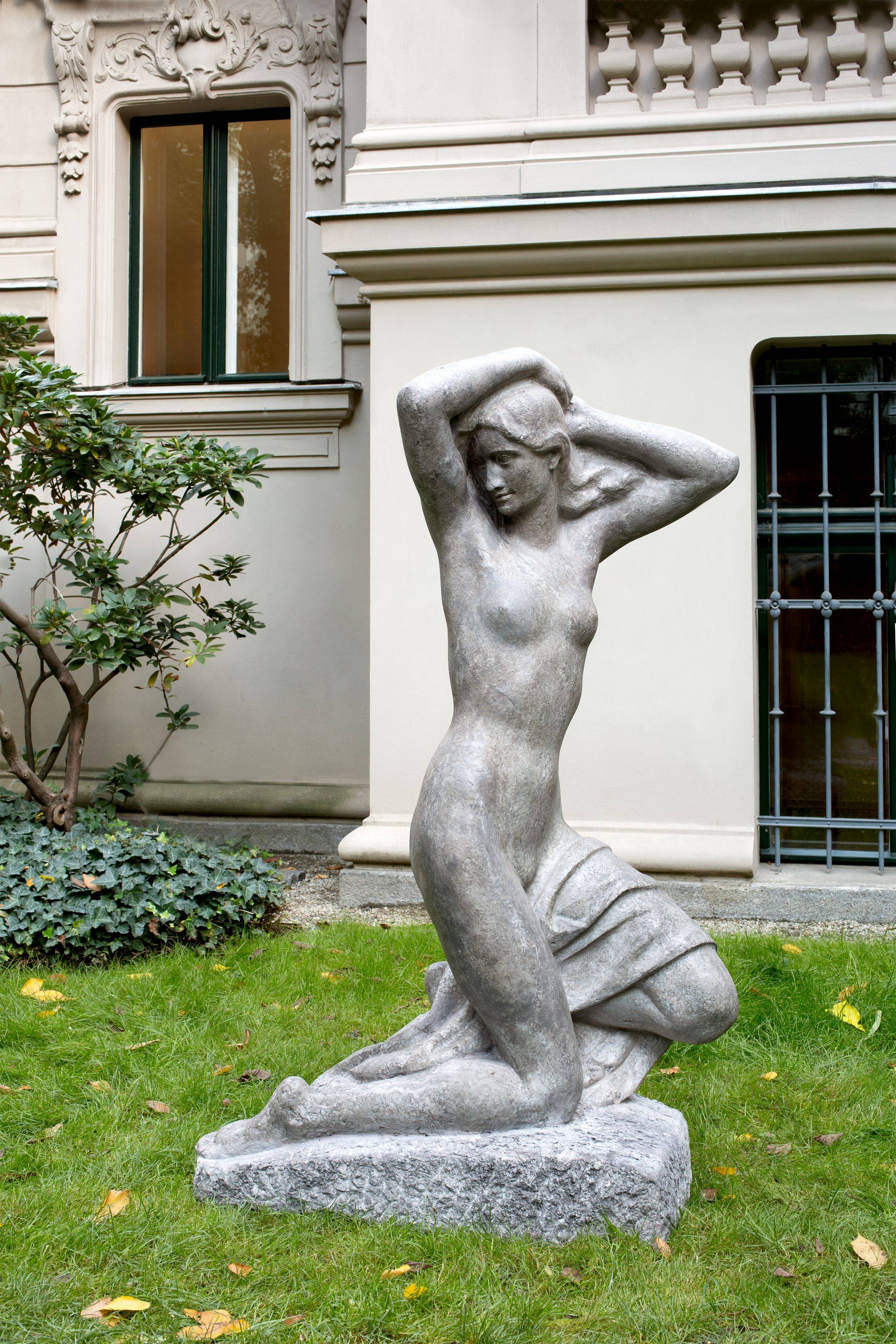
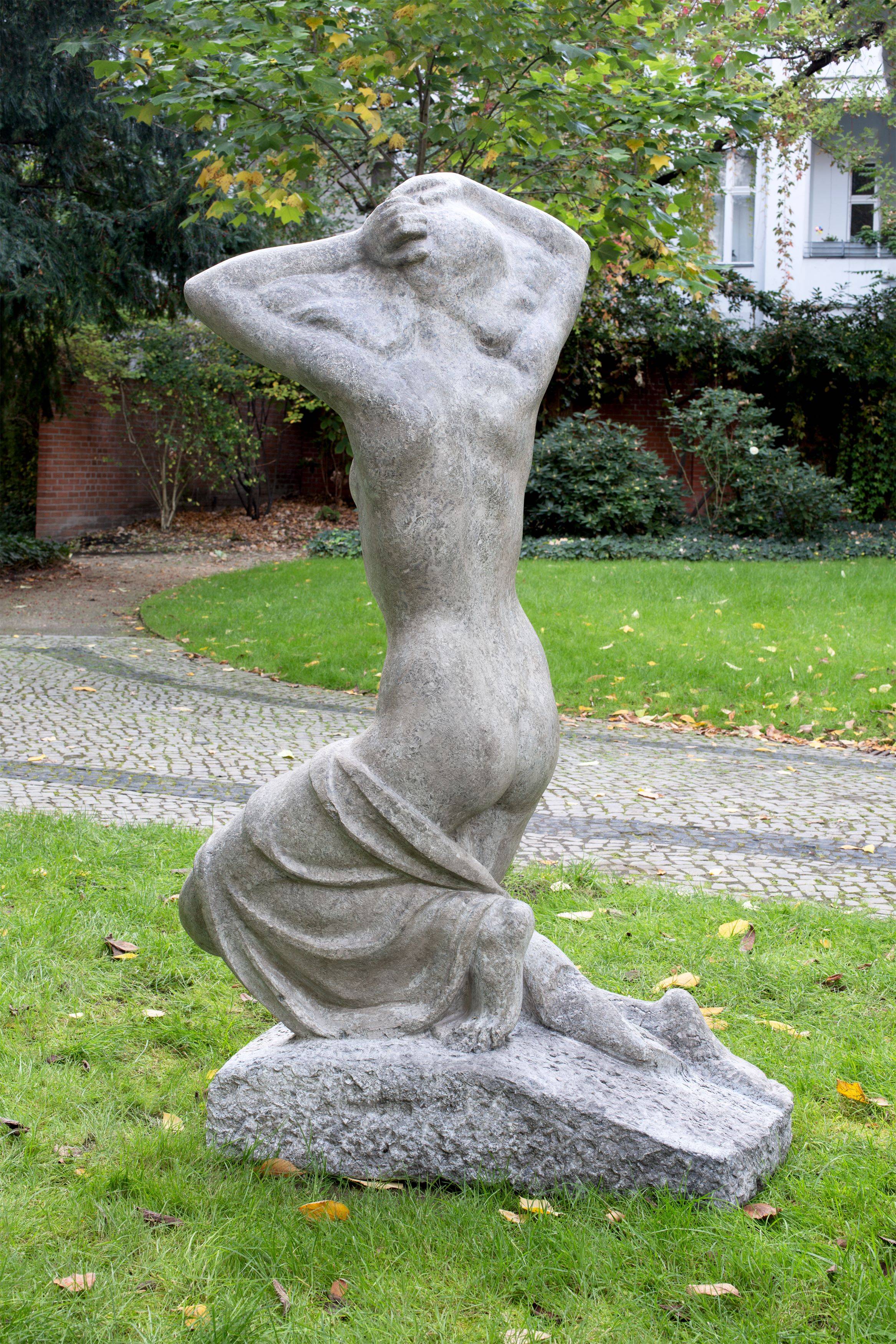
”Anadyomene”. 1920

Background:

Background:
Estimate:
EUR 100,000
- 150,000
USD 112,000
- 169,000
Auction 378
Thursday, 26.11.2026, 6:00 PM
Request condition report
Ask our specialists
Ilse Röchling-Heye, Freiburg i.Br./Pozzuoli near Naples / Private Collection, Netherlands
Freie Secession. Sommerausstellung. Berlin, Ausstellungshaus am Kurfürstendamm, 1920, cat. no. 269
Velhagen & Klasings Monatshefte. Berlin, Bielefeld, Leipzig, Vienna, Jg 35. 1920/21, vol. 1, ill. p. 21 / Wilhelm von Bode: Gedanken bei der Fritz Klimsch-Ausstellung in der Freien Secession zu Berlin. In: Die Kunst für Alle. Munich, Bruckmann, vol. 36, 1920/21, ill. p. 29 / Wilhelm von Bode: Fritz Klimsch. Eine Auswahl seiner Werke. Freiburg i.Br., Pontosverlag, 1924, ill. pl. 53 (dated: 1918/19) / exh. cat. Fritz Klimsch. Werke. Hannover, Galerie Koch, 1980, p. 13
“Klimsch’s figurative works consist almost exclusively of youthful, idealised female figures,” observed the Berlin museum director Wilhelm von Bode on the occasion of the special exhibition held at the Berlin Secession in 1920 to mark Fritz Klimsch’s fiftieth birthday. “All these figures are imbued with a delicate feeling for nature, with soft forms, a sensitively rendered surface of the skin—owing above all to their execution entirely by the artist’s own hand!—and a true sense of beauty, yet they are fashioned with a refined striving towards the simplification of form. What is striking, and, given its frequent recurrence, seems to be a guiding principle of the artist, is that even the freestanding figures are carved from a shallow block in such a way that they create an almost relief-like impression, as though they had been cut away from a high relief” (quoted in: Die Kunst für Alle, vol. 36, p. 29).
Fritz Klimsch received intensive encouragement in his artistic development, which led him to enter the Berlin Academy of Fine Arts at the age of just sixteen. The sculptors teaching there at the time were still influenced by the neoclassical sculptor Christian Daniel Rauch and his successor, Reinhold Begas. Klimsch was able to develop his talent and was awarded the coveted Rome Prize in 1894. He had the good fortune to travel to Italy, where older German artists such as the sculptor Adolf Hildebrand and the painter Hans von Marées were exploring fundamental questions of sculpture and painting.
A particularly outstanding example of the artist’s work is “Anadyomene”, carved in Untersberg marble. The young woman, who appears to have just awakened, is more upright in posture, more slender and more naturalistic than the figures in many of his other works. Through movement, form and expression, Klimsch creates a sculpture of subtlety and grace that lives up to its name. With this work, Fritz Klimsch also helped to carry the nineteenth-century tradition into modernism. Through the simplification of form, the beauty of line and the expressiveness of movement, he frees his figures from the appearance of posed models, endowing them with a significance of their own. Mario von Lüttichau
Subject to change - Please refer to our conditions of sale.