
Los
302
1811 – Frankfurt a.M. – 1893
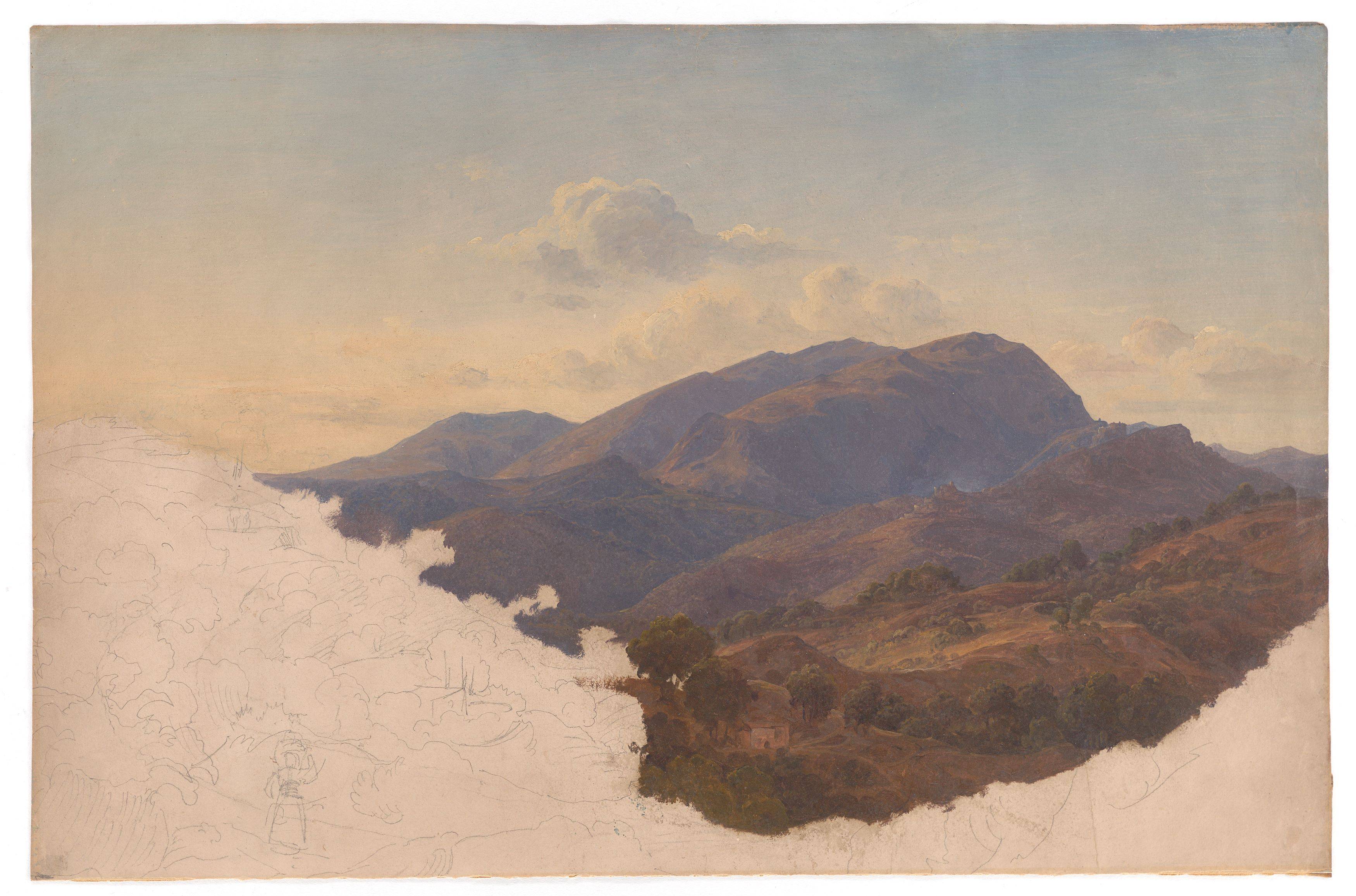
Blick von Subiaco auf die Sabiner Berge.

Hintergrund:


Hintergrund:

Hintergrund:


Hintergrund:
Schätzung:
EUR 25.000
- 35.000
USD 28.100
- 39.300
Auktion 379
Fr, 27.11.2026, 11:00 Uhr
Zustandsbericht anfragen
Experten kontaktieren
Nachlass des Künstlers / Katrin Bellinger, London / Privatsammlung, Bayern
Ausst. Kat. London, 2003: Katrin Bellinger at Colnaghi – Out into Nature. The Dawn of Plein-Air Painting in Germany 1820–1850, S. 50–51, m. Abb.
"Born into a well-established dynasty of painters in Frankfurt, Morgenstern had the full support of his family and the necessary contacts to enable him to make a three-year study trip to Italy (1834-37). In letters his father Johann Friedrich Morgenstern (1777-1844) repeatedly encouraged him to read the memoirs of the great landscapist Jakob Philipp Hackert, which were edited and published posthumously by Johann Wolfgang von Goethe:
'In them there are a lot of interesting facts, even on Italian landscape painting. I do hope you keep a diary and we can compare Hackert's earlier impressions with yours, (letter dated 4 December 1834). Indeed we find many motifs, painted and drawn, in Morgenstern's Italian works which also caught Goethe's eye.
Having spent most of May 1836 sketching in Terracina with his two travel companions, Ernst Willers and Georg Gmelin, the rising summer heat and the feverish air blowing from the nearby Pontine Marshes forced them to return to Rome. By mid-June Willers, Morgenstern, and the artist Gustav von Haugk, decided to escape the extreme summer temperatures and leave the Eternal City for the cooler climes of the Sabine Mountains. High up in the small hill town of Civitella, the three companions rented affordable artist's quarters from a Signore Don Vicenzo, the same lodgings where Wilhelm Schirmer was to stay three years later on his tour with Willers. Perched up on a steep mountain cliff, the town enjoys spectacular views of the surrounding mountain peaks and deep valleys below. The rooms of Don Vicenzo were well-known to the German and French artists painting in Italy. First used by Richter and the Nazarenes, they were later rented by Blechen and Corot.
Morgenstern and his companions would climb down the Serpentara, the steep path leading to the surrounding valleys and the old oak forest and work from nature. In our sketch, which Morgenstern has left deliberately unfinished, he followed Valenciennes' theory closely. First he quickly drew in pencil the rough outline of the panorama; then, with minute brushstrokes he painted the sky, before working on the landscape." (Ausst.kat. London, 2003: Katrin Bellinger at Colnaghi - Out into Nature. The Dawn of Plein-Air Painting in Germany 1820-1850, S. 50)
Irrtum vorbehalten. Wir verweisen auf unsere Versteigerungsbedingungen.