
Los
1283
Aachen 1886 – 1969 Chicago
Gläserner Wolkenkratzer. Modell mit Staffage von Oskar Herzog. 1922

Schätzung:
EUR 18.000
- 24.000
USD 26.500
- 35.300
Verkauft für:
84.490 EUR (inkl. Aufgeld)
Auktionen 168-171
Photographie, Do, 26.11.2009
Today, Ludwig Mies van der Rohe’s ideas and designs for a glass skyscraper are part of the history of architecture. It was for the first time in 1922, when working on his independent project of a glass skyscraper, that the architect developed his ideas using a three-dimensional model. As often was the case for Mies van der Rohe, the emphasis for him laid on the visionary handling of glass as a building material rather than the delineation of feasible structures.
The photographs of Curt Rehbein show the model in open-air as well as in front of a dark background in an interior space in relation to its future environment. Here, Mies van der Rohe used the photographic medium to highlight various aspects of the building. The organically shaped and rounded glass architecture clearly protrudes from the cowering plaster staffages by the sculptor Oskar Herzog. Placed in front of the dark background, the model appears to be radiating from within itself, the skin-like glass surface seems transparent and like a delicate appearance around the skeleton of beams and floors. This photographs was very likely taken at Mies van der Rohe’s Berlin studio at the address “Am Karlsbad 24”.
Together with a programmatic essay by Mies van der Rohe, this photograph of the glass skyscraper was published for the first time in 1922 in the magazine Frühlicht (Early Light). In this essay, the architect elaborated on the meaning of his glass model: “My experiments with the glass model have shown me the way, and I soon realized, that what is important when using glass was not an effect of light and shadow, but instead a rich play of light reflexes.” [Quoted in: Frühlicht, Vol. 1, Issue 4 (1922): 124.] The architect remembered his experiments with the material in 1968: “Then, I tried to work with smaller glass planes. I just arranged the glass strips according to the light before sticking them into the Plasticine ground. This consequently led to the curve […] I particularly wanted to show the skeleton and thought that it would be best if I drape a glass-like skin around it.” [Quoted in: Dziewior, Yilmaz, Mies van der Rohe, Blick durch den Spiegel (Cologne, 2005), 26.]
The present print represents an enlarged detail of the photograph published in Frühlicht (Early Light). Mies van der Rohe dedicated this print to his “teacher Peter Behrens [(1868-1940); …] with gratitude and adoration.” The young architect worked in Behrens’ studio in Neubabelsberg during the years 1908 to 1912, where he participated in, among other projects, the designs for the small-power motor hall of the AEG turbine factory and the supervision of the construction of the German Embassy in St. Petersburg. The occasion for presenting Behrens with this gift has yet to be determined, but Behrens’ sixtieth birthday in 1928 appears as a likely time.
What is certain, however, is that Mies van der Rohe presented this print on another occasion to his former employee and long-time friend Karl Otto (1904-1975) before 1935. At the end of WWII, the print was still in his possession. Otto had met the “admired designer of two glass high-rises” already in 1926, when he was still a student of architecture [Quoted in: Witt, Julia, Otto und Mies – zwei Architekten auf dem Weg, MA Thesis BTU Cottbus, 2005, 27.] During this time, Otto gratuitously worked for Mies van der Rohe as a draftsman. From 1929 to 1935, Otto participated in various building projects of Mies van der Rohe’s construction bureau such as the world exhibition of 1929 in Barcelona. Additionally, Otto worked on the construction of the Haus des Rundfunks (House of the Radio Broadcast) in Berlin. In several documents, both Mies van der Rohe and Poelzig recognize the talent of the young aspiring architect.
Mies van der Rohe and Otto contacted each other again after the end of the war and Otto also visited the older architect repeatedly in Chicago. Otto acted as the director of the Hochschule für bildende Künste (Academy for Fine Arts, today University of the Arts) in Berlin from 1956 until 1969. Even in this late period, during a radio report on the occasion of Mies van der Rohe’s eightieth birthday in 1966, Otto emphasized the importance of the early glass skyscraper projects as audacious and radical designs. At the time, he may have been referring to Curt Rehbein’s photographs of the glass model..
Ludwig Mies van der Rohe an Prof. Karl Otto, Berlin / Privatsammlung, Großbritannien
Hauptstadt Berlin: internationaler städtebaulicher Ideenwettbewerb 1957/58, Berlinische Galerie, Martin-Gropius-Bau Berlin, 3. November 1990 bis 6. Januar 1991
Frühlicht Bd. 1, 1922, H. 4, S. 122 (Variation)
Philip Johnson, Mies van der Rohe, The Museum of Modern Art, New York 1947, S. 29 (Variation)
Ludwig Hilberseimer, Mies van der Rohe, Chicago 1957, S. 27 (Varation)
Mies van der Rohe, Vorbild und Vermächtnis, Frankfurt/M. 1987, S. 37 (Variation)
Mies in Berlin. Ludwig Mies van der Rohe. Die Berliner Jahre 1907-1938, hg. von Terence Riley u. Barry Bergdoll, München u.a. 2002, S. 187, Abb. 55 (Variation)

Los
208
„MR10“ Set von vier Stühlen. 1927
Schätzung:
EUR 10.000
- 15.000
Verkauft für:
EUR 17.080

Los
292R
Vier Ansichtsskizzen für das Haus Hubbe in Magdeburg. 1934/35
Schätzung:
EUR 10.000
- 15.000
Verkauft für:
EUR 12.200

Los
294R
Studien zu Sitzmöbeln. Um 1940
Schätzung:
EUR 5.000
- 7.000
Verkauft für:
EUR 15.860

Los
405
Beistelltisch – Modell: MR 130. Um 1931 / Ausführung 1938
Schätzung:
EUR 4.000
- 6.000
Verkauft für:
EUR 3.125

Los
416
„Internationale Ausstellung. Barcelona 1929. Deutsche Abteilung“. 1929
Schätzung:
EUR 500
- 700
Verkauft für:
EUR 3.125
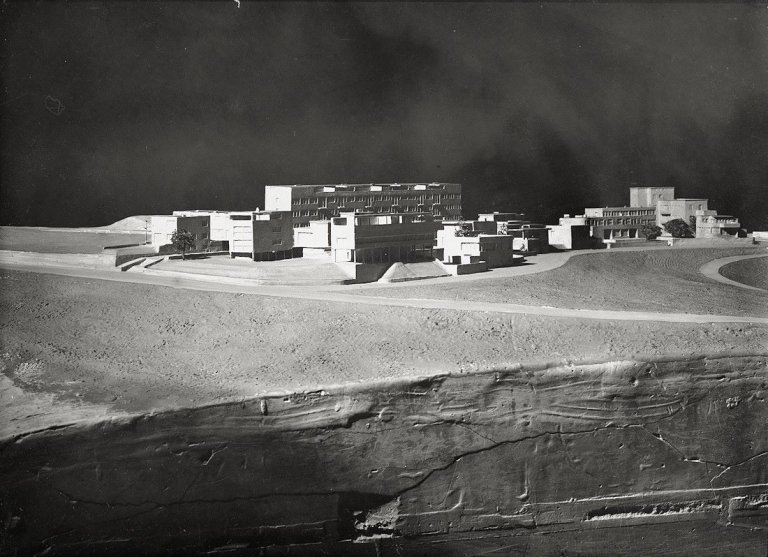
Los
1334
Modell der Weissenhof-Siedlung wie gebaut (1927), Ansicht von Südosten / Ansicht von Süden. 1927
Schätzung:
EUR 300
- 500
Verkauft für:
EUR 357

Los
1335
Modell der Weissenhof-Siedlung wie gebaut (1927), Ansicht von Norden. 1927
Schätzung:
EUR 200
- 400
Verkauft für:
EUR 595

Los
1336
Modell der Weissenhof-Siedlung wie gebaut (1927), Ansicht von Südwesten. 1927
Schätzung:
EUR 200
- 400
Verkauft für:
EUR 214
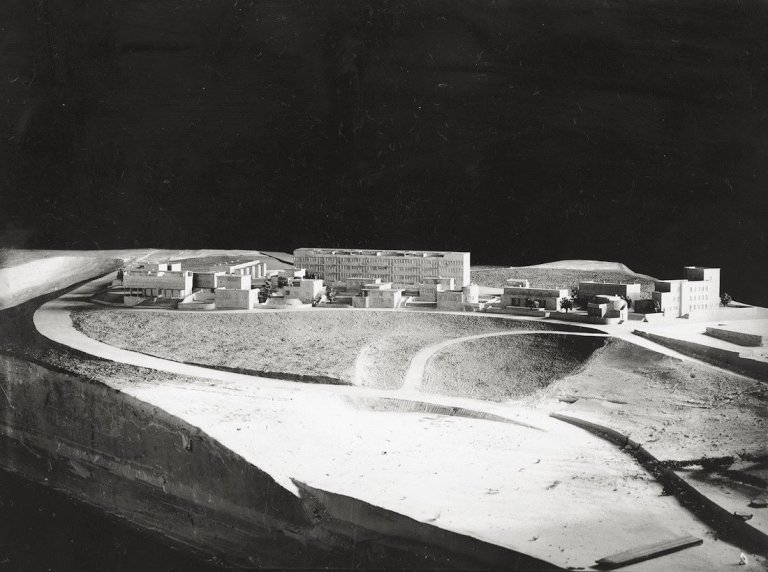
Los
1337
Modell der Weissenhof-Siedlung wie gebaut, Ansicht von Osten / Ansicht von Westen. 1927
Schätzung:
EUR 400
- 600
Verkauft für:
EUR 476

Los
1338
Modell der Weissenhof-Siedlung wie gebaut, Ansicht von Süden. 1927
Schätzung:
EUR 200
- 400
Verkauft für:
EUR 214

Los
2081
Modell der Weissenhof-Siedlung wie gebaut (1927), Ansicht von Südosten. 1927
Schätzung:
EUR 300
- 500
Verkauft für:
EUR 23.180

Los
2082
Bergbau-Ausstellung. Schautafel zum Teerstammbaum, nach Entwurf von Herbert Bayer. . 1934
Schätzung:
EUR 300
- 500
Verkauft für:
EUR 366

Los
2083
Modell der Weissenhof-Siedlung wie gebaut (1927), Ansicht von Osten. 1927
Schätzung:
EUR 300
- 500
Verkauft für:
EUR 4.392

Los
2084
Modell der Weissenhof-Siedlung wie gebaut (1927), Ansicht von Westen. 1927
Schätzung:
EUR 300
- 500
Verkauft für:
EUR 854

Los
2085
Modell der Weissenhof-Siedlung wie gebaut (1927), Ansicht von Südwesten. 1927
Schätzung:
EUR 300
- 500
Verkauft für:
EUR 4.880

Los
2086
Barcelona Pavillon, Frontseite von Nordost gesehen. 1929
Schätzung:
EUR 1.500
- 2.500
Verkauft für:
EUR 2.318

Los
2087
Barcelona Pavillon, Frontseite von Südosten gesehen. 1929
Schätzung:
EUR 1.500
- 2.500
Verkauft für:
EUR 1.830

Los
2088
Barcelona Pavillon, Blick über das grosse Wasserbecken.. 1929
Schätzung:
EUR 1.500
- 2.500
Verkauft für:
EUR 4.880

Los
2089
Barcelona Pavillon, Interieur mit Onyxwand und Georg Kolbes Skulptur „Morgen“ im Hintergrund. 1929
Schätzung:
EUR 1.500
- 2.500
Verkauft für:
EUR 8.540

Los
2090
Barcelona Pavillon, Innenansicht mit beleuchtbarer Glaswand und Onyxwand. 1929
Schätzung:
EUR 1.500
- 2.500
Verkauft für:
EUR 63.440

Los
2091
Barcelona Pavillon, Ansicht des Haupteingangs. 1929
Schätzung:
EUR 1.500
- 2.500
Verkauft für:
EUR 6.710

Los
2092
Barcelona Pavillon, Blick vom Hinterausgang zum Bürotrakt. 1929
Schätzung:
EUR 1.500
- 2.500
Verkauft für:
EUR 4.026

Los
2093
Gläserner Wolkenkratzer, Modell mit Staffage des Bildhauers Oswald Herzog. Nicht ausgeführtes Projekt von 1922 / Photo: Curt Rehbein, 1922.
Schätzung:
EUR 15.000
- 25.000
Verkauft für:
EUR 35.000
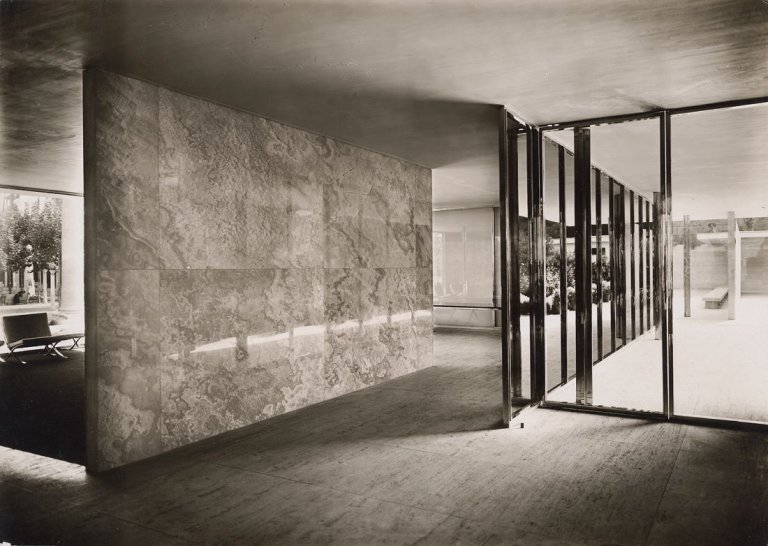
Los
2093
Barcelona Pavillon, Ansicht des Nebeneingangs mit Blick auf die Onyxwand und den Nebenanbau. 1929
Schätzung:
EUR 1.500
- 2.500
Verkauft für:
EUR 4.026

Los
2094
Projekt „Wabe, Friedrichstrasse“, Entwurf für das Hochhaus an der Friedrichstraße, 1921. Perspektive von Norden, erste Fassung / Photo: Curt Rehbein, 1922.
Schätzung:
EUR 10.000
- 20.000
Verkauft für:
EUR 31.875

Los
2094
Barcelona Pavillon, Ansicht des Nebeneingangs von Westen, abends, mit erleuchteter Glaswand. 1929
Schätzung:
EUR 1.500
- 2.500
Verkauft für:
EUR 2.684

Los
2095
Projekt „Wabe, Friedrichstrasse“, Entwurf für das Hochhaus an der Friedrichstraße, 1921. Perspektive von Norden, Endfassung / Photo: Curt Rehbein, 1922.
Schätzung:
EUR 10.000
- 20.000
Verkauft für:
EUR 50.000

Los
2129
Bank- und Bürogebäude in Stuttgart, Projektentwurf / Photo: Curt Rehbein. Um 1928
Schätzung:
EUR 10.000
- 15.000
Verkauft für:
EUR 41.250

Los
2180
Deutscher Pavillon. Weltausstellung, Barcelona, 1928/29. Blick auf das Wasserbecken mit Skulptur „Der Morgen“ von Georg Kolbe / Photo: Berliner Bild-Bericht. 1929
Schätzung:
EUR 3.000
- 4.000
Verkauft für:
EUR 8.125