"Beautiful brown moor, delicious brown! The canals with their black reflections, asphalt black," the painter Paula Modersohn-Becker enthused in her diary in the summer of 1897 about the landscape of Worpswede, which had seemed to her since her first visit like a "wonderland, a land of the gods" (diary, 24 July 1897, quoted in: Günter Busch, Liselotte von Reinken (eds.): Paula Modersohn-Becker in Briefen und Tagebüchern, Frankfurt am Main 2007, pp. 122f.).
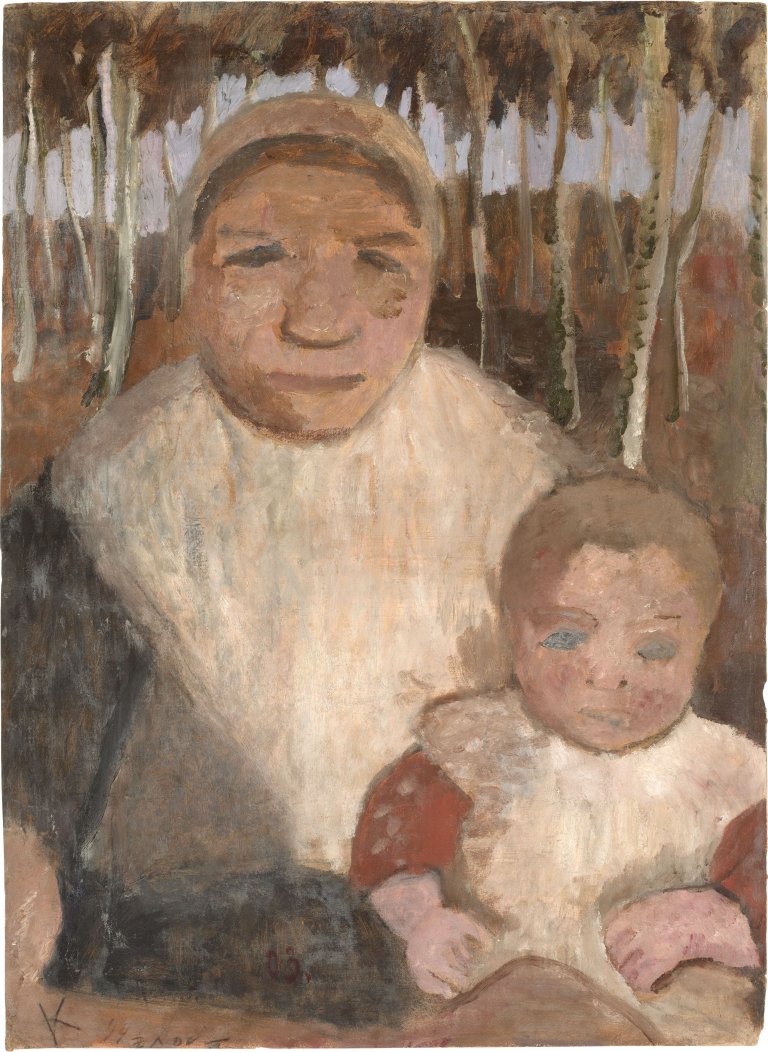
Among the Worpswede artists, who had joined together in 1894 to form the Worpsweder Künstler-Verein, she became the most innovative and experimental. Her recurring stays in Paris from 1899 onwards in particular encouraged her formal experiments, and over time she left behind descriptive, genre-like landscape painting and opened herself to the adventure of colour, of pure painting.
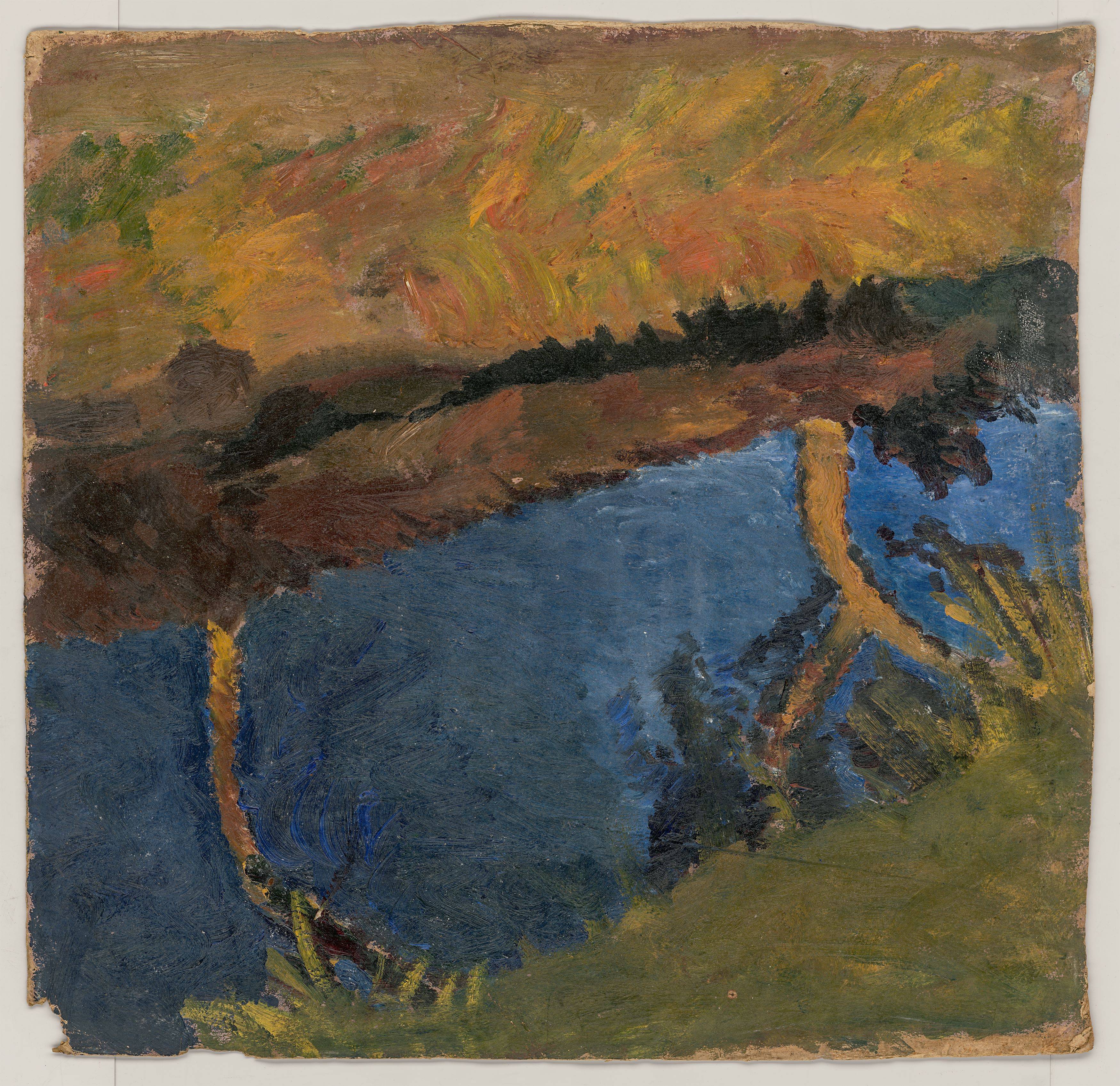
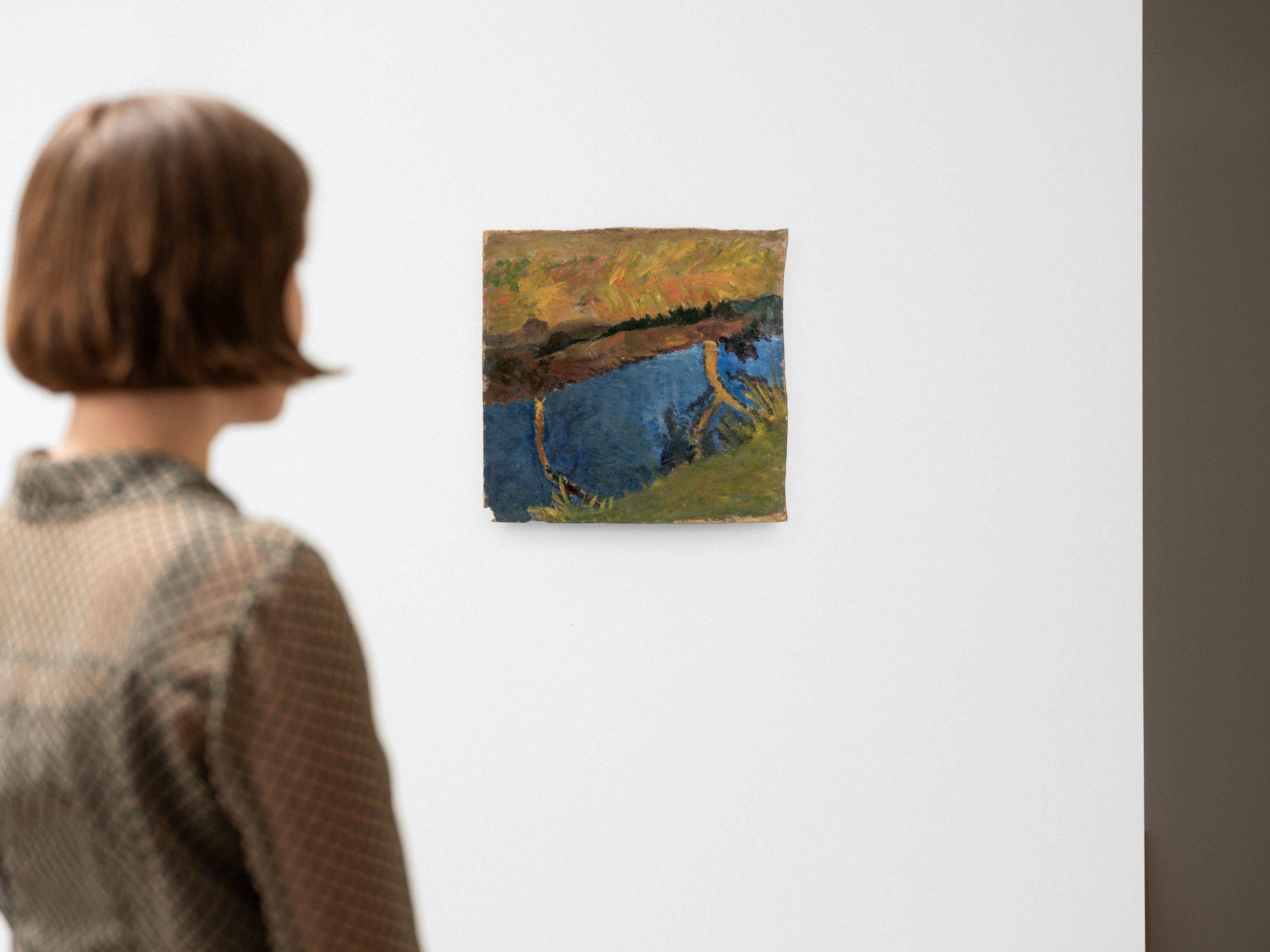
So too in the present painting. We look into the deep blue of the sky reflected in the ditch in the moor. Here the world is turned upside down: the two trees mirrored in the surface of the water seem to grow downwards. With loose brushwork, the colours of the green-yellow-orange moorland shimmer and shift, contrasting with the strong blue. The complete absence of a horizon as a boundary and of any real background heightens the radicalism of the picture.
In search of suitable, fresh motifs, the artist explored the landscape of Worpswede in all weathers, as she reported in her letters: "I spent the day far out on the moor, in a storm, with clouds racing by. In this country one keeps discovering new beauties. [...] Here and there stand a few gnarled old pines, mighty and tall, almost as if from another civilisation" (Paula Modersohn-Becker to her aunt Marie Hill, letter of 15 January 1899, quoted in: ibid., p. 175).
How much the painter needed the moorland of Worpswede as a source of creativity is shown by the longing for the unspoilt character of the artists' village near Bremen that she recorded in Paris. "On the whole, Paris makes me serious," she wrote in a letter to her parents. "There is so much sadness here. [...] Sometimes I long for a walk on the moor. Nevertheless I am enjoying my time, taking in a great deal and making progress" (Paula Modersohn-Becker to her parents, letter of 11 January 1900, quoted in: ibid., p. 217). With her unusual, assured pictorial inventions, the artist has secured her place in art history and in the museums of the world. Gloria Köpnick